
The digital world is entering an era where artificial intelligence and blockchain are no longer separate revolutions they are beginning to merge into a single technological force capable of reshaping how humanity interacts with information. In this emerging frontier, one project is rapidly capturing the attention of serious market participants and forward-thinking investors alike: Mira Network (MIRA). Positioned at the intersection of decentralized verification, cryptographic security, and AI accountability, Mira Network is not merely another token entering the Binance ecosystem. Instead, it represents a bold attempt to solve one of the most urgent problems facing modern artificial intelligence the reliability crisis.
Artificial intelligence today is powerful, but it is far from perfect. Even the most advanced AI models can produce hallucinations, inaccurate information, biased conclusions, and unverifiable outputs. These flaws become dangerous when AI systems are used in high-stakes environments such as finance, medicine, autonomous systems, and large-scale decision-making platforms. The world is moving rapidly toward AI-driven automation, yet the lack of trust in AI outputs remains a fundamental obstacle. This is precisely where Mira Network introduces a revolutionary paradigm.
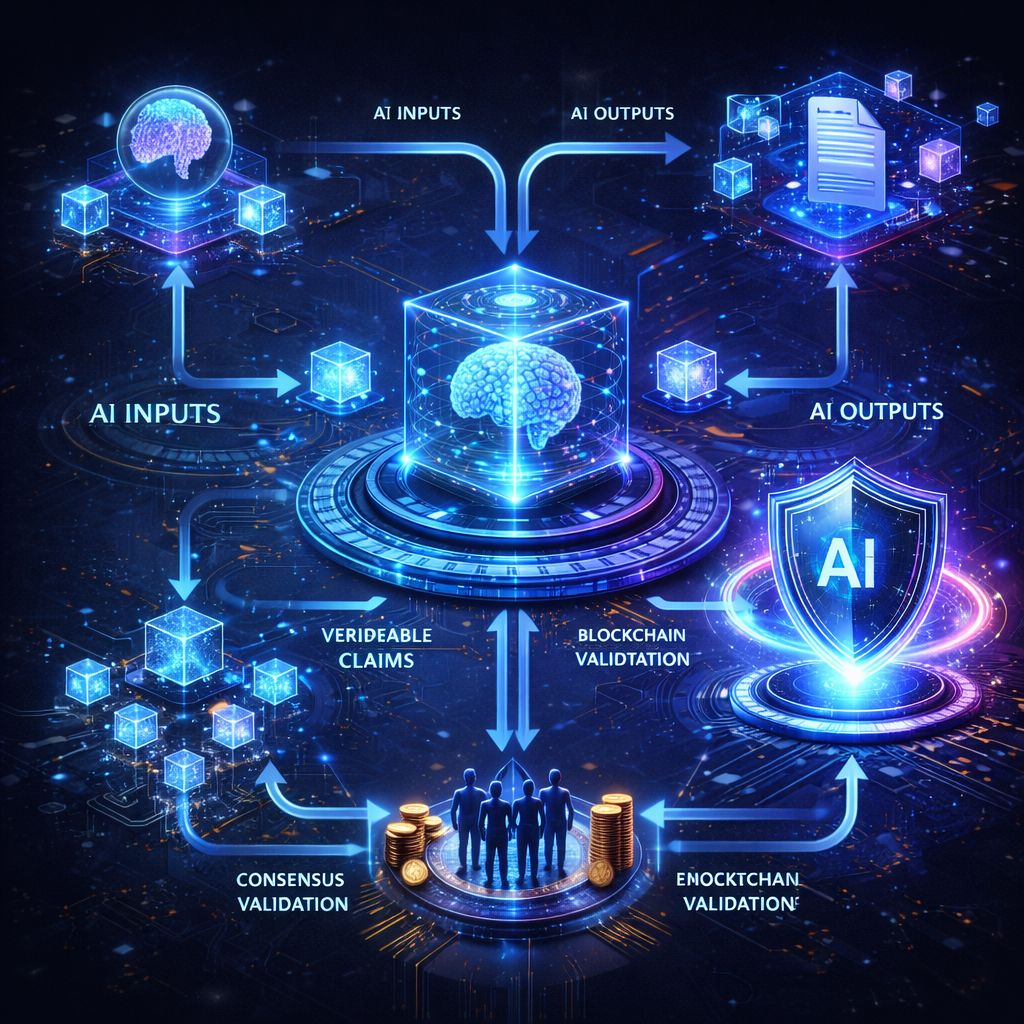
Mira Network is designed as a decentralized verification protocol that transforms AI-generated information into cryptographically verified truth. Instead of relying on a single AI model to generate and validate results, the network decomposes complex outputs into smaller, verifiable claims. These claims are then distributed across a network of independent AI models and validators operating within a blockchain-based consensus system. Each participant analyzes the claim, verifies its accuracy, and contributes to a collective validation process governed by economic incentives. The result is a trustless ecosystem where AI outputs are not accepted blindly they are verified through decentralized consensus.
This architecture fundamentally shifts the way information is validated in AI systems. In traditional environments, users must trust the centralized entity that owns or operates the AI model. With Mira Network, trust is replaced by cryptographic proof and decentralized agreement. Every verified claim becomes part of an immutable blockchain record, creating a transparent and tamper-resistant layer of truth that can be audited by anyone. This concept introduces a new standard of reliability for AI-driven data, potentially unlocking use cases that were previously considered too risky.
From a technological standpoint, Mira Network stands at the forefront of quantum-resistant verification infrastructure. As the possibility of quantum computing grows closer to reality, many current cryptographic systems face the risk of becoming obsolete. Mira’s architecture anticipates this future by incorporating advanced cryptographic frameworks that are designed to remain secure even in a post-quantum environment. This forward-looking approach places the project in a strategic position within the next generation of blockchain security development.
However, the real power of Mira Network lies not only in its technical framework but in its economic design. The protocol introduces a sophisticated incentive mechanism that rewards validators, AI contributors, and network participants for maintaining accuracy and honesty within the ecosystem. When a claim is submitted for verification, multiple independent models analyze it, and the consensus outcome determines the final validated result. Participants who provide correct validations are rewarded with network incentives, while inaccurate or malicious inputs are economically penalized. This creates a self-regulating environment where reliability becomes financially beneficial.
For traders observing the Binance market landscape, this model introduces a powerful narrative. Crypto markets have historically rewarded projects that solve foundational technological problems especially when those solutions intersect with rapidly expanding industries. Artificial intelligence is already a multi-trillion-dollar technological transformation, and blockchain verification could become the missing infrastructure layer required to make AI trustworthy at scale. Mira Network operates precisely at this intersection, positioning its token not only as a speculative asset but as a gateway to the future of verified machine intelligence.
Market sentiment surrounding AI-related cryptocurrencies has surged over the past few years, driven by the explosive growth of large language models, generative AI platforms, and autonomous systems. Yet despite the enthusiasm, one persistent question continues to dominate institutional discussions: How can AI outputs be trusted without centralized oversight? Mira Network’s verification protocol attempts to answer that question directly, offering a decentralized solution that could become essential infrastructure for the AI economy.
Within trading communities, this narrative carries significant weight. Projects that successfully bridge AI and blockchain often generate strong speculative momentum because they tap into two of the most powerful technological trends simultaneously. The listing of a project like Mira Network on Binance signals that the market is beginning to recognize the importance of verifiable AI systems. Traders who analyze early technological narratives often understand that infrastructure projects especially those addressing systemic risks can attract long-term attention from developers, institutions, and ecosystem builders.
The potential applications for Mira Network extend far beyond simple AI validation. Imagine financial trading algorithms that must verify their predictions before executing multi-million-dollar transactions, medical AI systems whose diagnoses are confirmed by decentralized consensus before reaching patients, or autonomous vehicles whose decision-making systems are validated by cryptographic verification layers. Each of these scenarios demands reliability that current centralized AI models cannot guarantee. Mira Network introduces a trustless framework capable of supporting such high-stakes applications.
From a strategic investment perspective, projects focused on verification infrastructure often become foundational components of broader ecosystems. Just as oracles became critical to decentralized finance and data availability layers became essential for scaling solutions, decentralized verification for AI could emerge as a core pillar of the next technological wave. If artificial intelligence continues expanding into every aspect of digital life, the need for trustless validation systems will likely grow exponentially.
For pro-level market participants analyzing narrative momentum, Mira Network presents a compelling convergence of themes: artificial intelligence reliability, decentralized verification, quantum-resistant cryptography, and blockchain consensus economics. These themes resonate strongly with both technological innovators and speculative traders searching for the next transformative sector within the cryptocurrency market.
Yet perhaps the most intriguing element of Mira Network is philosophical rather than technical. The project represents a shift in how humanity may interact with intelligent machines. Instead of blindly trusting algorithmic outputs, societies could rely on decentralized networks that verify truth collectively, ensuring that AI serves as a reliable partner rather than an unpredictable authority. In a world increasingly shaped by machine intelligence, such systems may become indispensable.
As the crypto market continues evolving, the projects that survive and thrive will likely be those that address real technological challenges rather than merely riding speculative waves. Mira Network enters the Binance ecosystem with a mission that touches the very core of the AI revolution: transforming uncertain machine outputs into verifiable, cryptographically secured truth.