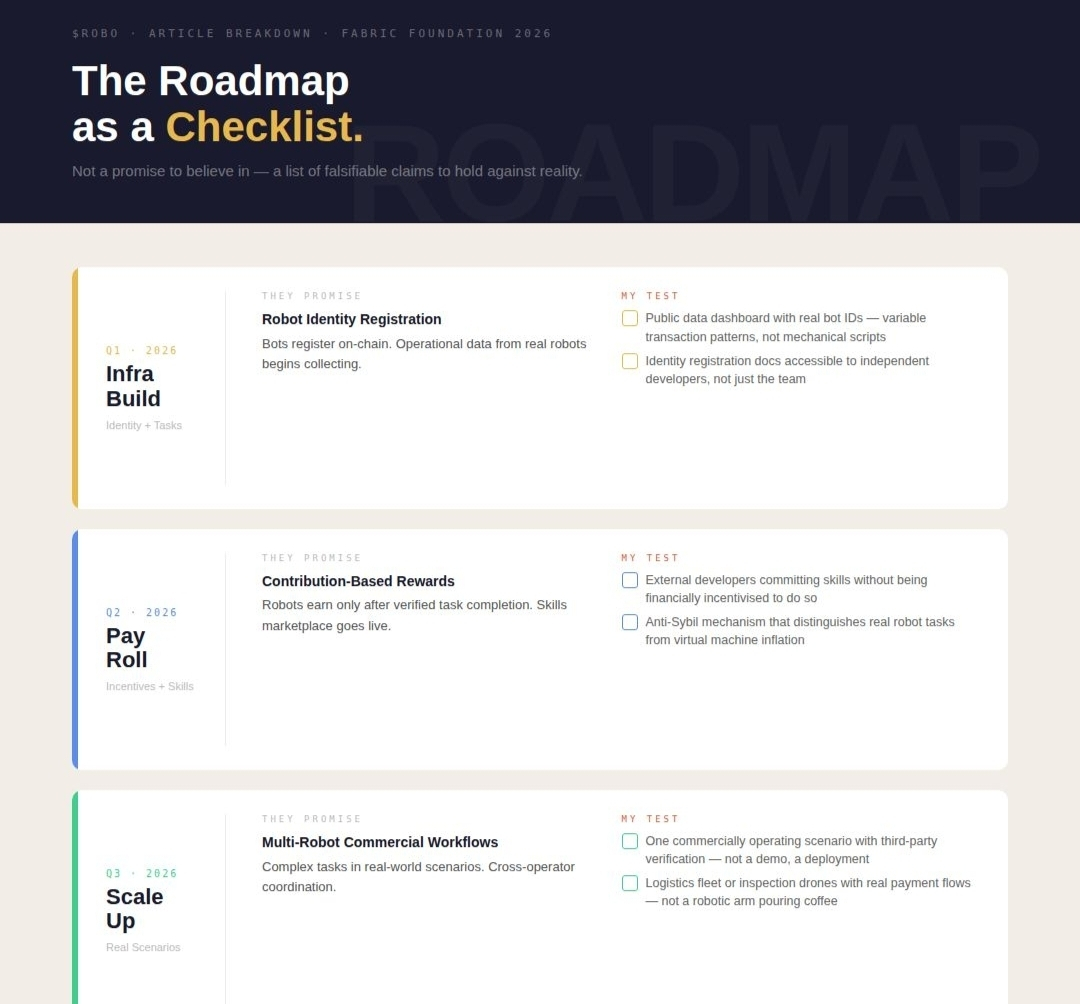
Most blockchain whitepapers read like digital utopias—smooth, frictionless worlds where every participant is a "rational actor" working for the common good. The Fabric Foundation takes a refreshing, if slightly darker, departure. They aren’t betting on human virtue; they are betting on human greed, laziness, and the inherent desire to "cheat" the system.In a world obsessed with the "mind" of AI and the "body" of robotics, Fabric is building the "Collar"—the economic constraints required to keep human nature from breaking the machine economy before it even begins.Designing for the "Dishonest Actor"The brilliance of the Fabric ($ROBO) ecosystem lies in its honesty. Their documentation doesn't ignore the fact that humans are short-sighted; it treats it as a primary data point.In most decentralized systems, we pretend that if you write tight enough code, people will behave. Fabric assumes the opposite:The Assumption: Validators will try to extract value without providing work.The Solution: The "Collar." Instead of fighting greed, Fabric’s architecture makes deception expensive and transparency profitable. It doesn’t try to make people "good"—it simply makes the network function as if they were.Infrastructure Before the MarketWe are currently in a strange limbo. AI agents and autonomous robots are "coming," but they aren't yet operating at the global scale required for a massive on-chain economy. This leaves Fabric in a high-stakes position: Are they five years too early, or exactly on time?By building the identity, payment, and coordination layers now, Fabric isn't just waiting for the robot economy—they are defining the rules it will have to follow. Through Contribution Accounting, every unit of work is recorded. You cannot simply buy your way into controlling the network; you have to earn it through verified utilityThe Three Paths: Linux, The Void, or Wikipedia?History suggests three fates for infrastructure projects like this:The Corporate Buyout (The Linux Path): The tech succeeds, but the culture is swallowed by a proprietary giant.The Idealist Collapse: The project refuses to compromise, the money dries up, and the vision dies.The Open Standard (The Wikipedia Path): A genuinely independent, decentralized system sustained by those who need it to exist.Fabric’s defense against a hostile takeover is simple: Math. By making the cost of bribing validators or centralizing control prohibitively expensive, it becomes cheaper for a competitor to build their own network than to steal Fabric’s.
A Team of Conviction
The pedigree here—Jan Liphardt (Stanford), a CTO from MIT CSAIL, and backing from Pantera—suggests this isn't a project chasing a trend. This is a research-heavy team that realized the biggest hurdle to autonomous machines isn't the AI—it's the coordination.The $ROBO token isn't just a speculative asset; it is the energy source for a system designed to survive human nature long enough for the robots to arrive.