

There was one minor aspect that was nagging me when I started to pay more attention to robotic infrastructure in crypto. The general discussion about the machines, the automation, or the wondrous power of robotics platforms is commonplace but few people talk about the silent economic layer beneath that which actually determines who receives the right to access these systems and who determines the direction they take. Through my personal experience of researching projects in this space, I have realized that the apparent technology usually takes up all the focus, whereas the governance and access structure is rarely seen. It is precisely in this layer that Fabric Foundation Robo and its token $ROBO appear to be targeting their design.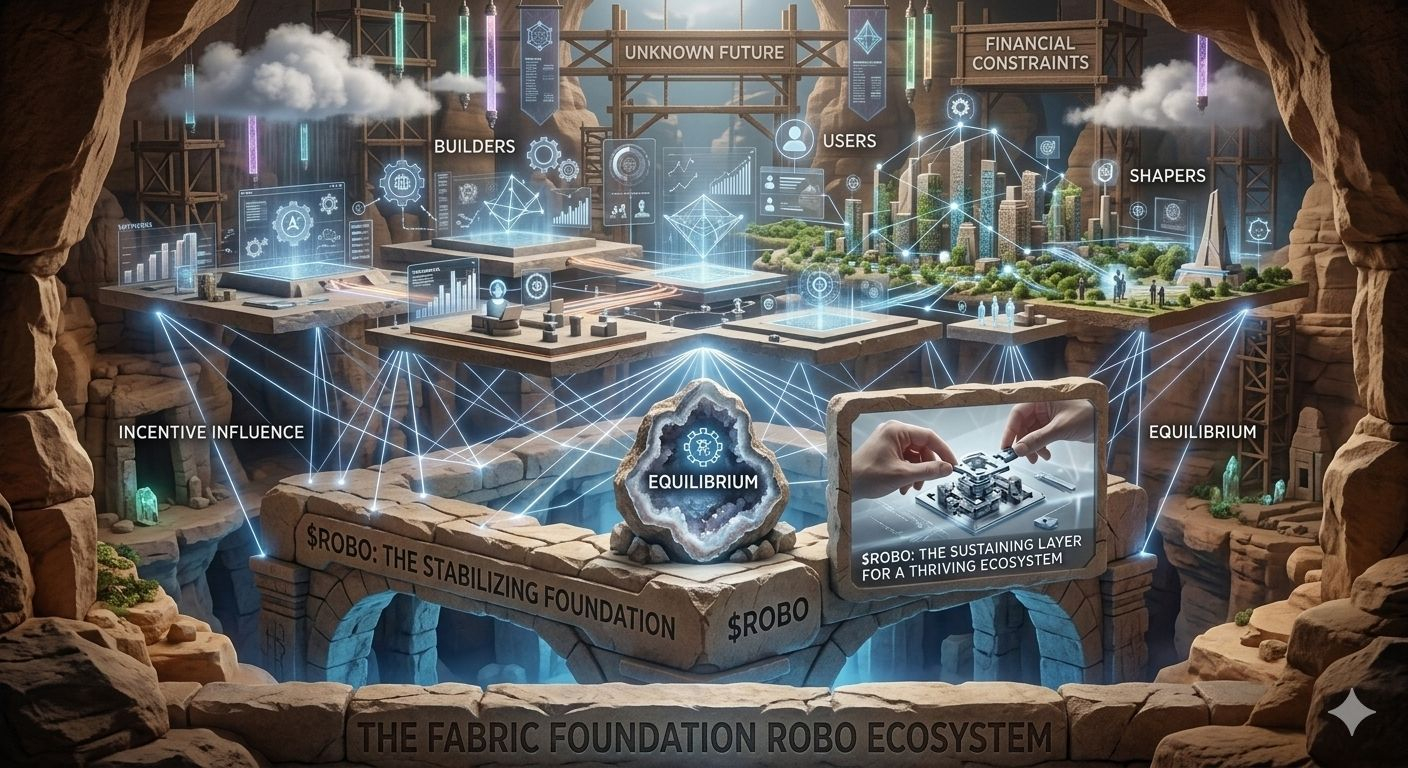
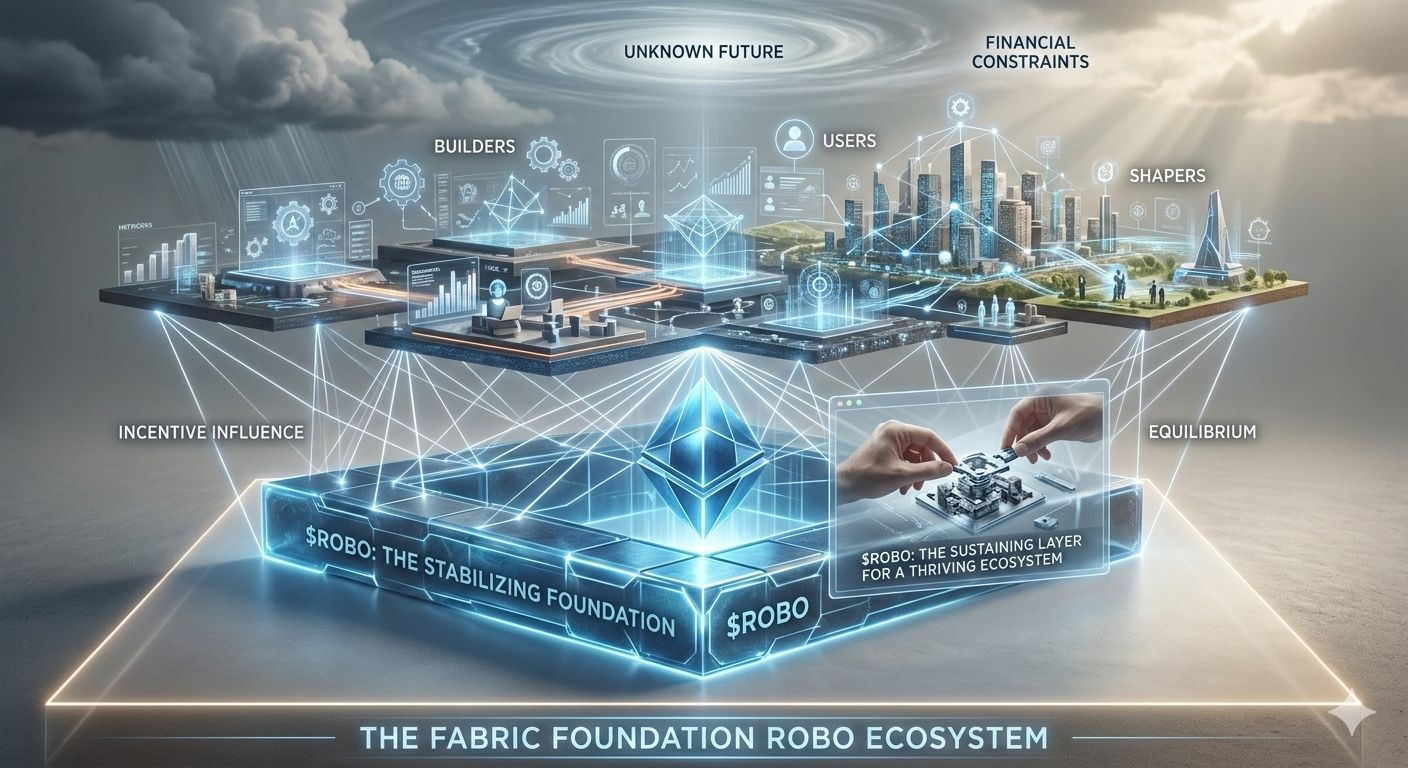
As I gazed at the ecosystem, I started to think of $ROBO as a fluid that was supposed to bring three key elements into contact namely: work, access, and governance. My initial thought was that it was another standard utility token which is primarily used in transactions. However, as I continued to research the description of the system, the more the system appeared to be a structural aspect that was meant to organize the working of the ecosystem.
It is in the work layer that, according to my own view, the first sign of the intention of the use of the word Robo is displayed. The robotics networks are fascinating since the work that occurs within them is not necessarily performed by humans. Tasks are performed by machines, instructions are performed by automated agents, and decisions are performed by algorithms. But behind those systems are still people developing the software, and people keeping hardware running, and contributors of data/infrastructure. These contributors operate behind the scenes in most of the systems I have seen with large platforms getting most of the value.
The concept of Robo appears to be a solution to that disparity in developing a token-based reward framework. Valuation of the token by contributors who contribute to keep the ecosystem alive or healthier may be possible. In my personal experience of open-source technology communities, there is no deficit of sustainable incentives. In such a way, the ecosystem will develop in a more stable manner when the contributors are rewarded. Provided this model is true, it is possible that, with the assistance of robotic infrastructure, the contribution of robots can be converted into something economically significant instead of being entirely voluntary.
Another element that I found interesting during the study of the system is the access layer. There must be some system of resource allocation in the case of robotic networks and automated infrastructure since there is a limit to computing power, machines, and operational capacity. In the Fabric Foundation Robo, the use of Robo seems to be a means of accessing services, tools or robot capabilities in the network.
To put it simply, being in possession of or operating the token can enable participants to communicate with the system- be it by executing duties, utilizing robotic services, or communicating with specific tools of the platform. The thing is that when I consider it practically, it is like a sort of a digital key. Rather than just using conventional money, a connection to the network is a requirement of being a member of the ecosystem itself.
Nevertheless, this also brings about a question that I usually take into consideration when assessing token economies. Does access through tokens really make infrastructure more open or can it help develop new barriers? Access may be perceived as just and deserved in case the token gets into the hands of many contributors and users. However, when tokens become centralized in the hands of a few individual holders, this might slowly transition to become access controlled by those with a financial incentive to perform instead of those who are actually participating in the network. This balance is always fragile as I have seen with other crypto ecosystems as they grow.
Although the most interesting part of Robo is arguably the governance part. There are numerous decentralized systems where governance tokens are introduced, and performance differs. In some cases they are hardly applied in making meaningful decisions. In other occasions, they take a tangible part in the steering of the development of a protocol.
The Fabric Foundation Robo ecosystem has set up the mechanism of Robo where the participants could sway the direction of the network. Such token holders can, possibly, vote on upgrades, change of policy or developments in the ecosystem. In my view, governance is particularly relevant in robotics since the automation systems may have an effect on the processes occurring in the real world. The decisions taken via governance are not merely technical revolves, they may influence the way the robotic systems interrelate with the spheres of industry, services, or digital infrastructure.
What I consider to be intriguing about the analysis I conducted is that Robo seems to unite the contributors, users, and decision-makers in a single economic chain. These groups are independently present in numerous digital ecosystems. The creators of technology are the developers, the consumers are the users, and the governance is usually on a completely different level. The architecture in this case seems to seek a more integrated model in which work receives tokens, tokens receive access and token holders engage in governance.
Concurrently, I attempt to be realistic when cogitating with regard to these models. New incentives can be added by the token-based systems which occasionally can result in short-term behavior. The participants can be more concentrated on the movements of the price of the tokens, rather than on the creation of sustainable infrastructures. Large holders may also take over the governance systems, in case of a non-distribution of participation. It are trends that I have observed in the crypto industry at large.
User experience is another challenge that can be approached practically. Most individuals who come into contact with robotics platforms are mainly functionalists. They desire tools of automation that just work. A token layer will also complicate matters, and in case the token layer becomes too noticeable or hard to control, participation might be deterred. I think that the most effective token systems are the systems which are silent in the background, and the user experience is not disrupted.
Regardless of these doubts, something coy in the conception of Robo works. Automation and robotics are also becoming a significant component of digital infrastructure, but there is a tendency to have large organizations own those systems. Another avenue that could see the infrastructure being maintained and directed collectively could be a token-based structure which involves distributing participation and governance.
In my view of studying this ecosystem, the success of Robo will probably hinge on whether it actually balances the three pillars it embodies, specifically, work, access and governance. When the contributors feel being fairly rewarded, users will enjoy the services being accessed with ease, and governance is active and decentralized, the structure may become stable in the long run.
However, as in most crypto experiments, the future of it is unknown. Initial designs can be very lovely until they come into contact with actual reality and financial constraints.
Nevertheless, the fact that the most significant layers are usually the least prominent is one thing that I have discovered after observing how technology ecosystems develop. They are sitting below the above technology and their influence on incentives and involvement is subtle. Provided the Fabric Foundation Robo ecosystem is created successfully, Robo might not be the most noisy feature that people will discuss. Rather it may just be the constant pillar that maintains equilibrium within the system between those constructing it, the users, and those who shape the future.@Fabric Foundation $ROBO #ROBO
