
@Fabric Foundation I was at my kitchen table at 11:18 p.m., my laptop fan whining like it was tired too, when I noticed a delivery robot outside my window—stuck, hesitating at the curb like it didn’t know what to do next. Lately I’m managing more automated work, and when something breaks, I keep coming back to the same question: can I actually prove what happened?
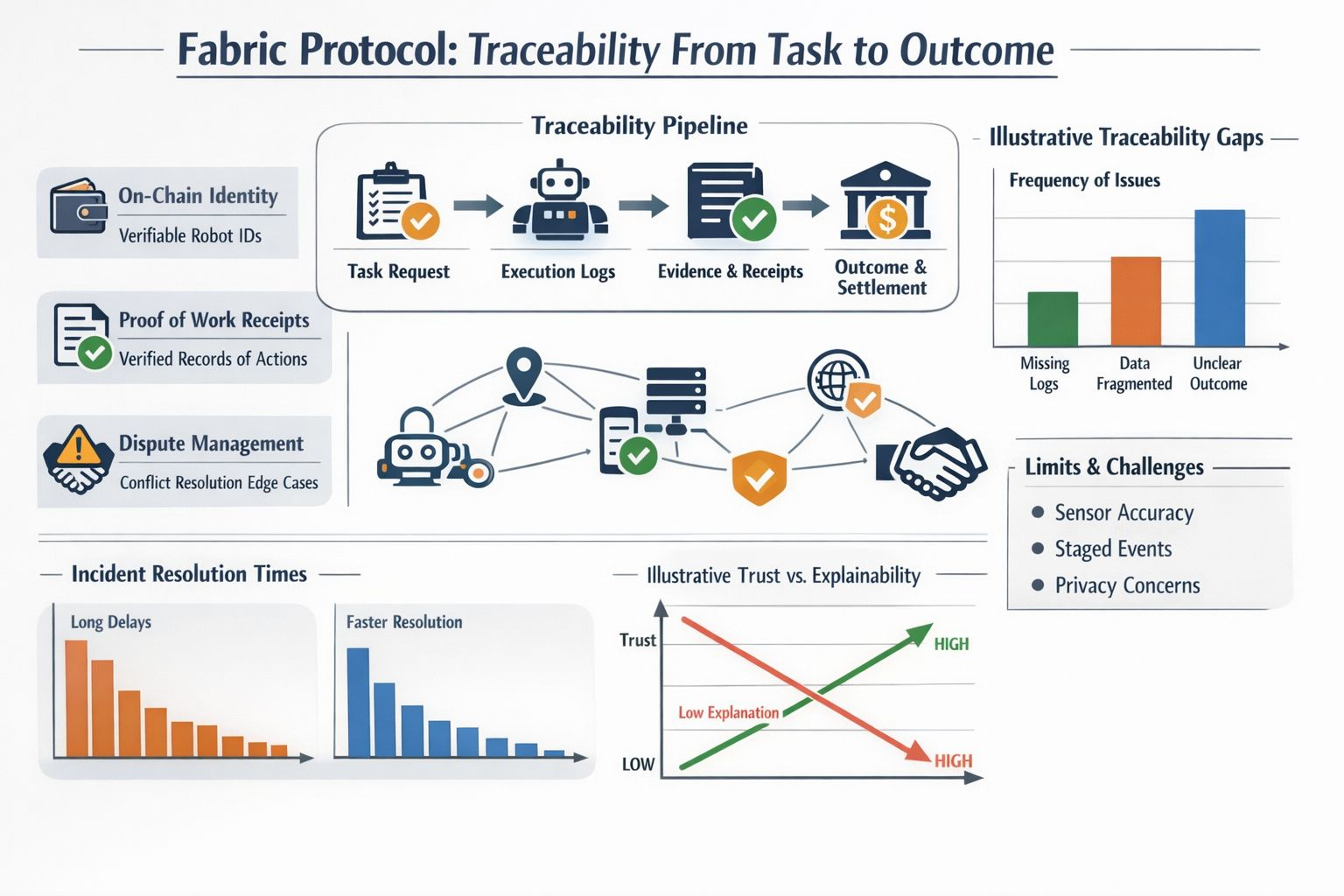
That is why I have been paying attention to Fabric Protocol because it keeps circling back to that question. It is trending right now because it paired its robot economy idea with the public launch of its ROBO token and an airdrop registration window in late February 2026 plus a wave of exchange listings that pulled the conversation into the mainstream. I do not follow it for the trading drama since I care more about what it reveals about traceability that links a task to evidence of work and to the outcome people actually feel.
In my day job traceability is usually a patchwork where a ticket lives in one system and logs live somewhere else while the most useful context sits in someones head until they quit or go on leave. That can work in software only workflows but robots and autonomous agents touch sidewalks and warehouses and hospitals so the cost of confusion rises fast. I do not just want to know that something failed because I also want a clean trail that shows who requested the work and what the system executed along with the data it recorded and the downstream decision or payment that depended on it.
Fabric's starting point is simple since machines cannot rely on the normal human rails such as bank accounts passports and informal accountability. They will need onchain wallets and identities if they are going to transact at scale and the foundation says the network starts on Base with a possible migration to its own chain. Even if I am skeptical of the ideology the operational upside is easy to see because a verifiable device identity lets me tie permissions software versions and responsibility to something specific rather than to a vague robot fleet label. During an incident I can ask concrete questions like which unit it was what code it was running and who authorized the task.
What keeps my attention is the idea of turning work into a receipt. Fabric descriptions lean on task verification and the ability to trace commands and operation logs with incentives paid for verified contributions and completion. If that design holds up it creates a direct line from a human request or a marketplace contract to a set of machine actions and then to settlement. It shrinks the space for we think it happened around then and replaces it with a record that shows who signed what and what depended on it.
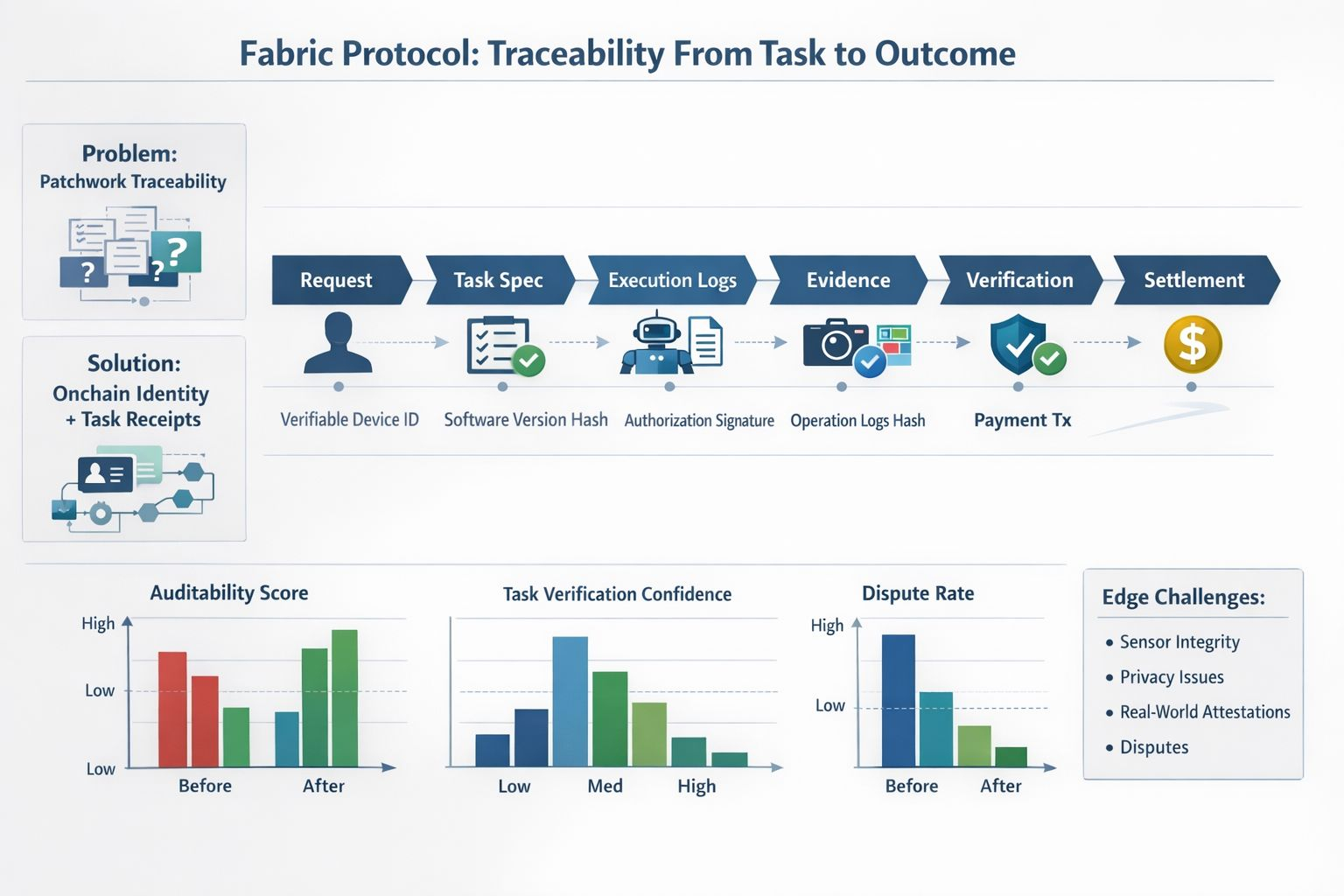
I have watched trust erode when outcomes cannot be explained and people will tolerate occasional mistakes from machines yet they do not tolerate silence blame shifting or endless back and forth over whose logs are the real ones. Traceability helps because it forces discipline and it pushes me to define the task set a clear completion standard capture evidence and attach a consequence that can be payment reward access or escalation. Fabric's token framework ties rewards to verified work and it names Proof of Robotic Work in its allocation which I read as a constraint rather than a slogan.
There are limits I cannot ignore because a ledger can store a log but it cannot guarantee the robot sensors were accurate or that a camera was not blocked or that someone did not stage the environment. The hard problems sit at the edges and they include attesting that a real world event happened protecting privacy when location data is involved and deciding what should be public versus what should be shared privately with partners or insurers. I am also curious how disputes will work since completed is easy to encode while completed well is where reality gets messy.
Even with those caveats the timing makes sense to me because the broader robotics and agent software world is moving from demos to controls such as audit trails safety cases compliance and insurance. When I hear teams argue about whether a robot really did a task I realize they are missing shared ground truth. A protocol that treats task to outcome as a first class object with identity evidence and settlement fits that shift and it will not replace engineering or good operations though it can reduce the politics in post mortems.
I am not looking for a future where everything is tokenized because I am looking for a boring reliable system where I can assign a task and know what done means and prove what happened without chasing ten teams across three tools. If Fabric Protocol pushes the field toward that kind of accountability I will keep reading even if I am still unsure how much of the promise survives first contact with the real world.