
Open Infrastructure: AI Aur Robotics Ke Liye Web3 Ka Naya Standard
@Fabric Foundation #ROBO $ROBO
The intersection of artificial intelligence, robotics, and blockchain is no longer just theoretical. As a researcher and active participant in the Web3 space, I recently took a deep dive into the Fabric Foundation and its native utility token, $ROBO. My goal was to step away from the usual crypto noise and evaluate the actual infrastructure being built. What I found is a profound shift in how we might coordinate machine economies in the near future. This is a real-time, sober review of what Fabric Foundation is actually executing, based strictly on their whitepaper, smart contract architecture, and recent institutional capital flows.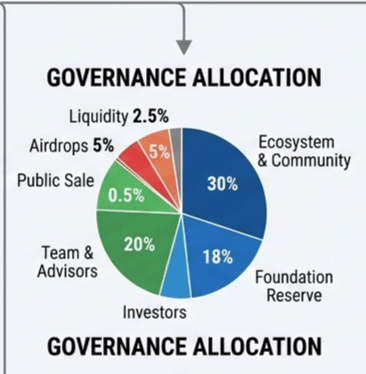
The Foundation: Beyond Siloed Hardware
When you read the Fabric Foundation whitepaper, the core problem they address is immediately clear: isolation. Currently, robotic systems operate in closed loops. A robot manufactured by one mega-corporation cannot seamlessly communicate, transact, or collaborate with a machine from another. The software, data and economic value are entirely centralized.
Fabric introduces a decentralized open network designed specifically as the coordination layer for intelligent machines. By leveraging blockchain technology initially deploying on the Base network with a roadmap for a custom Layer 1 Fabric gives these machines on-chain identities. 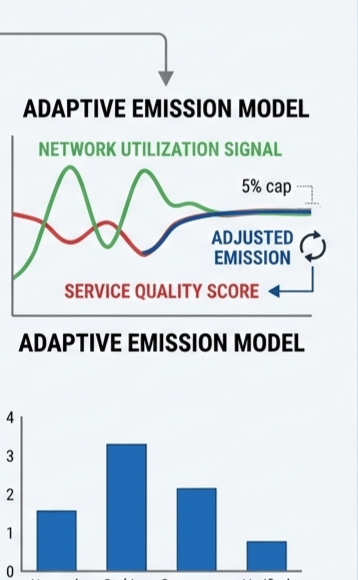 This means a robot is no longer just a piece of hardware; it becomes an autonomous economic actor equipped with a wallet, capable of signing smart contracts and paying for its own maintenance, charging, and API access without human intervention.
Institutional Trust: The VC Landscape
The narrative around Web3 infrastructure often gets clouded by speculative trading, but the capitalization table for Fabric Foundation tells a different, more grounded story. The project has secured significant backing from heavyweights like Pantera Capital, Coinbase Ventures, and Digital Currency Group (DCG).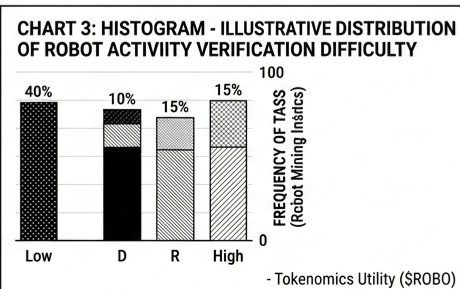
When institutions of this caliber deploy capital into a foundational layer, they are not looking for a quick retail flip. They are betting on the long-term necessity of a decentralized physical infrastructure network (DePIN). Pantera, Coinbase, and DCG recognize that if robots are to become a ubiquitous part of the global workforce, the underlying payment and identity rails cannot be owned by a single tech monopoly. Their investment validates the structural need for an open-source, trustless environment where machines can operate securely.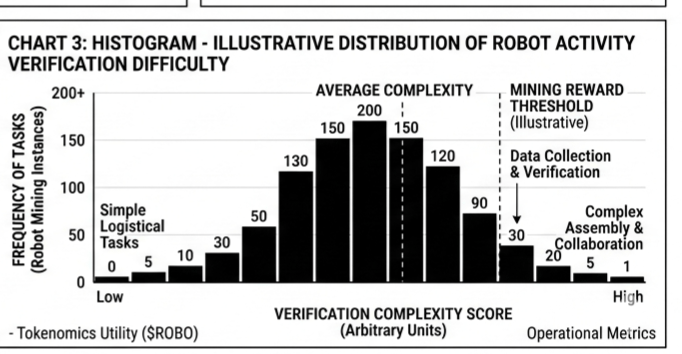
Mining Reimagined: Proof of Robot Work
One of the most critical aspects of the Fabric ecosystem is its approach to mining and network security. Forget the traditional algorithms where massive server farms burn electricity to solve cryptographic puzzles. The Fabric protocol introduces a concept that redefines mining for the physical world: Proof of Robot Work (PoRW).
In this system, mining is the execution of productive, real-world labor. When a robot completes a verifiable task—whether it is an autonomous delivery, warehouse logistics, or data collection—the action is recorded and verified on-chain. Smart contracts dictate the terms, and once multi-model consensus confirms the job is done, the machine or its owner is compensated. This provides a transparent, tamper-proof ledger of physical work. For anyone analyzing the smart contract infrastructure, this is where the true utility lies. It bridges digital verification with physical execution, ensuring that the token is backed by actual economic output rather than speculative momentum.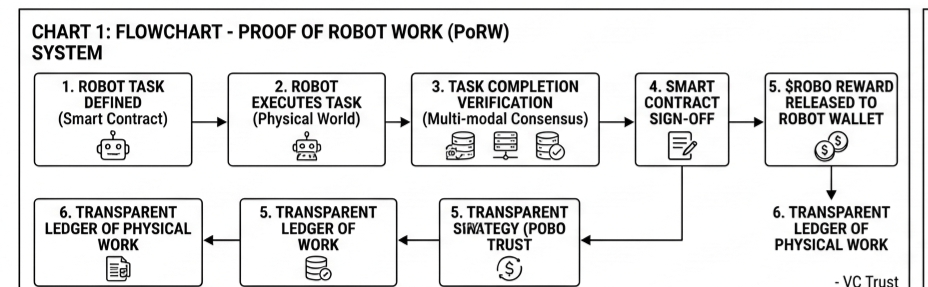
Real-Time Trading Experience and Tokenomics
From a trading and ecosystem analysis perspective, approaching $ROBO requires an understanding of its utility rather than treating it as a fleeting trend. The total supply is capped at 10 billion tokens. These tokens are the lifeblood of the Fabric economy, used for machine-to-machine payments, network fees, staking for robot participation, and decentralized governance.
Looking at the current market structure, the token is absorbing the reality of being a pure utility play. In my real-time experience observing the order books and on-chain liquidity, the volume is driven by utility accumulation and ecosystem building rather than pure retail speculation. The vesting schedules for early investors, including the VCs mentioned above, are structured with long lock-up periods, ensuring that the circulating supply is not suddenly diluted.
While my professional focus often circles around the long-term viability of assets like $ROBO, it is also important to maintain a diverse perspective on the broader Web3 ecosystem. Exploring how different layer-1 solutions and specialized tokens, such as Plasma ($XPL), handle scalability can provide valuable contrast when evaluating Fabric's future transition to its own native chain.
Conclusion
The Fabric Foundation is not promising an overnight revolution, and it certainly does not require overblown hype to justify its existence. It is methodically building the plumbing for the upcoming robot economy. By combining decentralized identities, smart contract execution, and the innovative Proof of Robot Work, it provides a legitimate, open-source alternative to centralized AI monopolies. The backing from Pantera, Coinbase, and DCG simply underscores the gravity of the problem being solved. For those willing to look past the daily price action and study the architectural rails, Fabric represents a serious, foundational shift in Web3 and robotics.
Disclaimer: This article is for informational and educational purposes only and does not constitute financial, investment, or trading advice. Cryptocurrency markets are highly volatile, and investing in digital assets carries significant risk. Always conduct your own thorough research and consult with a licensed professional before making any financial decisions.