
I’m going to start with a thought that’s been bothering me.
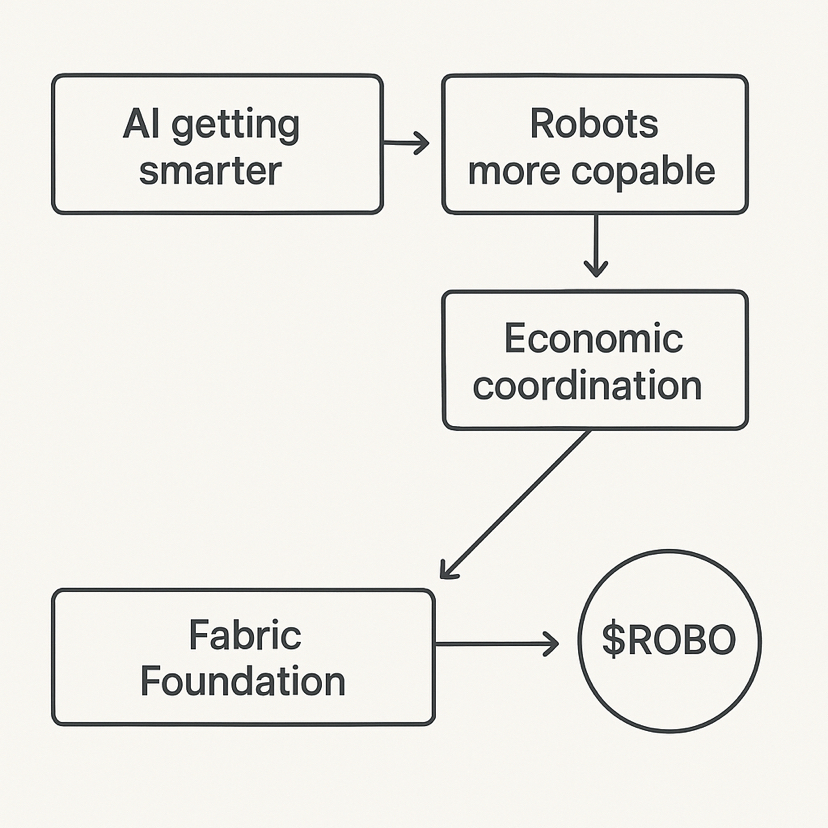
We talk a lot about AI getting smarter.
We talk about robots becoming more capable.
But almost nobody talks about how these systems will coordinate economically.
That gap is where the Fabric Foundation seems to be placing its bet.
And I’m not sure the market knows what to do with that.
Because coordination infrastructure is uncomfortable to evaluate. It’s not flashy. It doesn’t produce immediate demand. It sits quietly waiting for a future that may or may not arrive on schedule.
Which makes $ROBO a strange thing to analyze.
Most traders are still asking the usual questions.
Will liquidity increase?
Will listings improve visibility?
Is momentum building?
Those are fair questions. But they feel slightly misaligned with the actual premise here.
Fabric isn’t trying to build attention.
It’s trying to build a layer that only becomes obvious after machines start interacting economically.
That timing problem is what makes this thesis uneasy.
I’ve watched this pattern before in crypto.
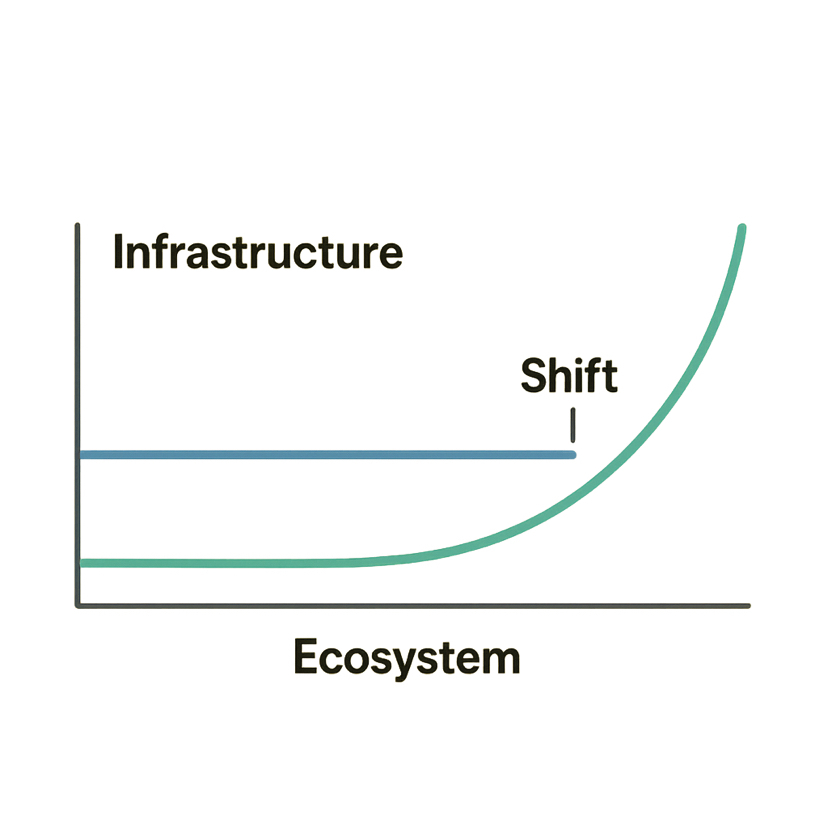
Infrastructure appears long before the ecosystem that justifies it. For a while, it looks unnecessary. Overbuilt. Maybe even misguided.
Then one shift happens — a new class of applications, a new behavior pattern — and suddenly the infrastructure looks prescient instead of premature.
But predicting that shift is where things get dangerous.
Because for every infrastructure layer that eventually mattered, several arrived too early and quietly faded away.
This is where I feel conflicted about $ROBO.
The logic makes sense if autonomous systems need neutral coordination. If machines transact across networks, they need identity, settlement rules, and governance logic that isn’t owned by a single company.
But that’s a conditional future.
And conditional futures are difficult to price.
Another thing that makes me cautious: machine economies don’t care about narratives.
Humans chase stories. Machines follow incentives and protocol guarantees. If Fabric’s model isn’t the most efficient path, autonomous systems will simply ignore it.
No community thread can change that.
Which means the real evaluation isn’t happening on social platforms. It’s happening quietly in developer decisions and system architecture.
And most of us don’t see those signals until much later.
So I’m left in an uncomfortable position.
I don’t see enough evidence to call this inevitable.
But I also see enough structural reasoning that ignoring it feels careless.
Some projects are easy to dismiss.
This one isn’t.
It sits in that strange middle space where the idea feels slightly early, slightly ambitious… but not entirely unrealistic either.
And when something lives in that space, the smartest move sometimes isn’t conviction.
It’s observation.
For now, I’m watching one thing.
Not price.
Not hype.
Just whether autonomous systems start needing coordination layers that look suspiciously like what Fabric is trying to build.
If that signal appears, the conversation changes quickly.
If it doesn’t…
I’m not sure the market will even remember this thesis existed.
#ROBO @Fabric Foundation $ROBO
