
@Fabric Foundation I’ve spent the last four years watching the crypto market evolve, and one lesson keeps repeating itself: popularity does not automatically mean necessity. Many projects gain attention and excitement long before anyone proves they are actually needed. Most investors only realize this after they’ve already paid the price.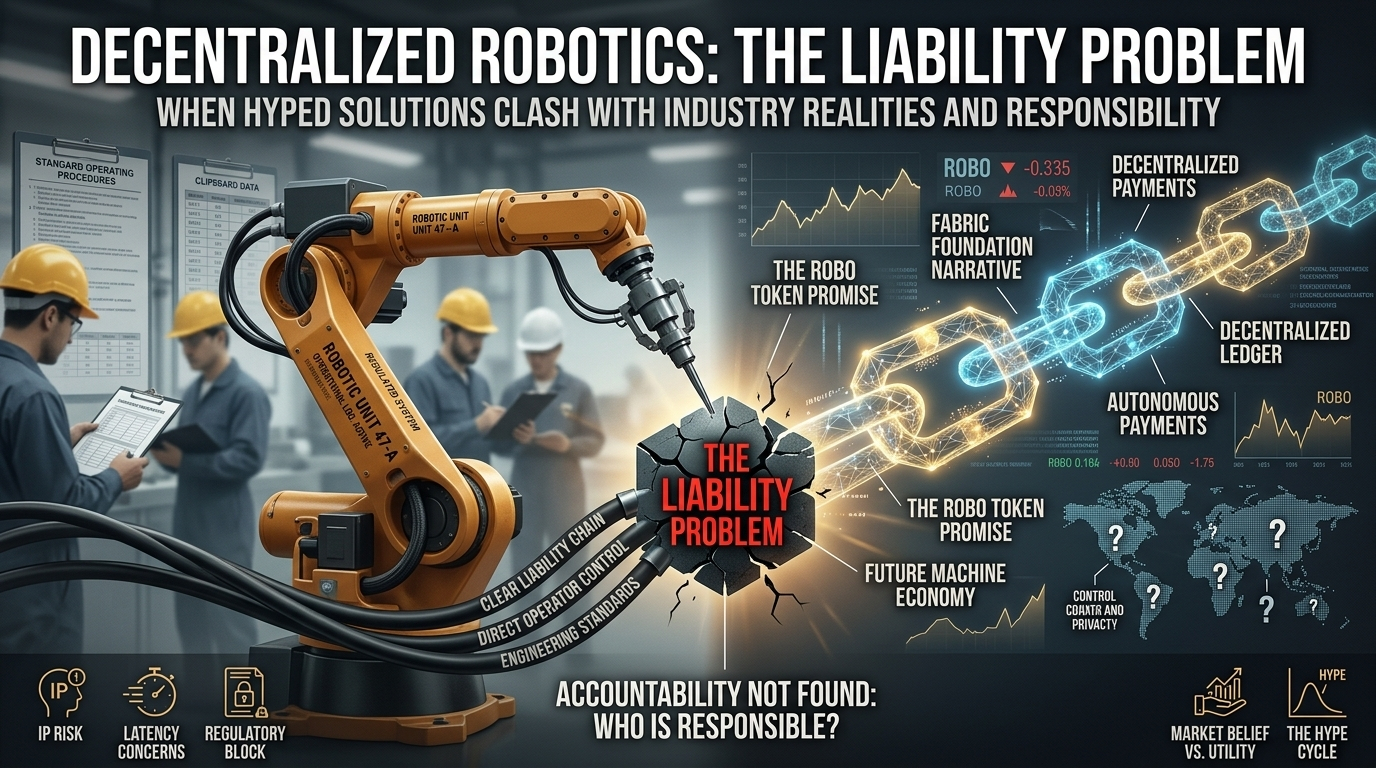
When the price of ROBO suddenly jumped around 55% and discussions about it started spreading across platforms like Binance Square, I decided to step away from the hype. Instead of reading more posts, I did something I’ve learned to do over time: I spoke with people who actually work in robotics.
The responses I received were not what I expected.
I had conversations with two professionals outside the crypto industry. One worked in industrial automation, and the other in service robotics. I asked both of them a simple question without mentioning blockchain or crypto: would your company consider using a system where machines could have their own digital identities and perform payments autonomously?
Both answers were immediate and direct: no.
There was no hesitation or “maybe in the future.” Just a clear no.
Their reasoning was surprisingly practical. Robotics companies treat behavioral data as highly sensitive information. The way machines operate, respond to environments, and make decisions is valuable intellectual property. Sharing that data across an open decentralized system would introduce risks they are not willing to take.
Speed was another concern. Robots often need to respond to inputs in real time. Even today’s most advanced blockchain networks struggle to match the latency requirements needed for real-world robotic operations.
But the most serious issue they raised was liability.
In traditional robotics systems, responsibility is clearly defined. If a machine causes harm or malfunction, the company operating the robot must be able to determine exactly who is accountable. A decentralized system could blur those lines of responsibility. If control or decision-making is distributed across a network, determining liability becomes complicated—something companies, regulators, and insurers are unlikely to accept.
Of course, two conversations are not enough to represent an entire industry. But they highlight an important possibility: projects like Fabric Foundation might be attempting to solve problems that they believe exist in robotics, rather than problems that the robotics industry itself actually experiences.
This kind of mismatch happens often in crypto.
It doesn’t necessarily mean the builders are incompetent. More often, it means developers are applying blockchain solutions to real-world industries without verifying whether those industries actually need those solutions.
Historically, the crypto ecosystem has been most successful when solving its own internal problems. For example, Decentralized Finance emerged because crypto users needed financial services within blockchain environments. Similarly, the rise of Non‑Fungible Tokens addressed specific needs of digital artists and online creators.
When crypto builds tools for crypto users, the demand is clear.
Building tools for industries that already have working systems is much harder.
Industrial robotics is not a sector waiting for blockchain to rescue it. It is already built on decades of engineering, regulation, safety standards, and operational systems. Machines already have serial numbers, operational logs, and detailed usage records that companies and regulators recognize. These systems may not be perfect, but they function well enough within existing legal and insurance frameworks.
If Fabric wants to succeed, it needs to demonstrate something concrete. It must prove—not just claim—that its system solves a problem the current systems cannot solve, and that companies outside the crypto space actually gain enough benefit to justify the cost of adopting it.
Right now, there is little evidence that this is happening.
This does not mean the price of ROBO cannot rise. Markets and utility are two different things, and they often move independently. Crypto history has shown many times that projects with limited real-world usage can still achieve large market valuations simply because people believe in the narrative.
Stories can sustain a market for a long time.
The risk appears when investors confuse belief with value. When a token rises quickly, it is easy to assume the price reflects present usefulness. In reality, the price may already be assuming that future adoption will occur.
With ROBO, much of the current valuation appears to be based on expectations about a future “machine economy.” Investors buying today are essentially betting that machines will eventually require decentralized identity and payment systems—and that Fabric will be the platform that provides them.
That bet could succeed. Infrastructure bets sometimes do.
But they require patience, careful risk management, and a clear plan for what to do if the assumption turns out to be wrong.
The real danger comes from buying because the price is rising, holding because the narrative sounds convincing, and selling only after the story collapses—usually after early investors have already exited.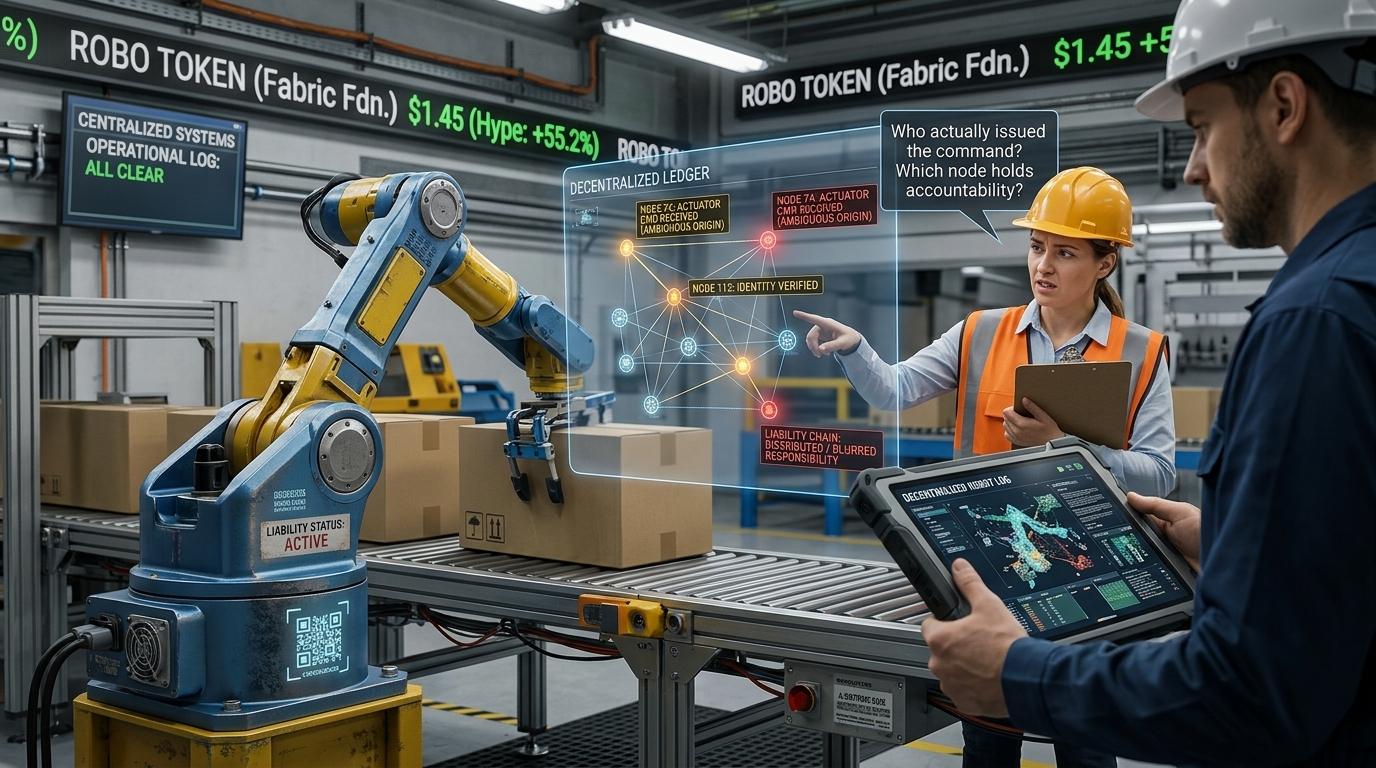
After four years in crypto, I’ve learned that complex analysis and tokenomics models are not always the most reliable guides. Instead, I keep returning to one simple question:
What real problem does this project solve today for people outside the crypto ecosystem?
For ROBO, I cannot currently answer that question.
That does not mean an answer will never exist. Technology evolves, and new use cases can emerge over time. But until the need becomes clear, paying today’s price for a possibility that may appear years later—or never appear at all—remains a difficult decision.
Sometimes the most rational strategy is not to rush in.
Waiting for clarity is not pessimism. In many cases, it is simply the most reliable way to avoid expensive mistakes.