
i spent six months contributing to a DAO that had beautiful governance infrastructure. voting portal, delegation system, proposal templates, quorum requirements. the whole architecture of democratic participation. then one day the core team made a decision that materially affected every token holder without a vote. when community members asked why, the answer was simple. that decision fell outside the governance scope. always had.
nobody had read the governance scope document carefully enough to know that before it mattered.
that memory comes back when i read how veROBO governance is described in Fabric's documentation.
the mechanic is genuinely well-designed. lock ROBO tokens for a defined period, receive veROBO in proportion to tokens locked and duration committed. longer lock equals more voting weight. the system rewards long-term alignment over short-term speculation. token holders who commit capital for extended periods gain more influence over protocol direction. clean incentive design on the surface.
but the surface is where most people stop reading.
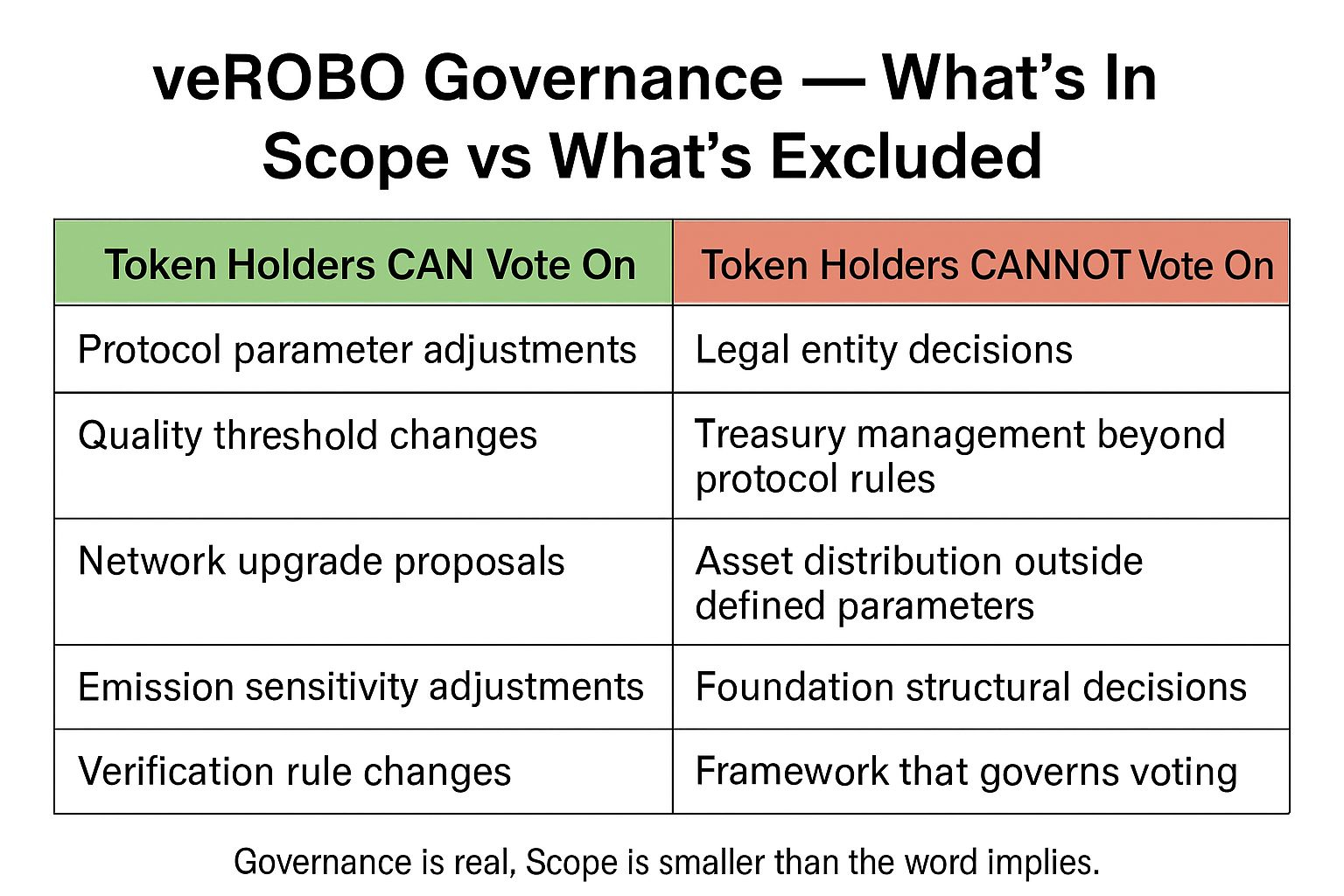
veROBO voting rights cover protocol parameter adjustments. quality threshold changes. network upgrade proposals. emission sensitivity adjustments within defined ranges. these are real decisions with real consequences for how the network operates day to day. holders who engage with governance are genuinely influencing meaningful operational variables.
what veROBO does not cover is equally important to understand.
governance rights explicitly do not extend to legal entity decisions. treasury management beyond protocol-specified rules. distribution of assets outside defined parameters. structural decisions about the foundation itself. the whitepaper describes these exclusions clearly. the Fabric Foundation as a legal entity operates under its own governance structure. token holders vote on protocol parameters within a framework the foundation has established. they do not vote on the framework itself.
the distinction matters more than it sounds.
imagine a corporation where shareholders vote on quarterly dividend policy but cannot vote on whether to issue new shares, acquire competitors, change the corporate structure, or replace the board. the voting rights are real. the exclusions are also real. and the exclusions cover exactly the decisions that determine long-term value distribution.
what Fabric gets right here is the transparency. the governance scope is documented not hidden. the veROBO time-lock design creates genuine alignment between voting power and long-term commitment — someone locking tokens for two years has meaningfully different incentives than someone who can exit tomorrow. and protocol parameter governance matters — quality thresholds, emission sensitivity, verification rules collectively shape how value flows through the network.
but here's what i keep coming back to.
most ROBO holders buying governance exposure assume they're getting something closer to shareholder voting rights. influence over direction. accountability over key decisions. the ability to course-correct if the protocol moves in a direction that harms holders. veROBO delivers something more specific and more limited than that assumption. it delivers operational parameter governance within a structural framework holders cannot vote to change.
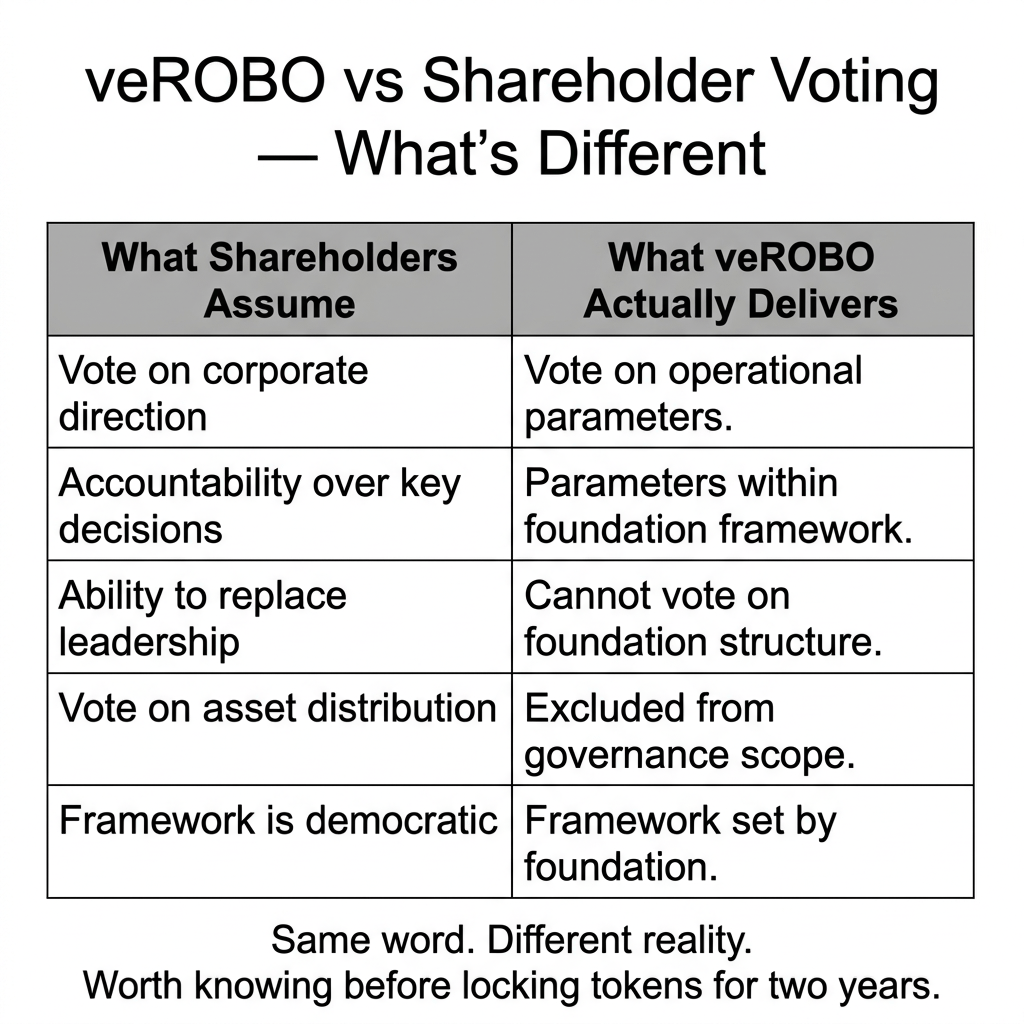
knowing the difference between those two things before you lock your tokens for two years seems worth the time it takes to read section 12 carefully.
the governance is real. the scope is just smaller than the word governance implies. 🤔
#ROBO @Fabric Foundation $ROBO
