In recent years, machines that can sense, move, and interact with the world around them have moved from science fiction into everyday life. From warehouse helpers and medical assistants to small home devices that vacuum floors or mow lawns, robotics is becoming part of modern society. Yet behind many of these innovations lies a powerful idea that is quietly transforming the field: open robotics. This approach focuses on sharing knowledge, tools, and designs so that researchers, engineers, and communities can work together to build better robotic systems. Instead of being controlled by a few private laboratories or companies, robotics becomes a shared effort that anyone with curiosity and skill can contribute to.
Open robotics is based on the principle of openness. In traditional development models, companies often keep their designs, software, and hardware secret in order to maintain a competitive advantage. Open robotics takes a different path. Engineers publish their code, system designs, and research publicly so others can use, modify, and improve them. This collaborative model allows progress to happen much faster than when individuals work in isolation. When one group solves a problem, the solution becomes available to thousands of others who can build upon it.
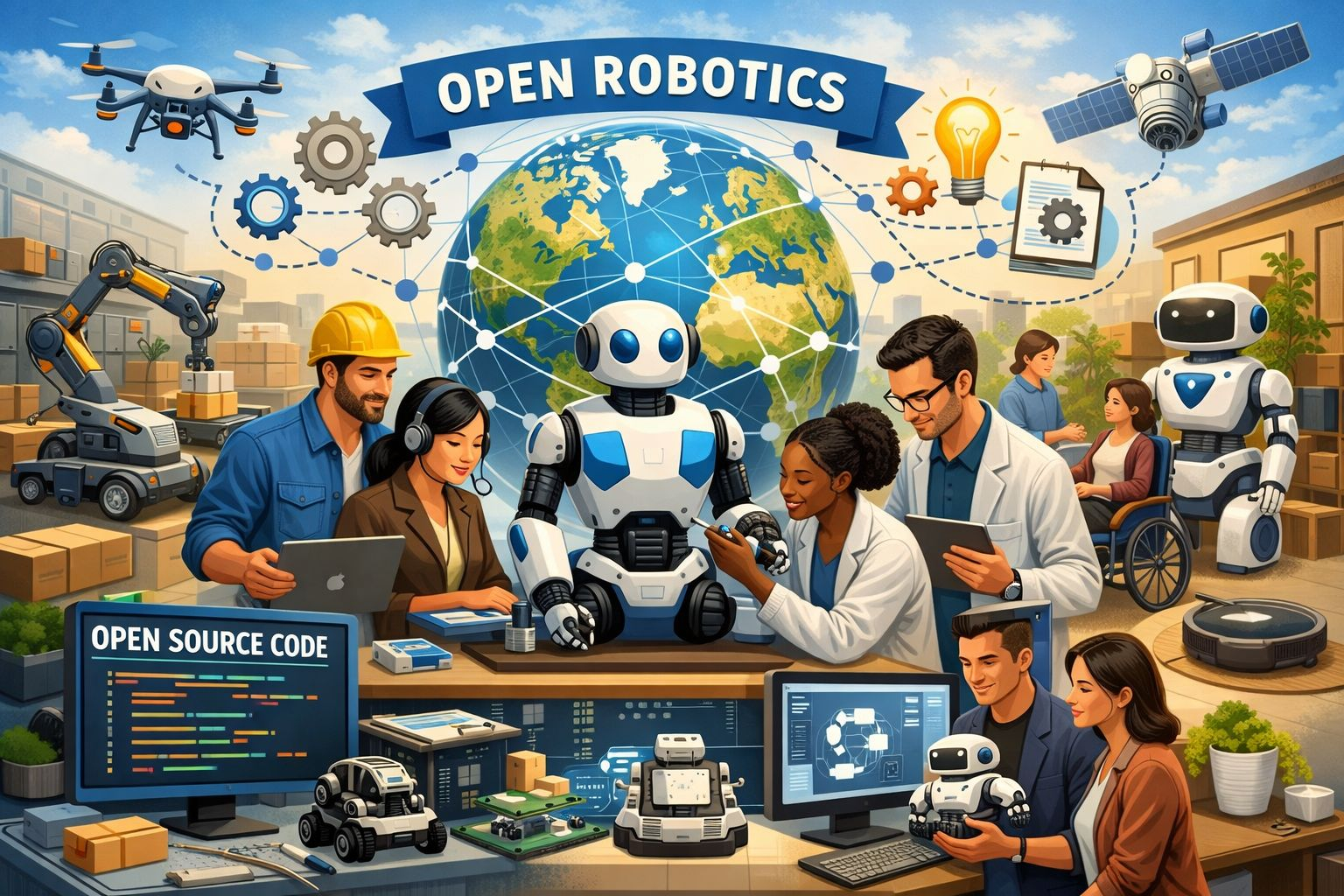
This approach has deep roots in the broader open technology movement, where shared knowledge has driven some of the most important innovations of the digital age. When robotics follows the same philosophy, it becomes easier for students, researchers, and small startups to enter the field. They no longer need enormous budgets to begin experimenting. Instead, they can use existing tools and frameworks as a starting point, saving years of development time and focusing on new ideas rather than rebuilding basic systems from scratch.
One of the most important benefits of open robotics is accessibility. Robotics has traditionally been an expensive and complex discipline that only well-funded institutions could explore. Open tools reduce these barriers by making high-quality resources available to anyone with an internet connection. Students in universities, independent inventors, and small research groups can all participate in building new machines. This wider participation leads to greater creativity, because people from different backgrounds bring new perspectives to the same challenges.
Another advantage lies in transparency. When designs and code are shared openly, others can examine how systems work and suggest improvements. Problems can be identified and fixed more quickly because many eyes are reviewing the same work. This leads to safer and more reliable machines. Transparency also builds trust. When people understand how robotic systems function, they feel more confident using them in daily life.
Open robotics also encourages faster innovation. Instead of every organization building its own tools from the ground up, teams can focus on solving specific challenges. One group may specialize in navigation systems, another in robotic arms, and another in sensors. Because their work is shared, these pieces can be combined into powerful systems. The result is a collaborative ecosystem where progress accelerates naturally.
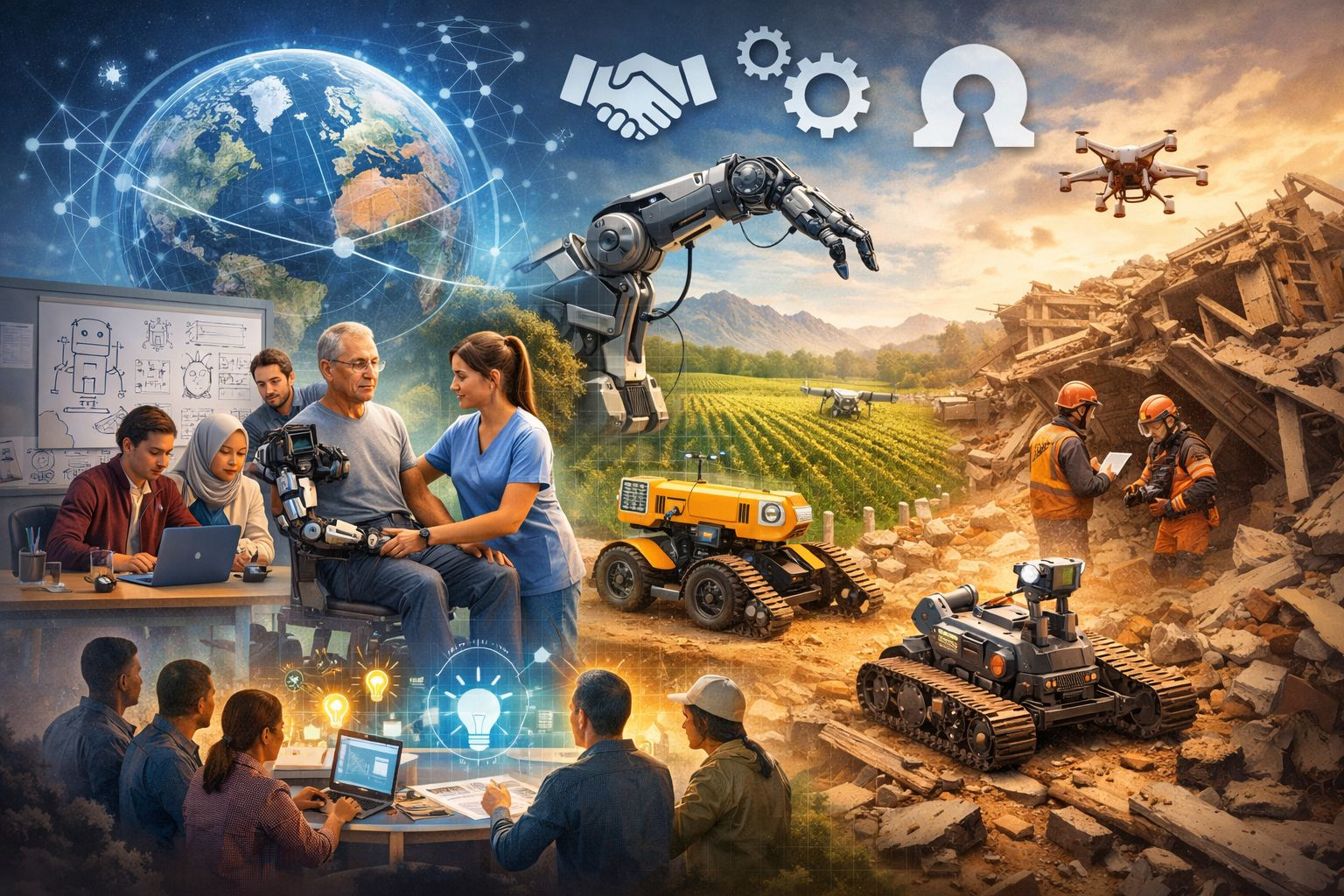
The real-world impact of this approach is already visible in many areas. In education, open robotics platforms allow students to learn by building and experimenting with real machines. Schools and universities can create laboratories where learners design robots, test ideas, and understand complex engineering principles through hands-on experience. This type of learning prepares the next generation of innovators who will continue advancing the field.
In healthcare, open robotics can help researchers develop affordable medical devices and rehabilitation tools. By sharing designs, engineers can collaborate across borders to create systems that assist doctors, therapists, and patients. For example, robotic arms designed for physical therapy or mobility assistance can be improved by researchers worldwide, making them more effective and accessible to hospitals that may not have large budgets.
Agriculture is another area where open robotics is making a difference. Farmers are beginning to use robotic systems to monitor crops, plant seeds, and manage resources more efficiently. When designs are openly shared, smaller farms can adapt these technologies instead of relying solely on expensive commercial solutions. This helps communities improve food production while reducing waste and environmental impact.
Disaster response also benefits from open collaboration. Robots that can enter dangerous environments—such as collapsed buildings or flooded areas—are often developed by teams that share their findings publicly. This allows rescue organizations to access reliable designs and adapt them for emergency situations. The ability to quickly build or modify robots for specific missions can save lives when time is critical.
Perhaps the most powerful aspect of open robotics is the culture it creates. Instead of competition being the only driving force, collaboration becomes equally important. Engineers and researchers often contribute improvements not only for personal recognition but also for the advancement of the entire field. Communities form around shared platforms, exchanging ideas, solving problems together, and supporting newcomers who want to learn.
Looking ahead, the importance of open robotics will likely grow even further. As machines become more capable and begin working alongside humans in everyday environments, the need for reliable, transparent, and adaptable systems will increase. Open collaboration provides a pathway for developing these systems responsibly while ensuring that the benefits are shared widely rather than concentrated in a few organizations.
The future of robotics will not be shaped by a single company or country. It will be built by thousands of minds working together across universities, startups, research labs, and communities. Open robotics makes this global collaboration possible by turning knowledge into a shared resource instead of a guarded secret.
In many ways, $ROBO open robotics represents more than a technical strategy. It reflects a vision of how innovation should happen in the modern world—through cooperation, shared learning, and collective progress. By opening the doors of robotics development to a broader community, we allow creativity to flourish and ensure that these powerful machines are developed in ways that benefit society as a whole.
As robotics continues to expand into new industries and daily life, the principles of openness may become one of the most important forces guiding its growth. Through shared knowledge, collaboration, and accessibility, open robotics is helping shape a future where technological progress is not limited to a few experts but is driven by a global community working together.