

When Machines Become Economic Actors
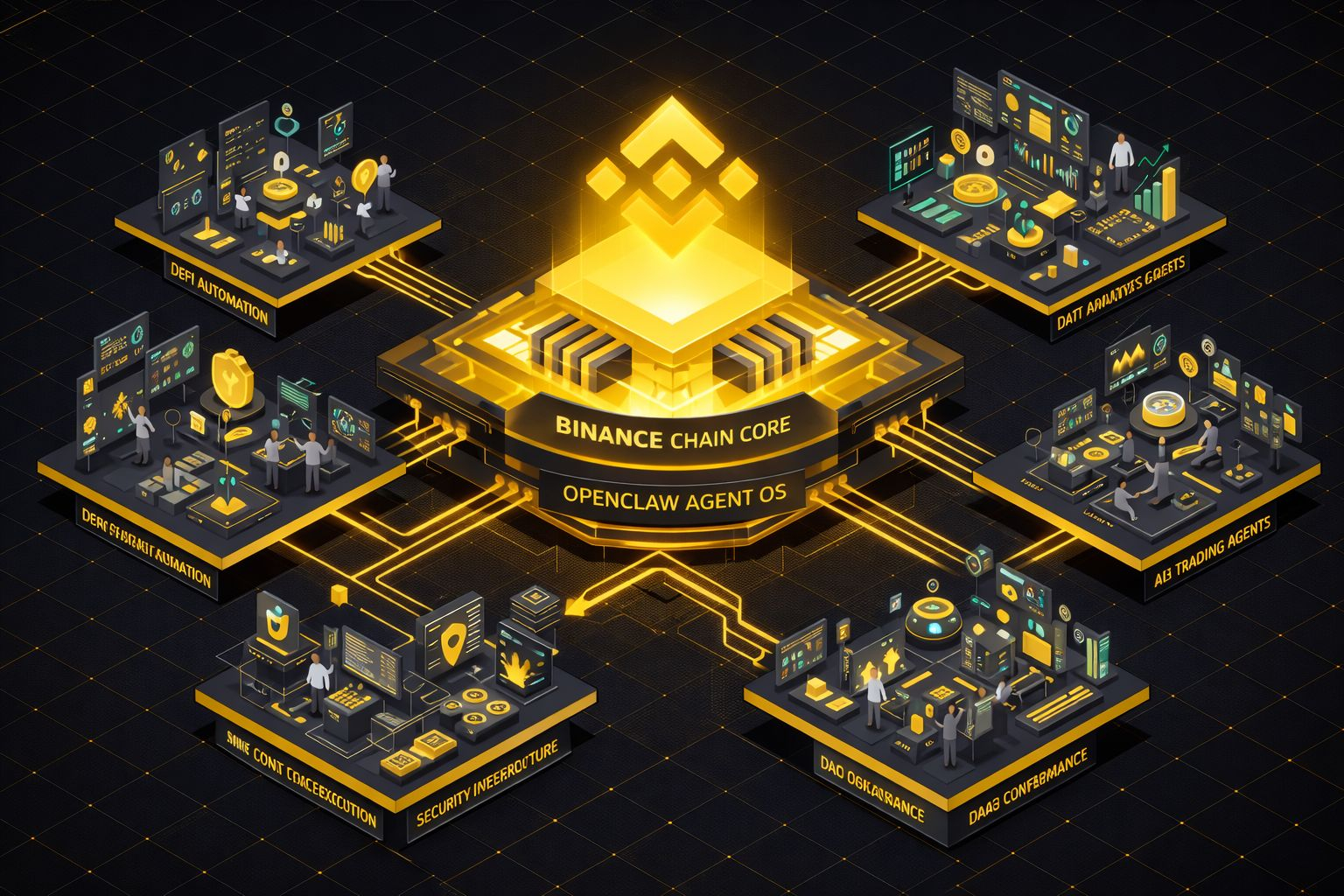
The internet has always evolved through waves.
From static websites (Web1) → user-generated platforms (Web2) → ownership-driven networks powered by blockchain (Web3).
Now, a new shift is quietly emerging:
Web4
But Web4 is not simply a new version number.
It represents something deeper.
👉 The moment AI agents become autonomous economic participants on the internet.
Instead of humans interacting directly with platforms, AI agents may soon act on our behalf — trading, managing assets, executing contracts, and participating in decentralized governance.
And that changes everything.
What Is Web4, Really?
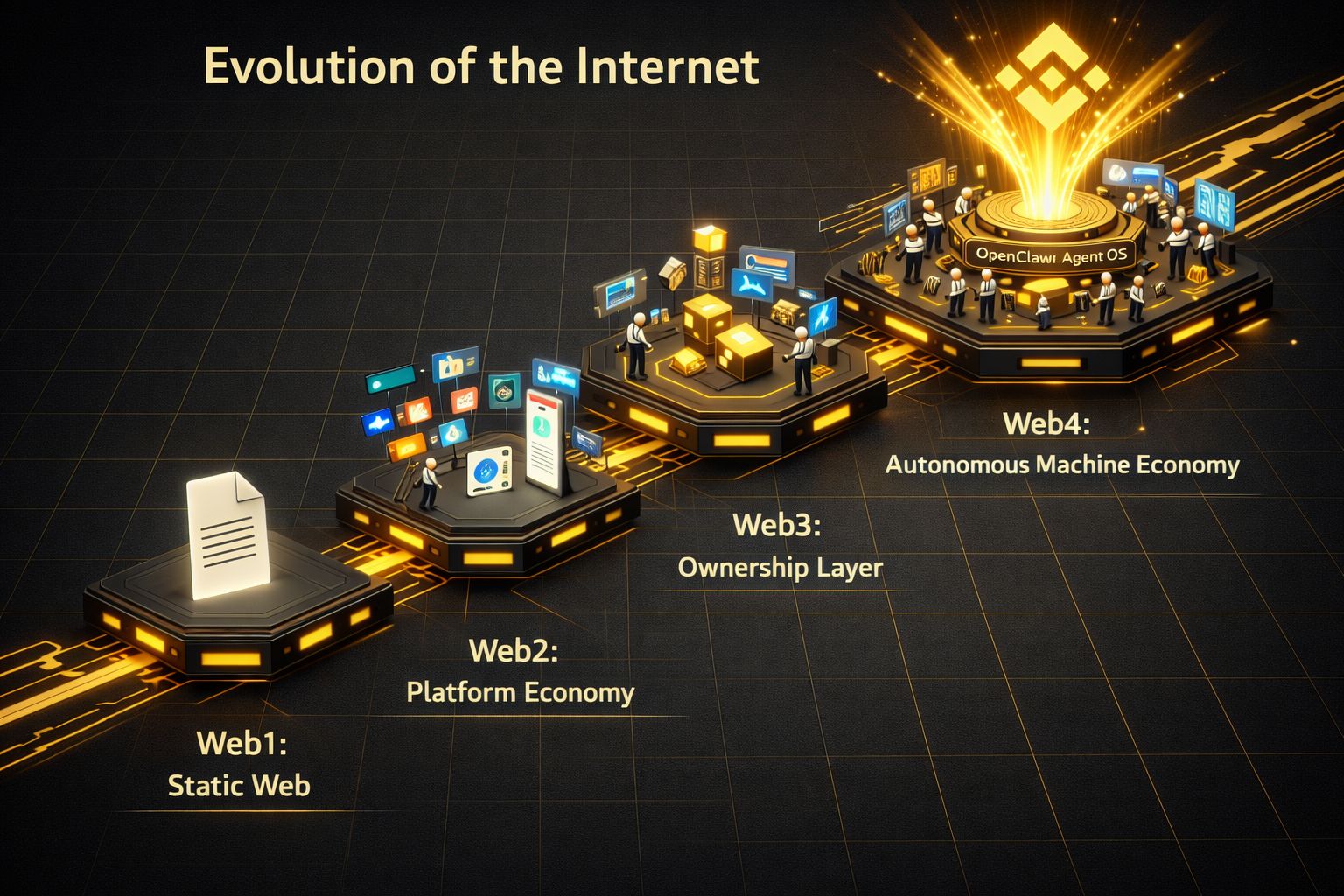
Web4 is the convergence of AI agents and blockchain infrastructure that enables autonomous digital actors to participate in economic systems.
Evolution of the Internet
Web1
Read-only internet
Static websites
Web2
Social and interactive
Platforms dominate
Web3
Ownership and decentralization
Users control wallets and assets
Web4
Autonomous economic networks
AI agents become participants
While Web3 focuses on giving humans ownership,
Web4 focuses on giving machines agency.
This is a fundamental shift.
In Web3
Humans own wallets
Humans sign transactions
Humans interact with protocols
In Web4
AI agents can hold wallets
AI agents can execute transactions
AI agents can optimize strategies in real time
The internet moves from human-operated systems to machine-participating economies.
This is not just a technological change.
👉 It is an economic transformation.
AI Agents: Tools or On-Chain Participants?
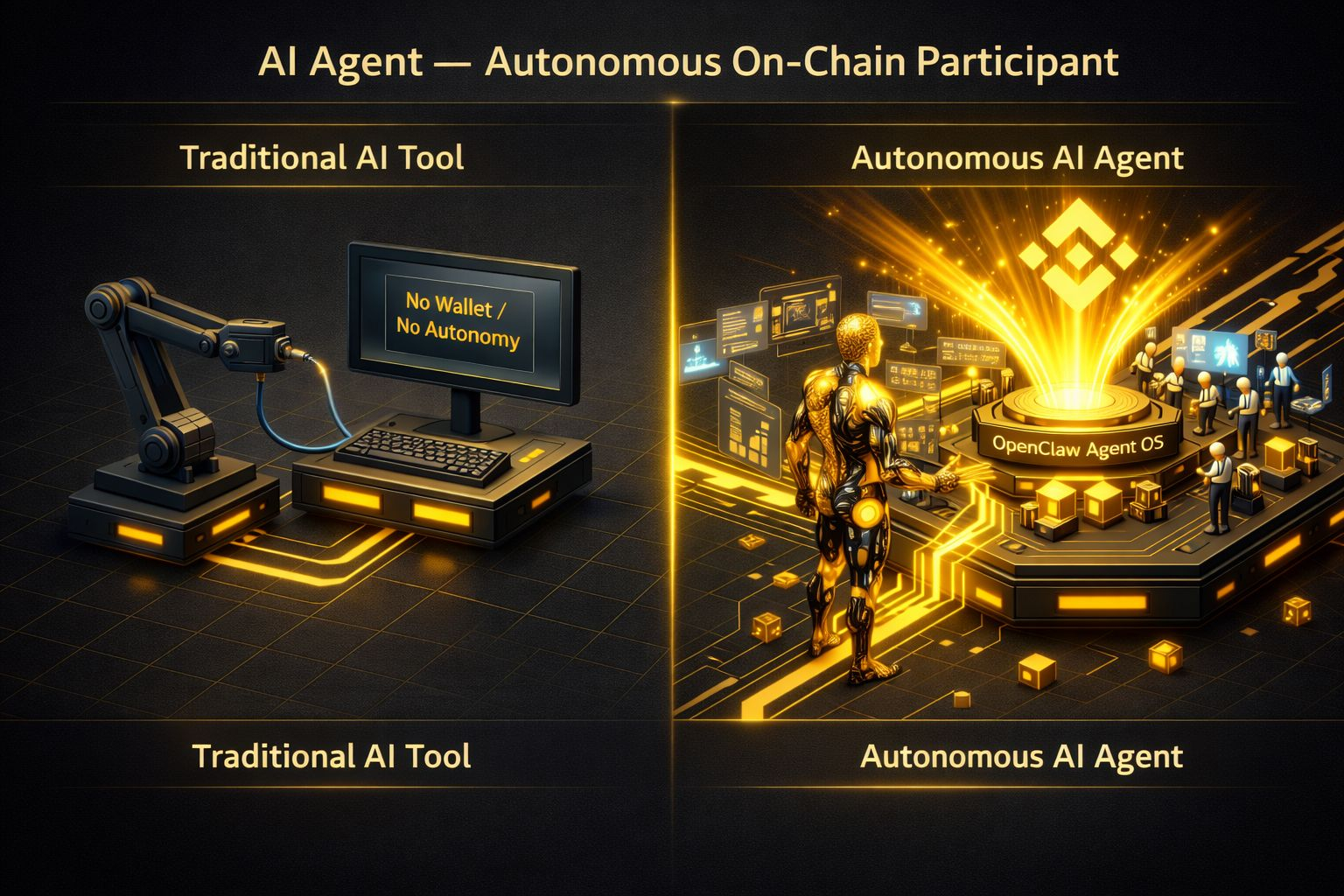
Today, most AI systems are still tools.
They assist humans.
Examples include:
Chatbots answering questions
Trading bots following rules
AI copilots generating content
But true AI agents are different.
A mature AI agent typically has four core capabilities:
1️⃣ Autonomy – makes decisions without constant human input
2️⃣ Memory – remembers context and past actions
3️⃣ Goal-oriented reasoning – pursues objectives
4️⃣ Execution ability – interacts with external systems
When such an agent can control a blockchain wallet, it becomes something entirely new.
It can:
Deploy smart contracts
Manage DeFi positions
Vote in governance systems
Execute arbitrage strategies
Coordinate with other agents
At that point, the AI is no longer just a tool.
👉 It becomes an on-chain participant.
However, several bottlenecks still remain before this vision becomes mainstream.
Key Bottlenecks Today
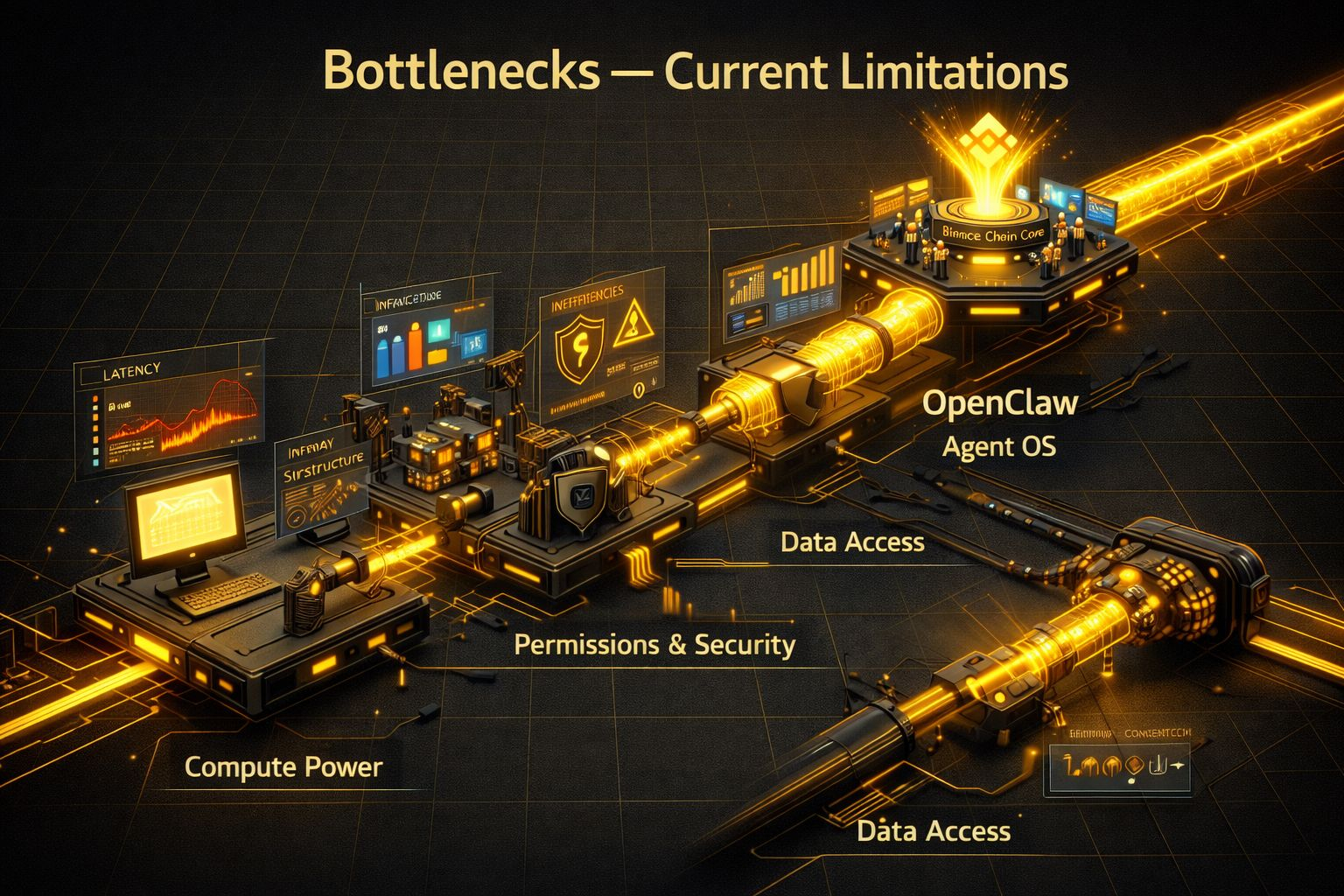
1️⃣ Compute Power
Autonomous agents require significant compute to reason and act continuously.
2️⃣ Infrastructure
Agents need reliable systems to interact with blockchains, APIs, and data streams.
3️⃣ Permissions & Security
If an AI agent controls assets, who is responsible if something goes wrong?
4️⃣ Data Access
Agents need real-time market data and on-chain information to operate effectively.
These challenges are exactly where new infrastructure layers are emerging.
The Agent Economy
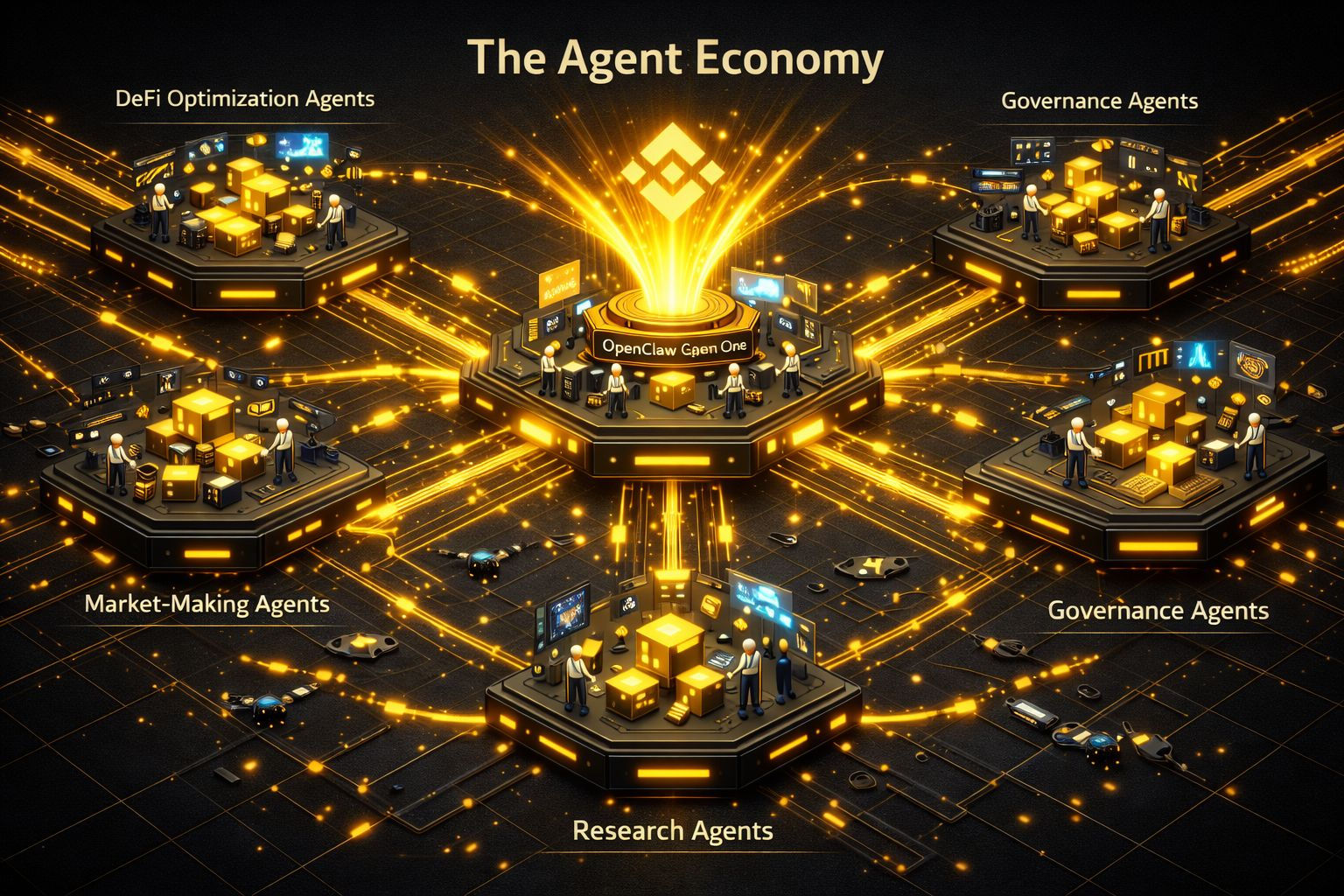
Once AI agents can safely operate on-chain, a new type of economy begins to form.
In this world:
AI agents trade against other agents
AI agents negotiate services
AI agents coordinate liquidity
AI agents deploy contracts automatically
Imagine thousands of specialized agents:
• DeFi optimization agents reallocating capital across protocols
• Market-making agents adjusting liquidity pools
• Governance agents analyzing proposals and voting strategically
• Research agents scanning on-chain data for opportunities
These agents could operate 24/7 without human intervention.
And because blockchain is programmable, agents can interact trustlessly.
This creates something entirely new:
👉 Machine-to-machine financial markets.
When Will This Happen?
The timeline may be closer than many people expect.
Within 2 Years
Early-stage AI agents will begin:
Managing wallets
Executing simple DeFi strategies
Performing automated governance analysis
Running arbitrage or trading logic
These agents will still be semi-supervised by humans.
Within 5 Years
We may see fully autonomous agents capable of:
Launching smart contracts
Negotiating services with other agents
Operating investment strategies independently
Running decentralized businesses
At that point, AI agents could represent a new class of economic actors.
Not companies.
Not humans.
But software entities with wallets, capital, and strategies.
The Missing Layer: Agent Infrastructure
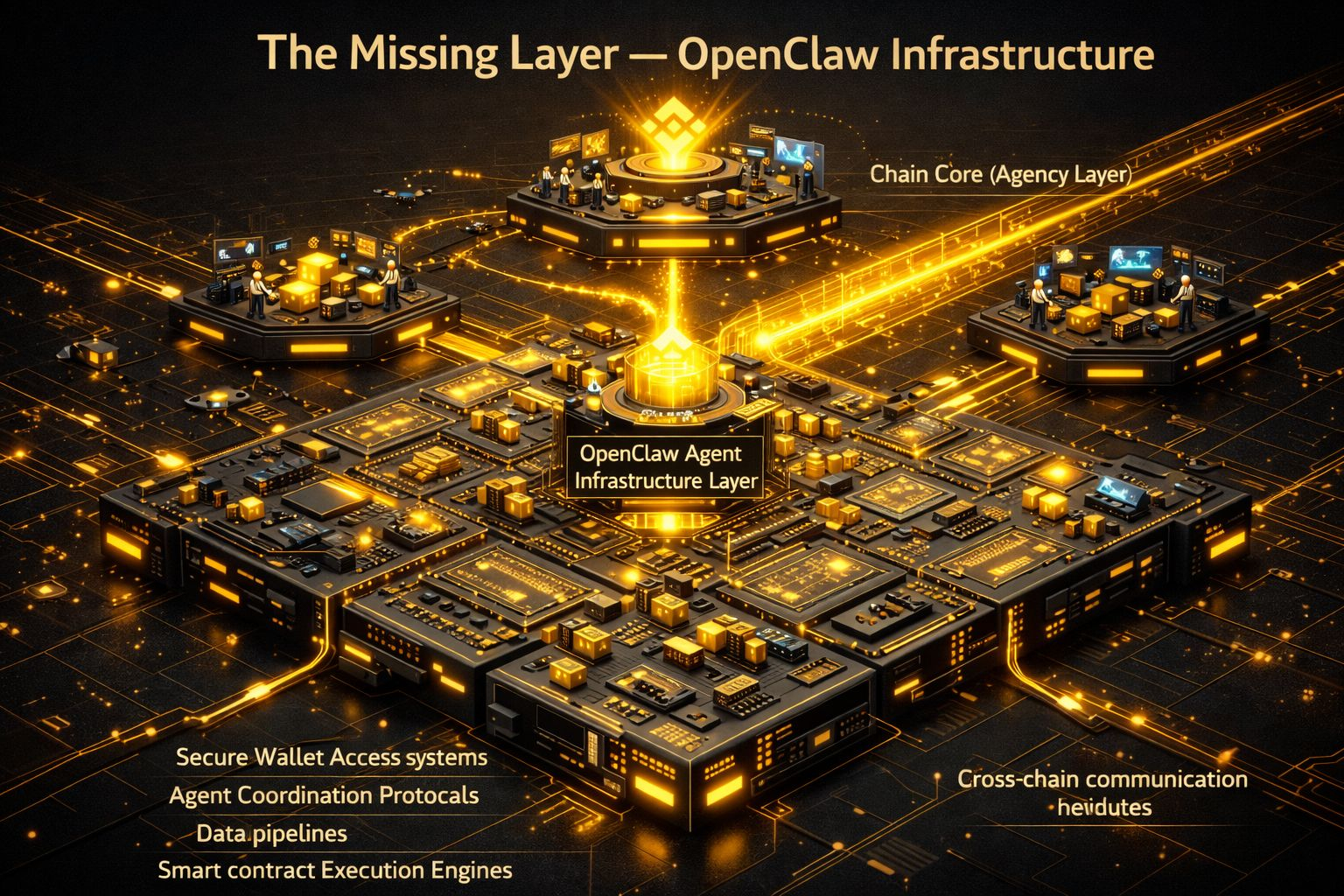
For this ecosystem to exist, agents need more than intelligence.
They need infrastructure.
That includes:
Secure wallet access
Execution frameworks
Data pipelines
Agent coordination systems
Smart contract deployment tools
This is where platforms like OpenClaw enter the picture.
Instead of simply building AI models, the goal is to provide:
👉 The infrastructure layer for agent-driven economies.
Think of it as:
The operating system for autonomous on-chain agents.
OpenClaw aims to connect:
AI reasoning + blockchain execution + agent infrastructure
into one integrated stack.
This allows developers to build AI-native Web4 applications where agents can safely interact with decentralized networks.
The Bigger Question
The real question is not whether AI agents will exist on-chain.
They already do in primitive forms.
The real question is this:
👉 When machines can own wallets and deploy contracts, are they still tools — or are they participants?
If an AI agent can:
Manage assets
Deploy smart contracts
Negotiate with other agents
Participate in governance
Then the internet is no longer just human-driven.
It becomes a hybrid economy of humans and machines.
And that may be the true definition of Web4.
Final Thought
Web3 gave users ownership.
Web4 may give machines agency.
When that happens, the internet stops being just a network of people and platforms.
It becomes an autonomous economic system.
And the question we will eventually face is not just how humans interact with the internet, but how humans coexist with autonomous digital actors within it.