

I keep a small note on my desk that says, “The map is not the territory.” I wrote it after losing money on a project that had an impressive whitepaper but very little real progress. That experience made me cautious about plans that sound great on paper. Fabric Protocol’s 2026 roadmap is interesting because it reads more like an engineering timeline than typical crypto marketing. The first quarter focuses on basic infrastructure—robots registering on the network, completing tasks, and sending operational data. This part is actually easy to verify. If the system works, there should be visible data from real robots interacting with the blockchain. Not staged activity or repetitive transactions, but patterns that look like real machines operating in real environments. By the end of the quarter, that evidence should either exist or it shouldn’t.
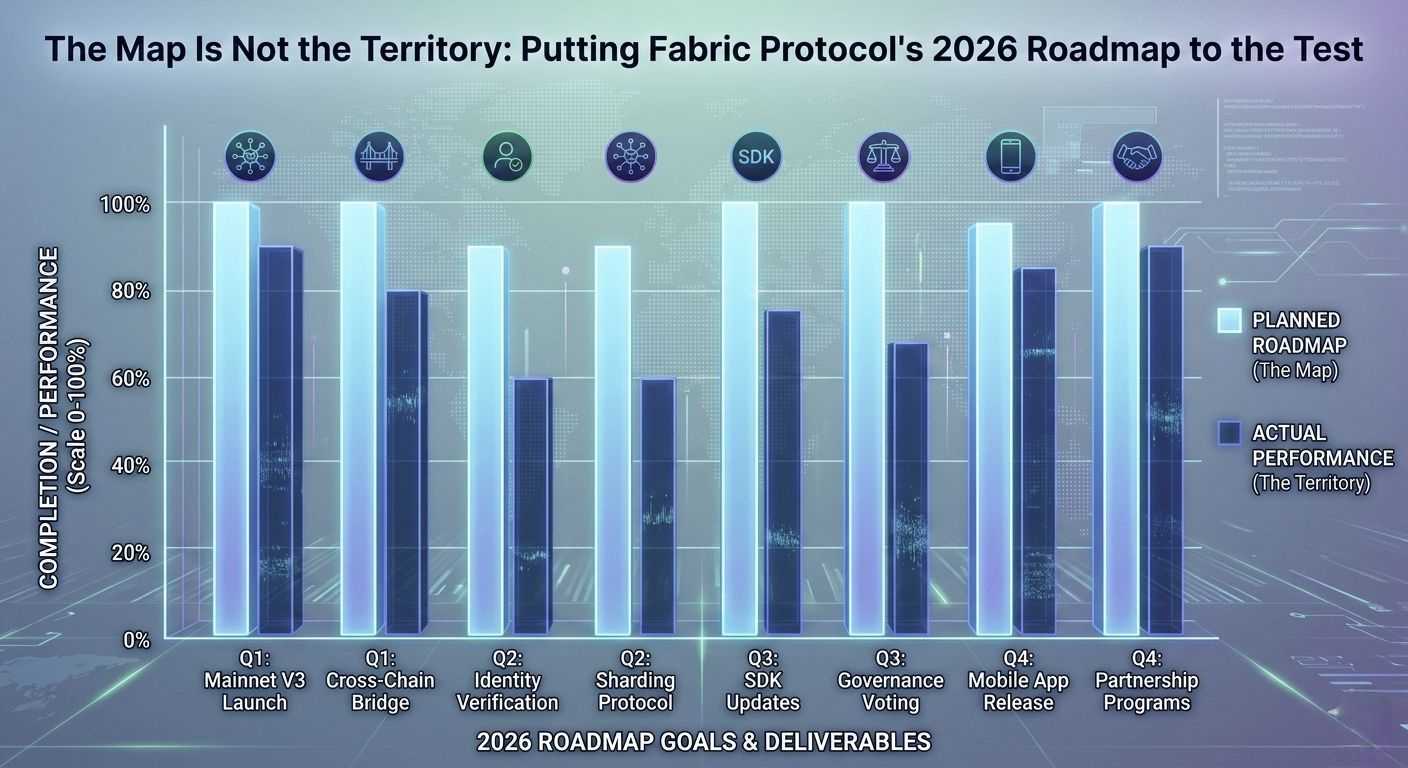
The second quarter moves the idea further by introducing payments for completed robotic tasks and a marketplace where developers can create new robotic “skills.” In theory, this creates a decentralized economy where robots can perform work and earn tokens. But systems like this always attract attempts to cheat—fake tasks, simulated activity, or automated loops designed to collect rewards. The real test will not be whether the team says they can prevent fraud, but whether outside developers actually start building on the platform. When independent builders show up and contribute tools or services without being directly paid by the project, it usually means the ecosystem is starting to grow naturally rather than being pushed by the core team alone.
By the third quarter, the roadmap becomes more ambitious. The goal is to have multiple robots working together in real commercial environments. This is where the difference between a tech demo and a real product becomes obvious. A robot performing a simple task in a controlled demo proves the concept exists. A robot integrated into a real business operation—handling logistics, payments, and accountability—proves the system actually works. That step is always harder because it involves coordination with companies, physical deployment, and real-world reliability. Hardware development also moves much slower than software, which means delays are almost inevitable. Robots need maintenance, testing, and physical troubleshooting that no smart contract can speed up.
Another reality that can’t be ignored is the token economics. The project’s documentation openly describes the ROBO token as a utility token with no guaranteed profit, which is more honest than what many crypto projects say. Right now only about 22% of the supply is circulating, while the remaining 78% will eventually enter the market. That means future demand must grow fast enough to absorb the additional supply. Ideally that demand would come from real operators using tokens to run robotic systems, not just investors trading the asset. If usage grows slowly while supply keeps expanding, the market will eventually reflect that imbalance.
For me, the roadmap is not something to believe in blindly. It’s simply a checklist. By the end of the first quarter I want to see real robot data on-chain. By the second quarter I want to see independent developers building in the skills marketplace. By the third quarter I want to see at least one commercial deployment confirmed by someone outside the project team. If those things happen on time, the plan starts turning into reality. Until then, I’m paying more attention to the evidence than the excitement. For now, I’m holding the checklist—not the token.
@Fabric Foundation #ROBO $ROBO
