
The G7 was formed fifty years ago so the world’s advanced-economy democracies could align on shared economic and geopolitical challenges. But what happens when the cause of instability is coming from inside the G7? That’s the question confronting the leaders as they assemble this week in Kananaskis.
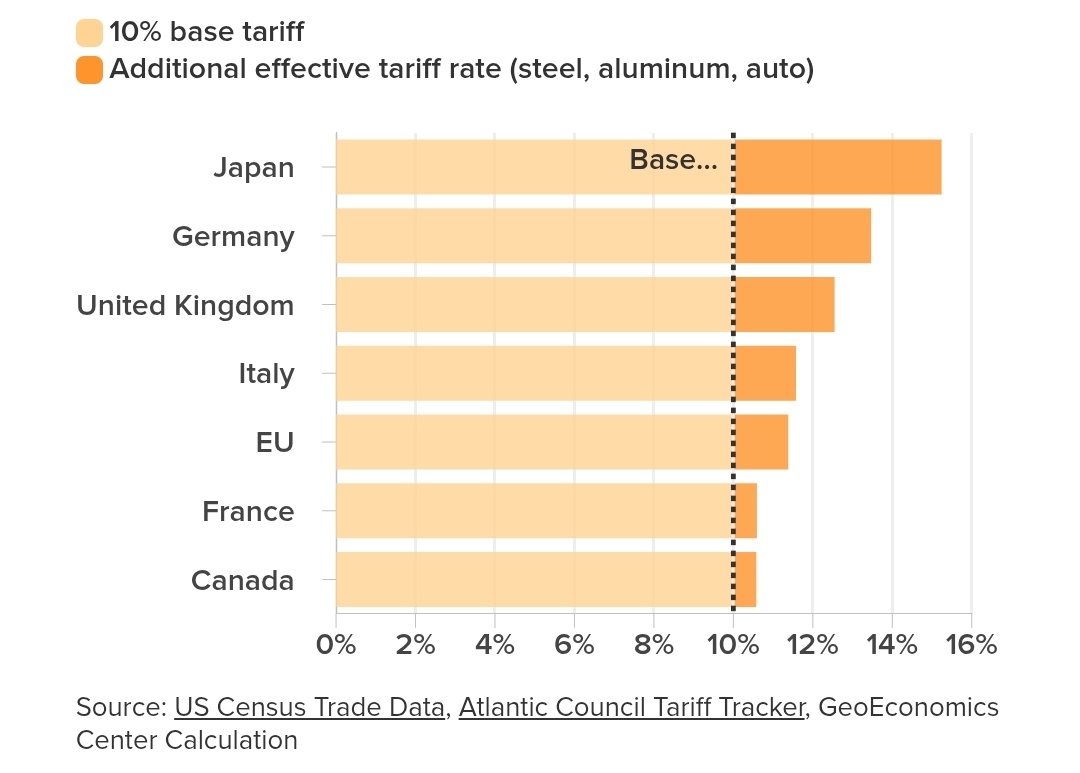
US President Donald Trump is still getting to know some of his new colleagues, including German Chancellor Friedrich Merz, UK Prime Minister Keir Starmer, Japanese Prime Minister Shigeru Ishiba, and the summit’s host, Canadian Prime Minister Mark Carney. Trump will try to coordinate the group against China’s economic coercion. But the rest of the leaders may turn back to Trump and say that this kind of coordination, which is at the heart of why the G7 works, would be easier if he weren’t imposing tariffs on his allies. The chart above shows the friction points heading into one of the most consequential G7 summits in the organization’s history.