
Why Infrastructure Matters More Than Hype in the Robot Economy
I’ve been thinking about why so many Web3 projects struggle when real users arrive. Most of the time, it’s not because the idea was bad. The real issue appears when the system faces pressure. Networks slow down, fees spike, and coordination starts breaking. Scalability in Web3 isn’t just about big TPS numbers in a whitepaper. It’s about whether the infrastructure can actually handle real computation when people and machines start using it heavily.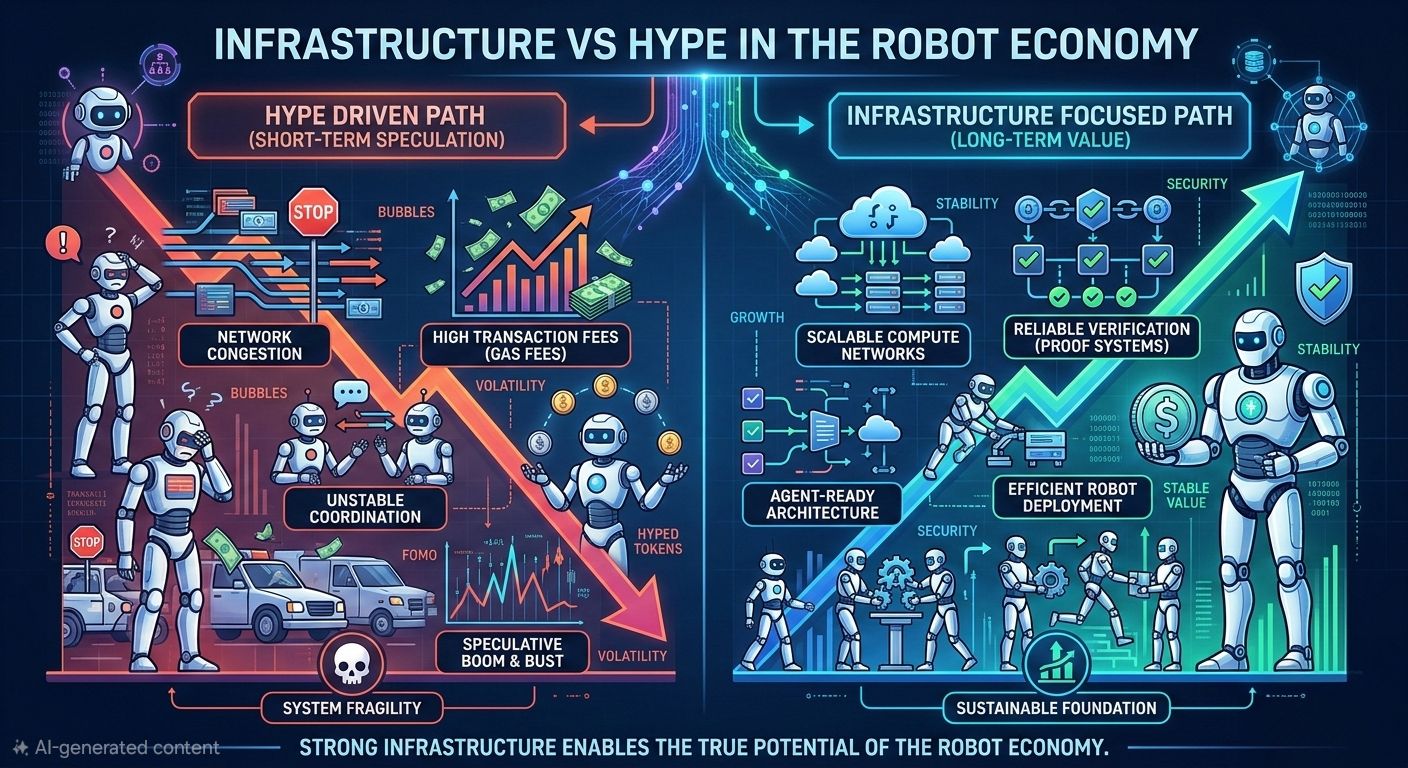
This is where @Fabric Foundation foundation started to catch my attention. The idea behind $robo is not just launching another application. The focus seems to be on building infrastructure that is ready for agent level activity, robotics, and heavy verification workloads. Instead of trying to patch scalability problems later, the design aims to handle them from the foundation. Data, compute, and governance are coordinated through verifiable systems so that robots and autonomous agents can operate in a reliable environment.
Another part that feels different is how the economy around #ROBO is structured. Many people casually call delegation staking, but the two are not the same. Traditional staking rewards people mainly for locking capital. In this model, delegation is closer to accountability. Rewards are tied to real activity, when robots actually complete tasks and contribute value to the network. That means participation carries both opportunity and responsibility.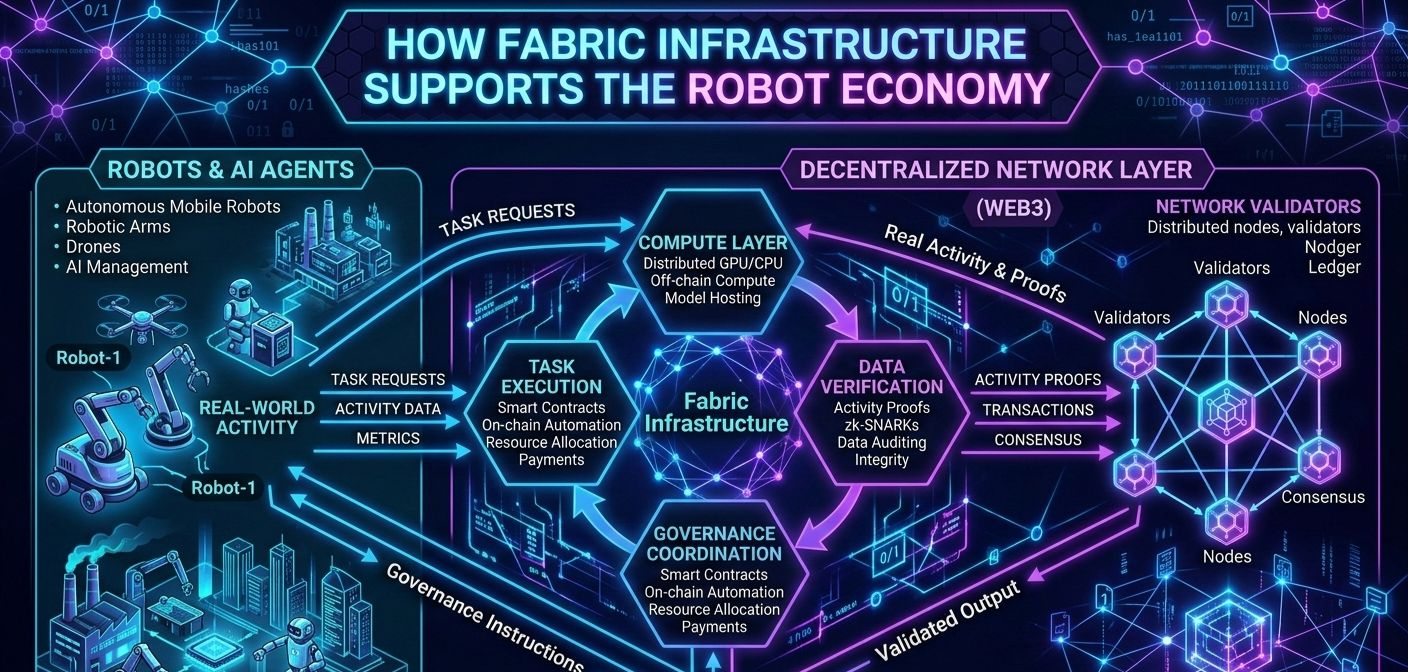
To me, this signals a bigger shift. Speculation can scale quickly, but real systems require careful architecture. If the robot economy becomes a reality, infrastructure like this will matter far more than short term hype.