

Most traders I know don’t fall in love with tech narratives. We watch what the market is paying attention to, we look for catalysts, and we ask a simple question: does this thing remove friction in a way that actually changes behavior? That’s the lens I’ve been using on Mira Network, especially since its mainnet launch on September 26, 2025.
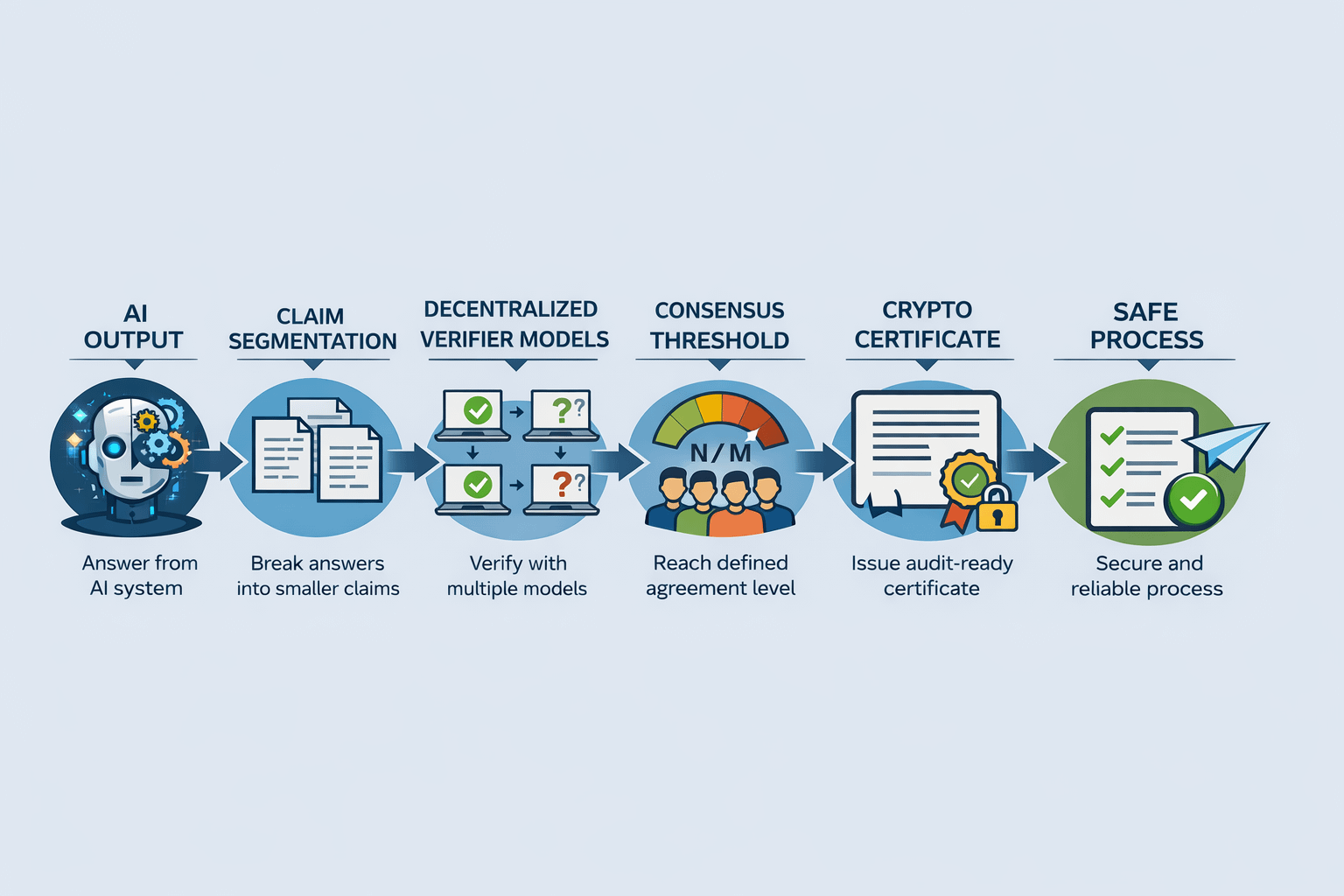
Mira is trying to solve a problem developers quietly complain about all the time: AI systems are fast, capable, and still unreliable in ways that are hard to “unit test” like normal software. One bad hallucination inside an agent that’s allowed to take actions send an email, place an order, update a database and you’re not debugging code anymore, you’re cleaning up real world mess. Mira’s core idea is to turn an AI output into a set of smaller, checkable claims, then have a decentralized set of “verifier” models independently judge those claims and produce a cryptographic certificate of what the network agreed on.
If that sounds abstract, here’s the simple version. Instead of trusting one model’s answer, you ask multiple models to verify it. But Mira doesn’t just throw the whole paragraph at them and hope for the best. The whitepaper describes a transformation step: break complex content into discrete claims so every verifier is answering the same narrowly framed question. The network then aggregates results to reach a defined threshold unanimous, or N of M, depending on what the customer asks for and records the outcome with a certificate. That “certificate” matters because it’s the difference between “the model said so” and “here’s what independent verifiers agreed on, and you can audit who participated.”
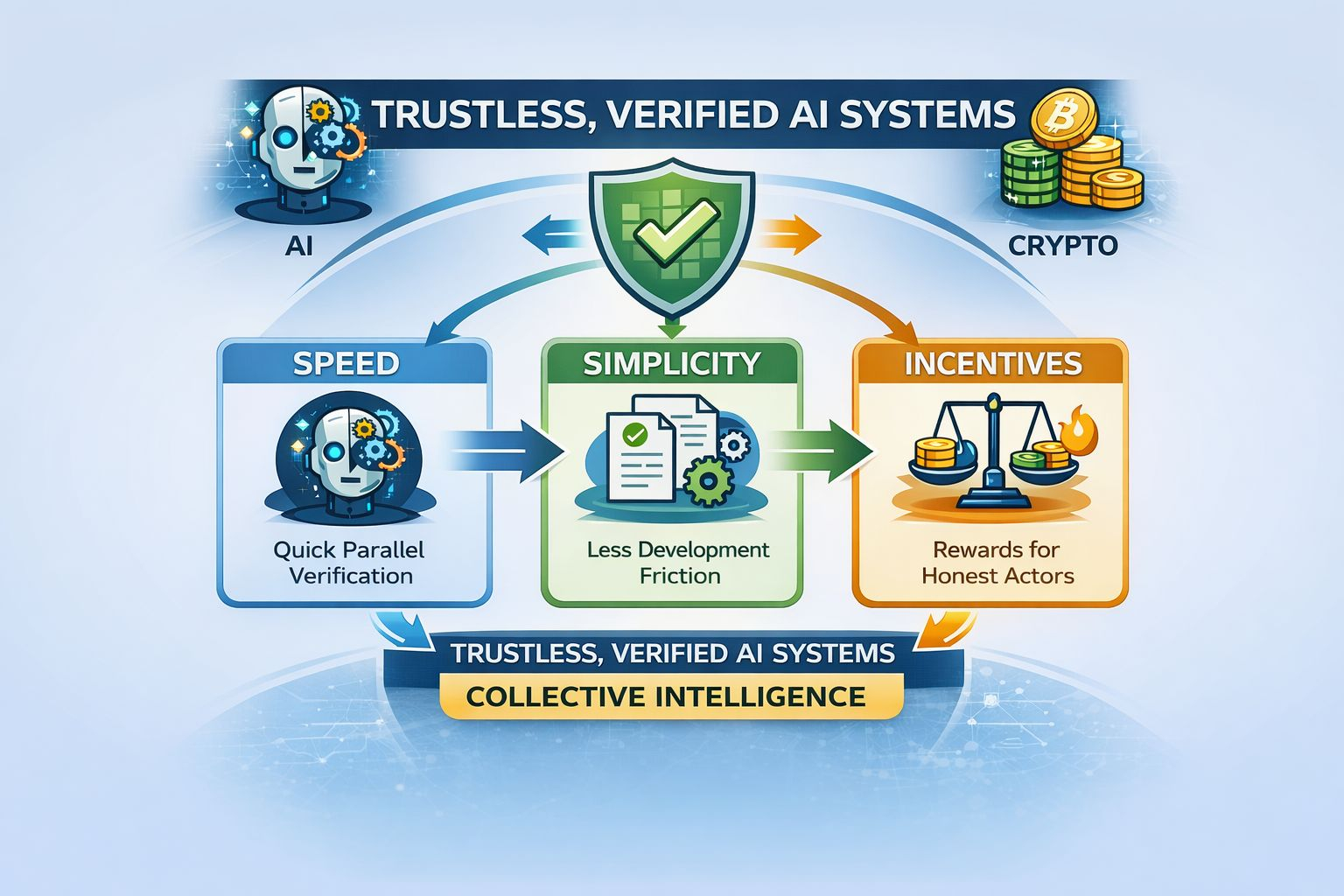
From a trader’s perspective, this is why Mira sits in a narrative pocket that keeps getting bid: “verified AI” is a clean storyline at the intersection of two hot arenas AI and crypto but it’s not just vibes. It aims at a real workflow pain point: developers building with LLMs spend a surprising amount of time bolting on guardrails, eval pipelines, human review queues, and custom rules. Mira’s pitch is that verification becomes a service: you generate, you verify, you ship without reinventing your own reliability stack each time. The official site frames this as “trustless, verified intelligence,” with verification happening at every step using “collective intelligence.”
Speed and simplicity are where it either wins or loses. Verification can’t be so slow that it kills the advantage of using AI in the first place. Mira’s approach is designed to parallelize: many claims can be checked at once by many verifier nodes. And because the output is standardized into claims, you reduce the “interpretation drift” you get when different models latch onto different parts of the same long prompt. In plain English: it’s trying to make verification more like a mechanical process and less like an argument.
The other piece traders should understand is the incentive design, because crypto networks live or die by incentives. Mira’s whitepaper describes a hybrid Proof of Work/Proof of Stake model where verifiers are economically rewarded for honest verification and can be penalized (slashed) if they consistently deviate from consensus or show signs of guessing. The “guessing” problem is more serious than it sounds: if verification is framed as multiple choice, random success rates can be high with simple binary questions. The paper even quantifies how the odds drop as you increase the number of checks and answer options. Staking is the deterrent if cheating costs you money, you need a real edge to try it.
So what progress has been made, and why did it start trending harder? Two timeline markers stand out. First, Mira publicly announced a $9 million seed round on July 16, 2024, led by BITKRAFT Ventures and Framework Ventures, with Accel also participating. Second, the project’s mainnet launch on September 26, 2025 gave the market something concrete to trade around: a live network, user onboarding, and staking/governance mechanics. CryptoBriefing’s launch coverage also claimed the network served “over 4.5 million users” across ecosystem applications at the time, which if accurate helps explain the speed at which it entered trader watchlists.
On the performance side, Binance Research’s project write up makes a bold comparison: it says Mira can reach “95%+ accuracy” versus a “70 - 75% baseline” for current AI systems by coordinating multiple models to verify outputs. I treat numbers like that the way I treat a shiny backtest interesting, but I want to know the conditions and what “accuracy” means in practice. Still, the direction of travel is clear: the market is rewarding projects that try to turn AI reliability into something measurable, auditable, and composable by developers.
If you’re a developer, the appeal is straightforward: less time building safety scaffolding, more time shipping features. If you’re a trader or investor, the cleaner takeaway is this: Mira is effectively selling “confidence” as infrastructure. When confidence gets cheaper and faster to produce, more apps can afford to automate. And whether you’re bullish or skeptical, that’s the kind of reduced friction that tends to create real adoption… which is usually where the most durable charts begin.