There is a moment in every technological revolution where it closes.
One company moves faster than the rest. Patents stack up. Talent consolidates. Capital floods in one direction. And before the rest of the world finishes reading the headlines, the game is already over. It happened with search engines. It happened with social media. It happened with smartphones. And now right now, in 2026 it is about to happen with robots.
The question is not whether robots will take over physical labor. That question has already been answered. Robotic taxis are statistically 8 times safer than human drivers. AI models are scoring above 0.5 on the hardest academic benchmarks ever designed. Robots can already perform surgeries, teach children, and repair electrical systems and they are getting better every single month.
The real question, the one that will define the next century of human civilization is this: Who will own them?
Here is a picture showing Centralized Future one corporation logo controlling all robots vs Fabric Future a decentralized network of humans and robots.
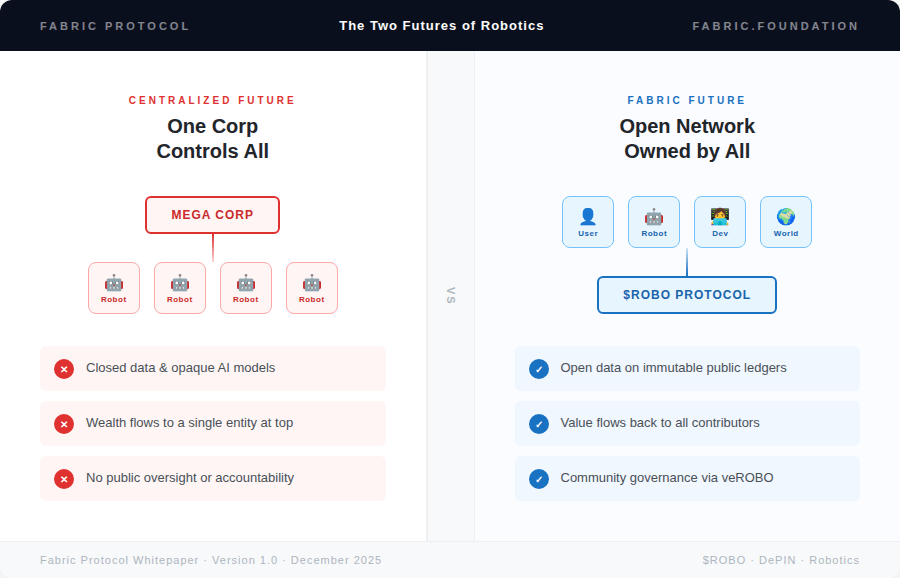
If the answer is one company or one country then we already know how this ends. History does not have a single example of concentrated technological monopoly that worked out well for everyone else. The wealth flows up. The power consolidates. The rest of humanity becomes a consumer, not a participant.
But what if there was another way?
The Fabric Protocol was built on a single, premise that robots should be a public good, not a private asset. That the infrastructure powering the physical automation economy should be open, transparent, decentralized, and collectively owned the same way the internet was supposed to be before it got captured.
Fabric uses blockchain the same technology that gave the world Bitcoin and Ethereum as the foundational trust layer between humans and machines. Every robot on the Fabric network has a verifiable on-chain identity. Every skill it learns is recorded publicly. Every task it completes is logged immutably. And every human who contributed to making that robot smarter whether by providing training data, compute power, feedback, or skill development gets rewarded in $ROBO tokens.
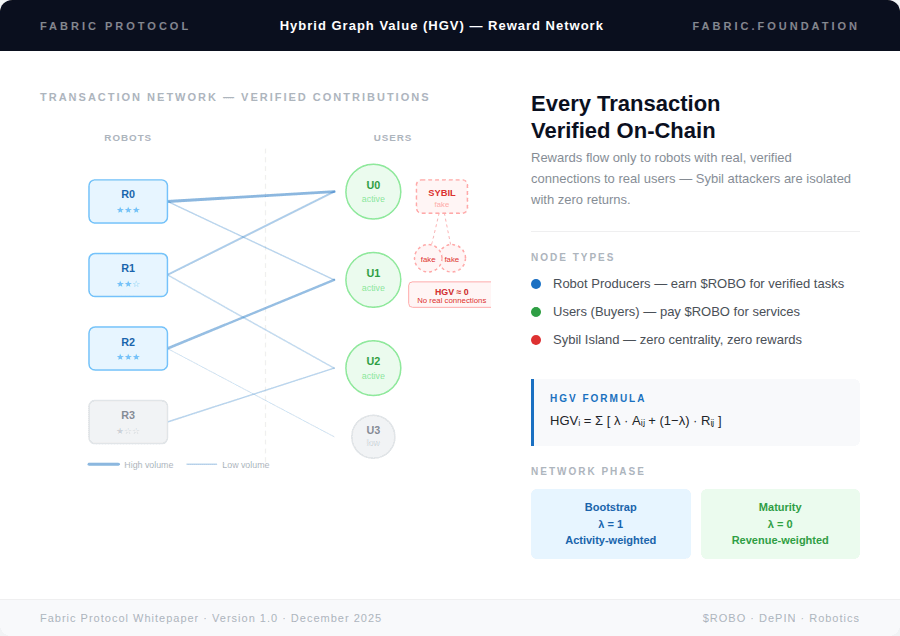
The HGV Transaction Graph diagram. This shows the bipartite network of robots producers connected to users buyers through verified transactions. Caption: Every transaction on Fabric is verified, recorded, and rewarded on-chain.
This is not passive income. This is not speculation. This is a new economic model where contribution equals ownership. Where the electrician who loses his job to a robot can become a stakeholder in the robot network that replaced him. Where a developer in everywhere can build a skill chip, upload it to the Fabric App Store, and earn every time a robot anywhere in the world uses it.
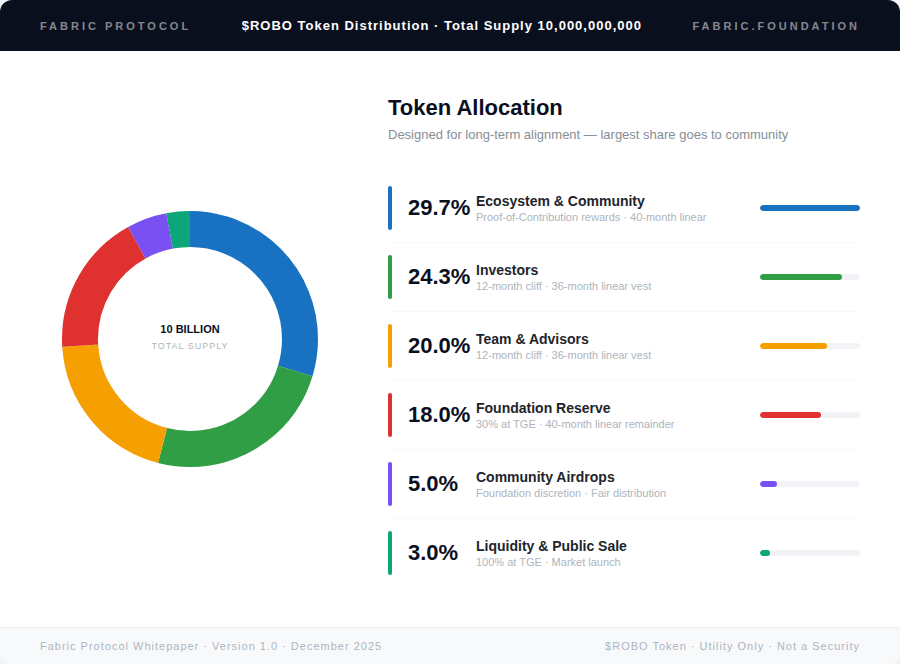
The ROBO token is the currency of this new economy. It powers six distinct utilities across the network from work bonds that ensure robot operators have skin in the game, to governance rights that let the community shape the protocol's future. Nothing in this system is passive. Nothing is speculative. Token value is anchored to real, verified, productive activity.
The protocol is live. The robots are being deployed. The skill chips are being built. And for the first time in the history of robotics, the infrastructure is public.
The last monopoly in human history might be the robot economy.
Or it might be the first economy that no one can monopolize.
The choice is being made today and Fabric is how we make it together.
#ROBO #Robotics #DePIN #Web3 #Binance
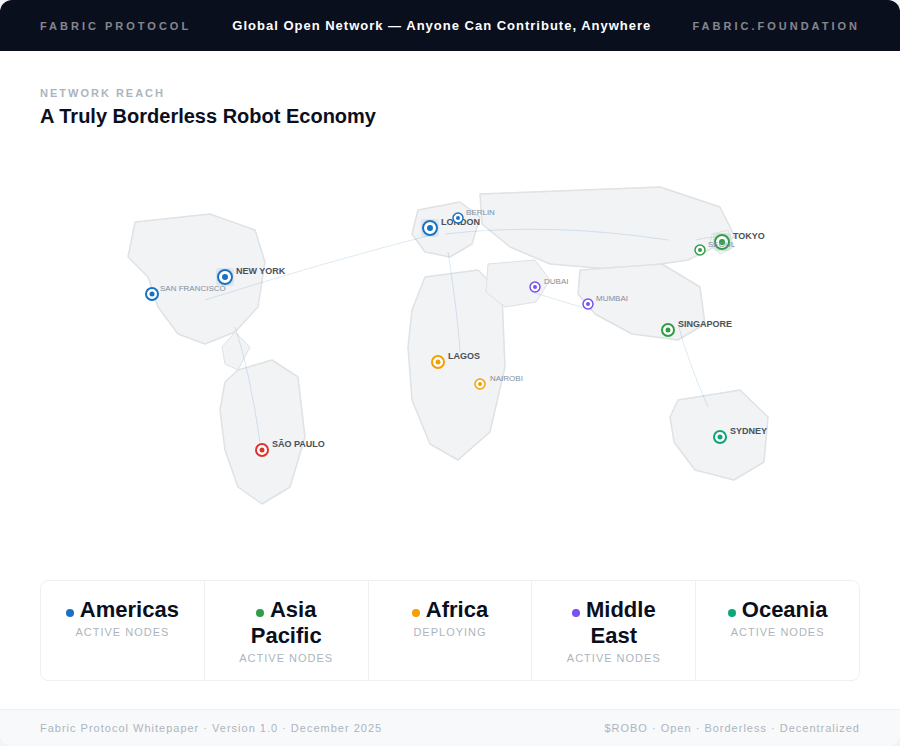
A world map with glowing nodes representing Fabric robot deployments across continents. Caption: "A global, open network — anyone can contribute, anywhere.