
I keep coming back to a simple question: as robots grow more capable, who—or what—do they answer to? I don’t mean in a sci-fi sense. I mean in the practical, everyday reality where machines already stock our warehouses, assist in surgeries, inspect infrastructure, and increasingly navigate public spaces. The intelligence of these systems is advancing quickly, but the infrastructure that governs how they learn, share knowledge, and remain accountable feels fragmented. Most robots are trained inside corporate silos. Their data is proprietary. Their updates are opaque. When something goes wrong, trust erodes—not just in the machine, but in the system that produced it.
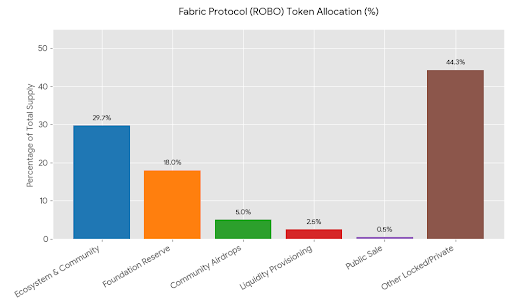
That’s why Fabric Protocol caught my attention. It proposes something that, at first glance, feels almost radical: a global open network supported by the non-profit Fabric Foundation, designed to coordinate the construction, governance, and collaborative evolution of general-purpose robots through verifiable computing and agent-native infrastructure. Instead of robots learning and evolving in isolation, Fabric envisions them participating in a shared, auditable ecosystem. When I think about what that means, I don’t see a press release. I see a structural shift.
The idea of a public ledger in robotics isn’t just about recording transactions. What intrigues me is the concept of verifiable computation. I’ve noticed that most debates about AI safety revolve around trust—trust in companies, trust in developers, trust in regulators. Fabric flips that dynamic. It suggests that instead of trusting claims, we could verify behavior. If a robot makes a decision—say, rerouting itself in a crowded hospital corridor or halting a mechanical arm mid-motion—the computational pathway behind that action could be cryptographically proven to comply with defined constraints. In theory, that moves us from “trust me” to “prove it.”
But I also recognize that proof alone doesn’t guarantee safety. Distributed systems are complex. Consensus mechanisms can fail. Malicious actors exist. I can’t ignore the risk that an open network could become a battleground of competing interests, where the very openness that enables collaboration also introduces vulnerability. Fabric’s modular structure—separating data validation, computation verification, and governance—seems designed to contain these risks. Yet I keep wondering: when robots operate in physical space, interacting with human bodies and environments, how much uncertainty can we tolerate?
What feels especially significant to me is the emphasis on agent-native infrastructure. Most of our digital world was built for humans. Our identity systems, APIs, and governance structures assume a person behind every action. Robots don’t fit that mold. They operate autonomously, often in real time, requiring edge computation and secure authentication that doesn’t rely on constant human oversight. If robots are going to be first-class participants in our economies, I believe they need infrastructure that treats them as such—machines with cryptographic identities, capable of negotiating data access and complying with programmable regulation. That’s a subtle but profound shift.
I think about real-world cases where fragmentation has slowed progress. Autonomous vehicle companies collect vast driving datasets, yet rare edge cases continue to surprise the industry. Each company guards its data, even when sharing could improve collective safety. In manufacturing, collaborative robots from different vendors often struggle with interoperability because standards are inconsistent. A protocol like Fabric could, at least in principle, reduce this redundancy. Shared, privacy-preserving records of edge scenarios might accelerate learning across borders. But this requires a cultural leap—from competition-first thinking to infrastructure-first thinking.
The economics are complicated. Robotics isn’t cheap. Companies invest heavily in hardware, simulation environments, and training data. Why would they contribute to a shared ledger? I suspect the answer lies in network effects. I’ve seen how open-source software reshaped computing. Foundational layers became communal, while value shifted to services and specialization. If Fabric can position itself as a foundational layer—neutral, reliable, and efficient—then participation becomes rational rather than charitable. Still, incentives must be carefully aligned. Without them, openness risks becoming symbolic rather than structural.
What I find rarely discussed is the governance philosophy embedded in this model. If regulation is encoded into infrastructure—if compliance proofs are machine-readable and consensus-driven—then governance becomes participatory and programmable. Developers, regulators, and stakeholders could propose and vote on rule changes. I find this both inspiring and unsettling. On one hand, it democratizes oversight. On the other, it shifts authority from traditional institutions to protocol communities. Legal systems are not yet designed to interpret cryptographic traceability as liability. If a robot’s behavior emerges from globally contributed modules, who is accountable when harm occurs? Traceability helps, but law and ethics don’t map neatly onto code.
I also worry about inequality. Advanced robotics research is concentrated in wealthy regions. An open network could lower barriers for researchers worldwide, allowing contributions that might otherwise be excluded. Yet hardware access and high-performance computation remain uneven. Without deliberate support mechanisms, the same power imbalances could replicate within the protocol. The non-profit structure behind Fabric suggests an awareness of this tension, but sustaining equitable governance over time will require vigilance.
What ultimately draws me to Fabric’s vision is its cultural ambition. It doesn’t frame robots as isolated tools but as participants in a collective memory system. Each machine’s experience can inform the next. The ledger becomes not just a database, but a historical record of machine learning and compliance. I see echoes of how human knowledge accumulates—through collaboration, debate, refinement. The difference is that here, verification replaces assumption.
I don’t believe any protocol can eliminate risk. Complexity guarantees friction. But I do believe infrastructure shapes behavior. If we build robotic ecosystems around opacity and siloed control, we will continue to struggle with trust. If we build them around transparency, verifiability, and shared governance, we at least create the conditions for accountability.
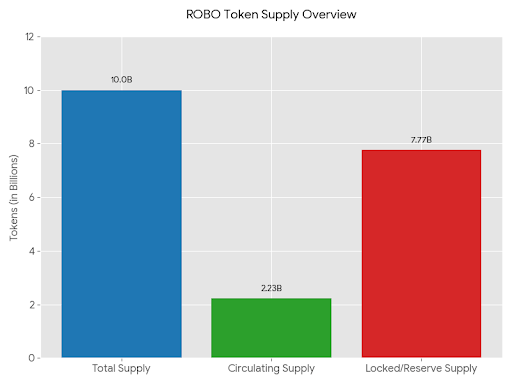
When I imagine the future of robotics, I don’t picture dramatic humanoid breakthroughs. I picture quieter shifts: robots that can prove why they acted, regulators who can audit in real time, developers who collaborate on foundational layers instead of reinventing them in isolation. Fabric Protocol may or may not become the backbone of that future. But the question it raises feels urgent to me: can we design the invisible systems that make machine intelligence something we can trust?
@Fabric Foundation #ROBO #robo $ROBO
