
When people hear about governance in decentralized systems, the assumption is usually that it’s just a voting interface layered on top of a protocol. A place where token holders show up occasionally, cast votes and shape the direction of the network. But when I think about governance in the context of Fabric Foundation and the broader vision of Fabric Protocol that framing feels incomplete. Governance here isn’t simply a control panel. It’s an operational layer that determines how machines, data and humans coordinate over time.
That difference matters because Fabric isn’t just managing digital assets or financial contracts. The protocol is attempting to coordinate real world robotic systems through verifiable computing and shared infrastructure. And when machines are involved in production, logistics or services governance stops being abstract policy and becomes something closer to system regulation. Decisions about standards, permissions and incentives directly affect how work is performed in the physical world.
In many blockchain systems governance appears after the infrastructure is already running. It acts as a mechanism for upgrades or economic adjustments. But Fabric’s approach suggests governance must evolve alongside the infrastructure itself. If robots are generating data, performing tasks and interacting with economic systems someone has to define how those activities are validated, how disputes are resolved and how new participants are allowed to enter the network. Governance becomes the rulebook that keeps the ecosystem coherent.
What’s interesting is how this shifts the role of governance participants. Instead of simply deciding parameters like fees or emissions they are effectively shaping the regulatory environment for autonomous agents. Which datasets are considered trustworthy? Which computation frameworks are verified? Which operational standards ensure safety between machines and humans? These decisions influence not only digital processes but also real world deployment.
That introduces a level of responsibility that most token governance models rarely confront. In a financial protocol a misconfigured parameter might disrupt markets temporarily. In a robotics network poorly defined governance could create coordination failures across fleets of machines supply chains or automated facilities. The governance layer therefore becomes less about quick voting cycles and more about building durable rules that can guide a growing ecosystem.
Another subtle shift happens around legitimacy. For governance to work in systems like Fabric the participants cannot only be speculative token holders. The network eventually needs input from developers, infrastructure providers, robotics operators and researchers who understand how these machines behave in practice. Without that diversity governance risks becoming detached from the operational realities the protocol is supposed to coordinate.
That’s why the governance layer begins to resemble a collaborative framework rather than a purely financial voting system. Participants are not just deciding what the protocol should do next they are collectively shaping the standards that allow machines and software agents to cooperate safely. Governance becomes the mechanism that aligns incentives across builders, operators and users who may never interact directly but still depend on the same infrastructure.
There’s also an economic dimension that often goes unnoticed. When governance determines how tasks are validated, how data is rewarded or how computation is verified, it effectively shapes the market structure for machine work. Decisions about incentives influence which types of robotic services become profitable and which remain experimental. Over time that means governance quietly steers the evolution of the robot economy itself.
From that perspective the governance layer behind Fabric Protocol looks less like a feature and more like a foundation. It’s the environment where rules are defined responsibilities are distributed and trust is negotiated between humans and machines. Without it the protocol might still function technically but coordination would quickly fragment as different actors pursued incompatible standards.
The deeper question isn’t simply whether governance exists but how resilient it becomes as the network grows. As more robotic systems, data sources and computing nodes join the ecosystem the governance process will have to scale with them. That means balancing openness with safeguards, innovation with stability and autonomy with accountability.
If Fabric’s broader vision succeeds governance may end up being one of its most important contributions. Not because it introduces a new voting mechanism but because it treats governance as infrastructure for coordination itself. In a world where machines increasingly perform economic work the systems that define rules and resolve conflicts might matter just as much as the technology performing the tasks.
And that leads to the real strategic question if robots become participants in decentralized economies who ultimately shapes the rules they follow and how does a governance system remain credible when both humans and machines depend on its decisions?
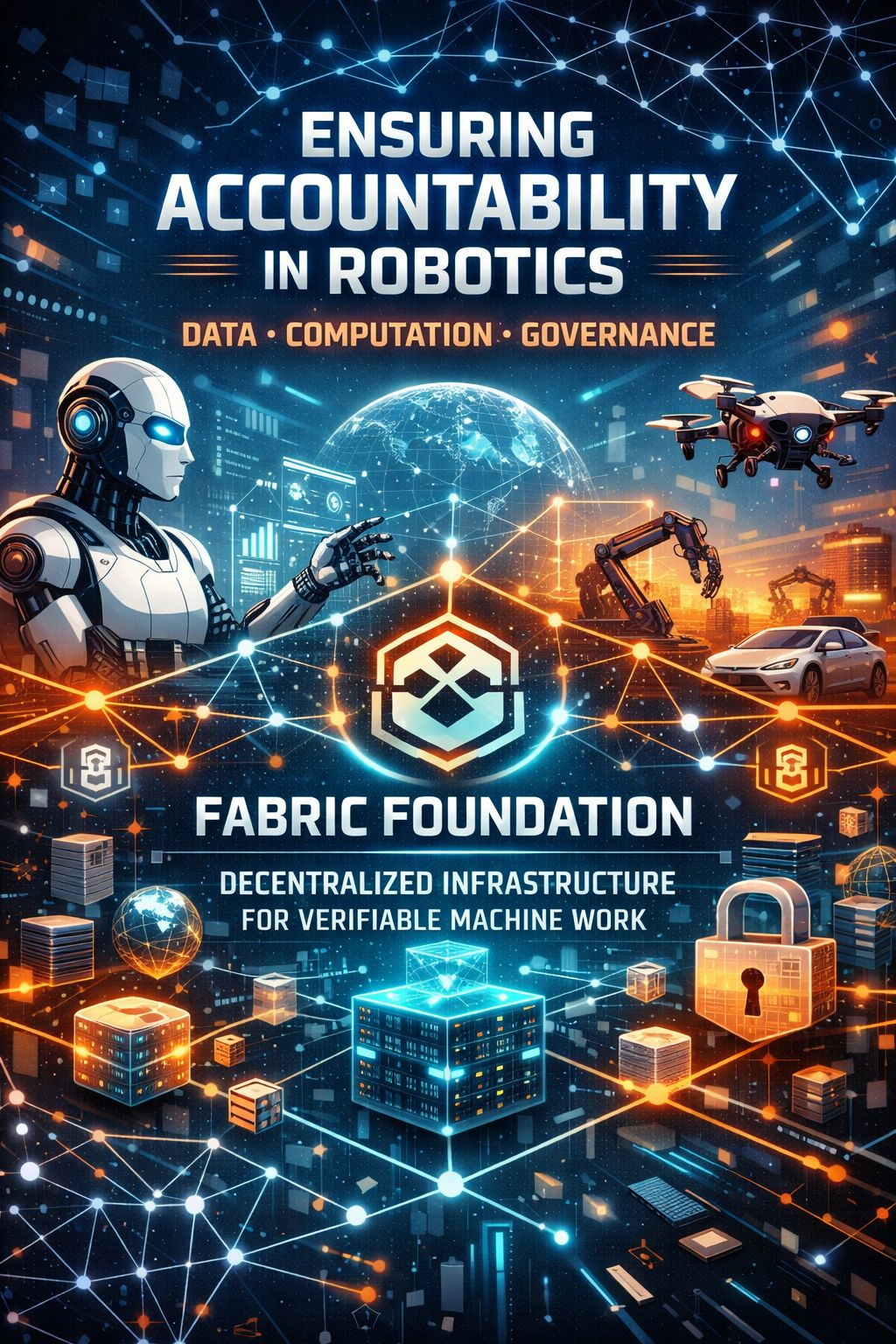
@Fabric Foundation #ROBO $ROBO

#MarketRebound #KevinWarshNominationBullOrBear
