 What Is Fabric and Why It Matters
When we talk about Fabric or the @FabricFND project we’re talking about something very different from the usual cryptocurrency tokens you’ve heard of. This is not just another token to trade for quick profit on Binance or elsewhere. Instead Fabric Foundation is trying to build infrastructure for the future where intelligent machines and humans work together safely and productively. They’re imagining a world where robots and AI systems are part of everyday life and where the rules and systems that govern them are open fair and decentralized
In many ways I’m reminded of how the early web looked before it became mainstream full of possibility new ideas and people asking big questions about how technology should serve everyone not just a few companies or rich nations
The mission that drives this project is simple but ambitious make machine behavior predictable observable and aligned with human values. They want systems that help all people benefit from AI and robots rather than letting power and control concentrate in only a few hands
The Big Idea Behind the Project
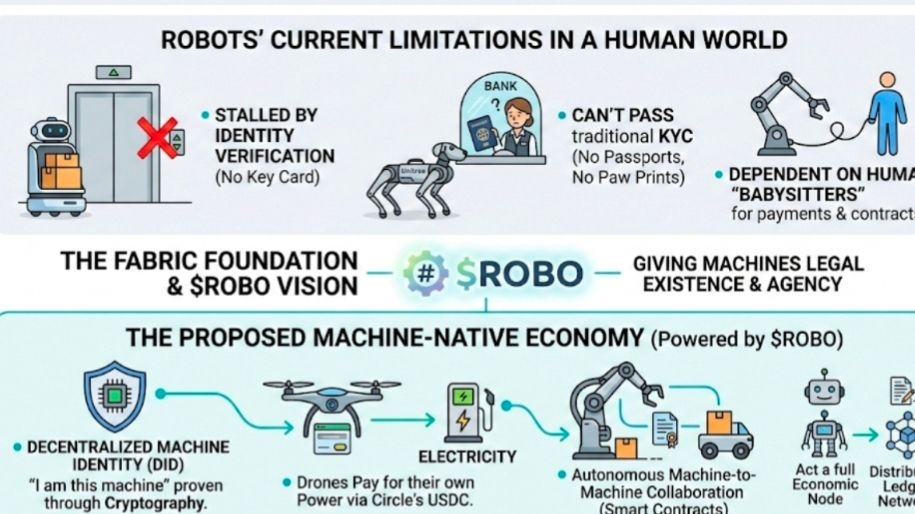
At the heart of Fabric is the belief that as AI and robotics become more capable we need new kinds of infrastructure and rules not just better machines. The project exists because current economic systems and laws were not designed to let machines take part in the economy or work alongside humans. For example a physical robot cannot open a bank account or sign legal contracts. Fabric sees a future where many of those interactions happen on a blockchain connected to tokens identities and governance mechanisms designed for these new relationships
Think of Fabric as a kind of foundation layer like the base of a house that supports everything built above it. Instead of making just one robot or one AI service they’re building a shared set of tools that many people and companies can use to make and govern their own systems
How the Project Works Step by Step
The mechanics of Fabric are complex but I’m going to explain them as simply as possible like telling a story
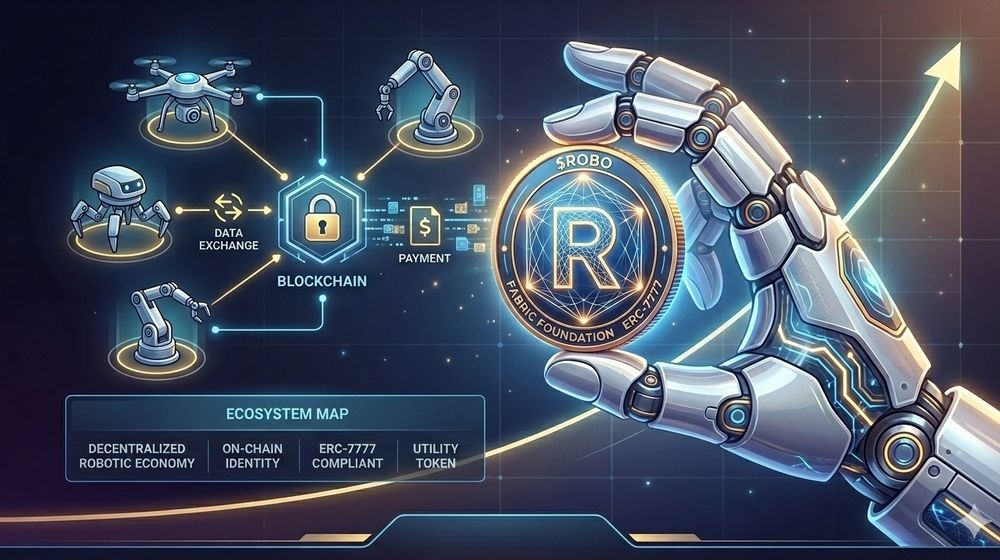
At the center is a native token called $ROBO. This token is not just something you hold because you think its price will go up. $ROBO actually plays several roles in the Fabric ecosystem
First $ROBO is used to pay for services on the Fabric network. As machines and humans interact whether it’s registering identities paying for compute or verifying data those interactions are counted and paid for using the token
Second $ROBO is part of a participation and incentive system. If developers builders or contributors want to take part in the network and coordinate tasks they stake $ROBO to show they are committed to the network’s health. This staking helps determine who gets to participate in early or priority tasks similar to how a community garden might give priority planting space to people who have helped maintain it
Third $ROBO is involved in governance. This means holders can have a say in decisions like setting fees defining rules and shaping future development. In theory this is designed to align the interests of the community with the long term success of the ecosystem
Technically speaking Fabric tries to coordinate robots and AI agents through public ledgers. That means instead of closed systems where power is concentrated in one company’s servers Fabric wants a system where contributions and decisions are verifiable by anyone. It’s a bit like moving from private club meetings to open town hall meetings
At first the Fabric network is being built on Base a blockchain layer that makes transactions faster and cheaper. Over time the plan is to evolve into its own independent network capturing economic value from real activity of machines and humans interacting
Why These Design Choices Were Made
If you step back one question you might ask is Why build a whole new system instead of using the ones we already have
The short answer is that the systems we have today were designed for humans dealing with money or digital assets. They weren’t built for machines that think act or make decisions autonomously. If you plug these intelligent agents into old systems a lot of problems arise from safety concerns to economic misalignment to unfair control by a few entities. Fabric tries to preempt those issues by designing rules that enable open participation let people and machines interact under verifiable governance and allow shared ownership and coordination at large scale rather than concentrated power
They want to build trust minimized execution meaning the system’s rules are clear enforced by code and consensus not by trust in a single corporation or developer team
What Really Matters When Judging Whether It’s Healthy
When you’re watching a project like this grow price charts and hype don’t matter as much as what’s happening under the hood. Here are some real metrics that actually speak to whether Fabric might be healthy or whether it’s just buzz
First on chain activity. Are developers building on the Fabric network Are people staking $ROBO Are real transactions happening that show the network is being used
Second ecosystem partnerships and integrations. For a project like this it’s important to see collaborations with serious research groups AI builders robotics companies and not just early hype Twitter announcements
Third governance participation. A truly decentralized ecosystem is one where various voices not just early investors are actively involved in making decisions
Fourth adoption outside crypto circles. A project that only lives inside Twitter threads or price charts on Binance won’t have a long life. We’re seeing real adoption when industries universities and real world builders start using the tools
Finally transparency and communication. If the team regularly shares clear updates roadmaps code releases and engages constructively with the community especially when things get rough that’s a strong sign of long term thinking
Main Risks and Weaknesses to Understand
Of course big visions come with big risks. One of the biggest is that projects like this require real world progress not just ideas. It’s one thing to describe future robot coordination systems on paper and another to have actual robots using them in factories warehouses or homes
Another risk is speculation and expectation mismatch. Some people join simply hoping the token price goes up not because they understand or believe in the long term vision. That can make the token’s price volatile and unmoored from real progress
There are also transparency and eligibility concerns. Recently some community members have expressed frustration that engagement or contribution points didn’t translate into eligibility for certain allocations creating distrust or confusion
Governance for things this complex is also extremely hard. Even if the idea of decentralized decision making sounds good in theory in practice it can become slow contentious or hijacked by a few large holders
Finally it’s worth remembering that crypto and blockchain are still young technologies. Regulations could change market conditions could shift and what seems like a great idea today might need to adapt tomorrow
What a Realistic Future Could Look Like
If Fabric succeeds it might not be because robots are suddenly everywhere. Instead success is measured by incremental adoption tools other developers use agreements among communities on how to govern machine behavior and early real world pilot programs
We’re not going to wake up one day and see every robot on Fabric. But we might see research labs startups universities and autonomous system builders using pieces of its toolkit. We might see real governance structures where humans and machines negotiate tasks in an open system. We might see economic systems where autonomous agents can transact with accountability and safety
With all that in mind it’s OK to be both hopeful and cautious. The idea is larger than just a token and the problems it’s trying to solve are deep and meaningful. It’s the kind of project that asks big questions about how society technology and communities should evolve together not just who gets rich first
Closing Thoughts
At the end of the day I’m excited about projects that try to think beyond short term price moves or hype cycles. When we look at the vision behind @FabricFND what matters most isn’t the token chart it’s the idea of building infrastructure for a future where humans and machines can cooperate in ways that are safe open and beneficial for everyone
At the same time I’m cautious because every visionary project faces real world challenges. Getting ideas to work in practice is always harder than it looks and early missteps around communication or allocation policies can erode trust. That doesn’t mean the idea is wrong it just means careful thoughtful participation is necessary
So if you’re curious and engaged let your interest be guided by understanding not fear. Let your questions be grounded in real progress not social media noise. And if this space continues to evolve We’re seeing moments where ambitious ideas begin to meet real world needs in ways that bring people together not push them apart. And that is something to watch with calm hope and thoughtful attention
If you want I can also make a version that flows like a story you could read to a friend aloud, which makes it even warmer and more emotional while keeping all the explanations clear. Do you want me to do that next?