
Crypto is no longer limited to digital finance.
In 2026, DePIN (Decentralized Physical Infrastructure Networks) are gaining serious attention as blockchain begins powering real-world infrastructure.
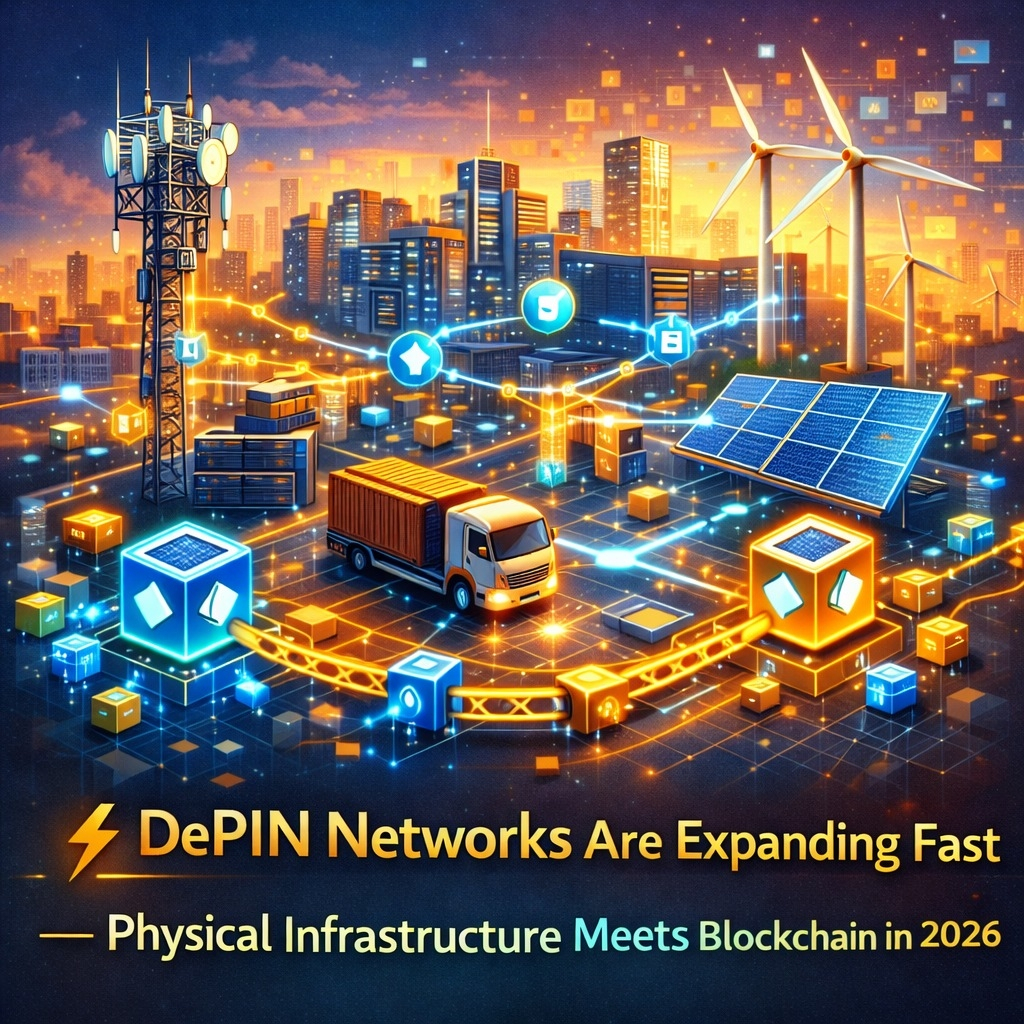
From wireless networks to energy grids and data storage, DePIN is turning everyday infrastructure into decentralized ecosystems.
🌍 What Exactly Is DePIN?
DePIN projects use blockchain incentives to build and operate physical networks through community participation.
Examples include:
• Decentralized wireless internet coverage
• Distributed cloud storage networks
• Community-powered energy grids
• Sensor and IoT data networks
Participants contribute hardware and receive token rewards for maintaining the network.
🚀 Why This Trend Is Growing
Traditional infrastructure requires huge capital and centralized operators.
DePIN flips that model by allowing communities to build networks collectively.
Key advantages include:
• Lower infrastructure costs
• Faster deployment in underserved regions
• Transparent reward distribution
• Global participation through token incentives
The model aligns real-world utility with blockchain economics.
📊 Market Impact
As DePIN adoption grows, it may create:
• New revenue streams tied to real-world services
• Increased demand for infrastructure tokens
• Stronger connection between crypto and physical industries
Unlike purely digital protocols, these projects deliver tangible utility.
🔮 Final Outlook
DePIN could become one of the most practical blockchain use cases.
If adoption continues accelerating, 2026 may mark the point where crypto infrastructure starts blending directly with the real world.
#CryptoTrends2026 #DePIN #BlockchainInfrastructure #Web3Innovation #BinanceSquare #Write2Earn