

A few weeks ago, I was helping a friend execute a transaction on-chain. The interface showed one fee estimate. By the time he clicked confirm, the cost had changed. Slightly higher. Not dramatic but enough to make him pause.
That hesitation is not about the money alone. It’s about predictability. About trust.
This small moment captures why I’ve been paying attention to Fabric Protocol. At first glance, it looks like another infrastructure layer in the blockchain space. But if you look deeper, Fabric is tackling something more psychological than technical: how users experience dynamic fees and automated transaction systems.
The Core Problem: Fee Volatility Without Transparency
Most blockchain networks operate on fluctuating gas fees. That’s not new. But what often gets ignored is how poorly these fluctuations are communicated and managed at the interface and execution level.
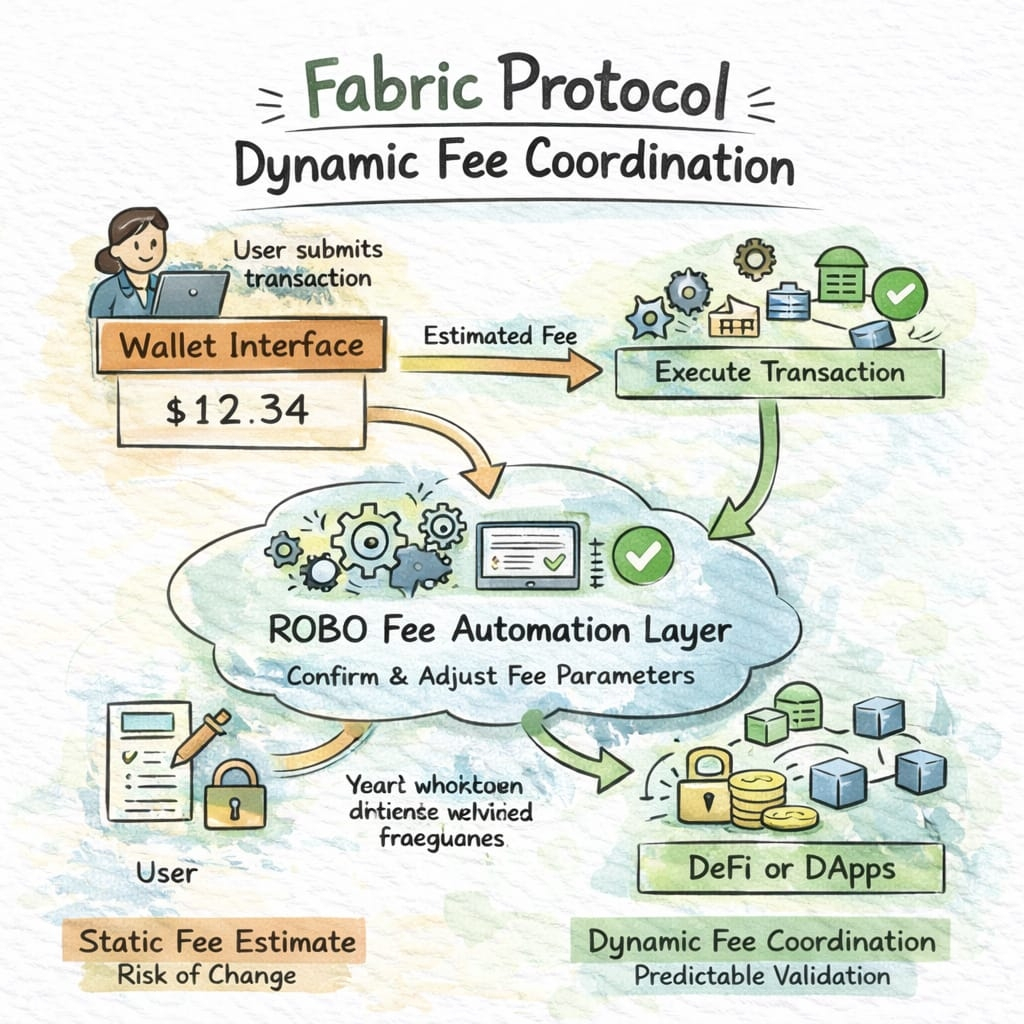
Users see “Estimated Fee.”
They click confirm.
The final number changes.
Even if the protocol logic is correct, the user experience feels unstable.
Fabric Protocol doesn’t try to eliminate dynamic pricing that would be unrealistic in decentralized systems. Instead, it introduces a smarter fee coordination and automation layer designed to reduce friction between estimation and execution.
In my view, that distinction is important. Fabric isn’t fighting market dynamics. It’s engineering around them.
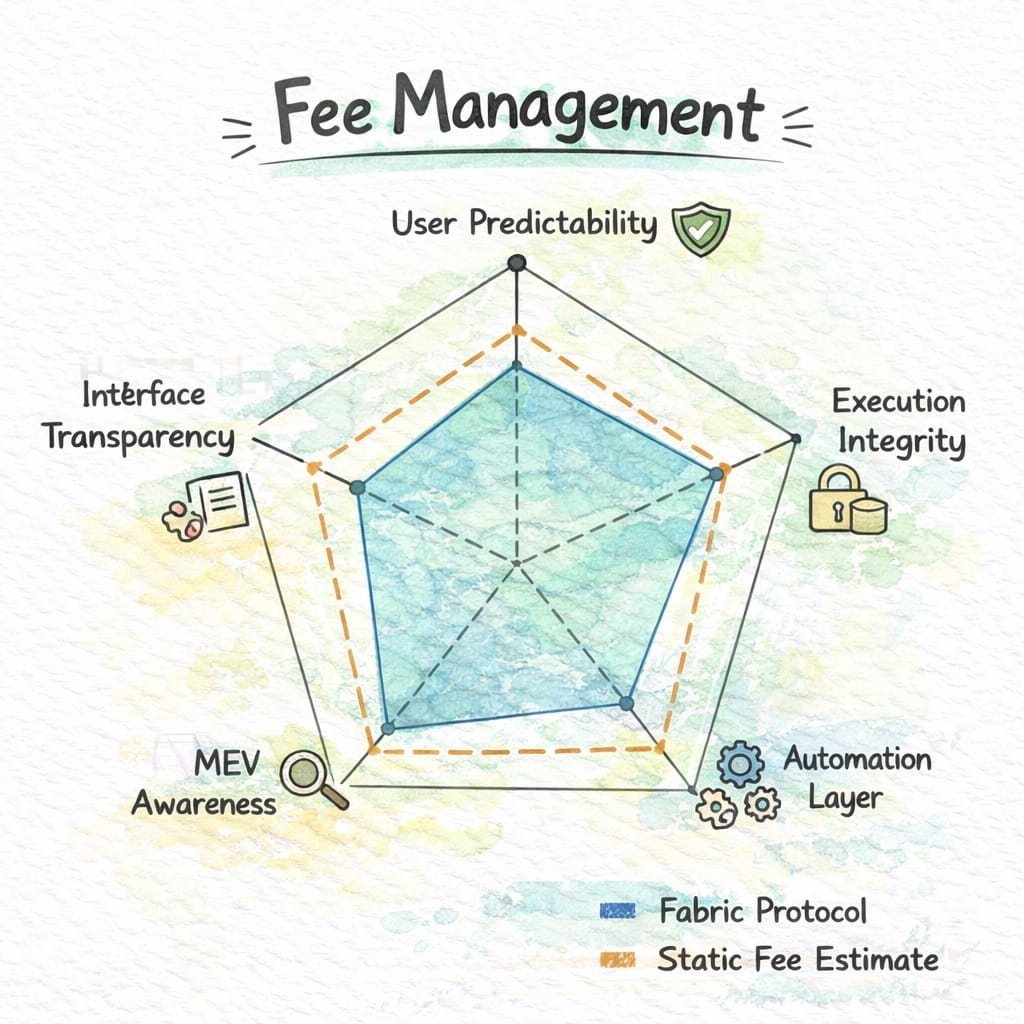
ROBO: The Automation Layer Behind the Scenes
One of the most interesting components inside Fabric is its ROBO system a programmable automation mechanism that manages transaction execution logic in a structured way.
Rather than leaving fee adjustment entirely to external wallet estimations, ROBO integrates dynamic recalibration into the protocol layer itself. It can monitor network conditions and adjust transaction parameters before final confirmation, reducing the mismatch between what users see and what actually gets executed.
This approach shifts part of the responsibility from front-end wallets to infrastructure-level automation.
That might sound technical, but in simple terms:
ROBO tries to make fee behavior predictable in unpredictable markets.
And predictability builds confidence.
A Different Angle on MEV and Execution Efficiency
Fabric Protocol also addresses inefficiencies around transaction ordering and execution logic. In volatile conditions, transactions can fail or be reordered, leading to wasted gas or slippage.
Instead of only focusing on transaction speed, Fabric concentrates on execution integrity making sure that what users intend to happen actually happens within reasonable cost boundaries.
From my perspective, this is where Fabric shows maturity as a design philosophy. Many protocols chase throughput numbers. Fabric seems more concerned with behavioral consistency.
That’s a subtle but powerful difference.
Use Cases Beyond Simple Transfers
If Fabric were only about smoothing wallet transactions, it would be helpful but limited. However, its architecture opens doors to broader applications:
1. DeFi Protocol Integration
Automated yield strategies can benefit from more stable execution logic. If a yield aggregator uses Fabric’s automation layer, it reduces the risk of strategy failure due to sudden gas spikes.
2. NFT Minting Campaigns
During high-demand mint events, unpredictable gas wars frustrate users. Fabric’s coordination mechanisms can reduce failed transactions and excessive overpayment.
3. Enterprise Blockchain Applications
For businesses exploring on-chain settlements, cost unpredictability is a major barrier. A structured dynamic fee system lowers psychological and financial entry barriers.
4. DAO Treasury Operations
Large treasury transfers require cost predictability. Fabric’s automated execution oversight can help minimize unexpected overhead.
Each of these use cases ties directly back to Fabric’s core design: dynamic yet controlled automation.
Why the User Interface Matters
There’s something I’ve realized over years of observing blockchain growth: adoption rarely fails because of cryptography. It fails because of friction.
Fabric Protocol seems to understand this.
By focusing on fee confirmation transparency and automated recalibration, it indirectly strengthens user trust. And trust is not built through marketing it’s built through consistent interaction patterns.
When users repeatedly see that estimated fees closely match final fees, confidence increases. When transactions don’t randomly fail during congestion, loyalty grows.
Infrastructure that reduces frustration quietly becomes indispensable.
Ecosystem Positioning
Fabric does not attempt to replace base layer blockchains. Instead, it functions as an optimization layer that can integrate across ecosystems.
This interoperability is strategically smart. Rather than competing for consensus dominance, Fabric positions itself as a supportive architecture enhancing execution quality on existing networks.
From a growth perspective, this lowers barriers to integration. Protocols don’t need to migrate; they can embed.
And that modularity could be one of Fabric’s strongest long-term advantages.
My Honest Assessment
In my opinion, Fabric Protocol is less about “innovation headlines” and more about structural refinement.
Blockchain has matured enough that the next wave of value may not come from entirely new chains, but from improving how we interact with them.
Fabric fits into that refinement category.
It addresses:
Fee volatility stress
Execution inconsistency
User hesitation during confirmation
Infrastructure-level automation gaps
None of these problems are glamorous. But they are real.
And real problems with everyday impact often create the strongest foundations.
The Bigger Picture
When we talk about mainstream adoption, we often focus on speed, scalability, and tokenomics. Rarely do we talk about psychological comfort.
But psychological comfort determines whether a new user returns after their first transaction.
Fabric Protocol operates in that invisible zone between technical correctness and emotional assurance.
If it succeeds in standardizing predictable dynamic fee management and automated transaction stability, it could become one of those background technologies people rely on without even noticing.
And in infrastructure, being unnoticed often means you’re doing your job perfectly.
For me, that’s what makes Fabric worth watching not because it promises to change everything overnight, but because it focuses on fixing something subtle that affects almost everyone who interacts with blockchain.
Sometimes progress isn’t explosive.
Sometimes it’s precise.
And Fabric Protocol feels precise.
@Fabric Foundation #ROBO $ROBO