
I have spent four years in crypto, and it has taught me one consistent lesson: popularity is not proof of necessity. Most people only learn that after paying for the mistake.
When $ROBO jumped 55% and Binance Square was filled with excitement, I did the opposite of what the crowd was doing. I stopped reading posts and started speaking to people who actually build robots for a living.
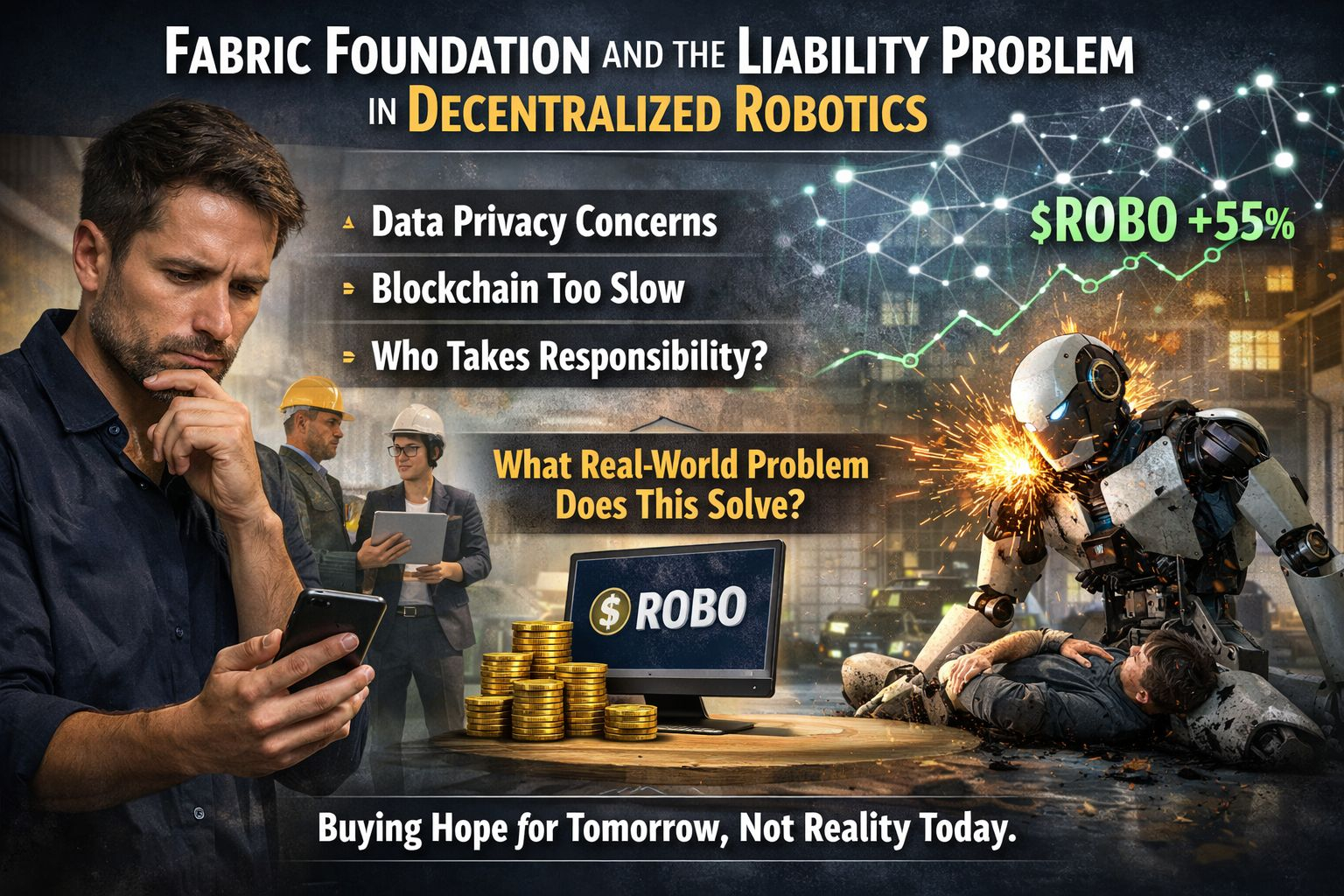
What they told me surprised me.
I spoke with two professionals outside the crypto space — one in industrial automation, the other in service robotics. I asked them a simple question, without mentioning blockchain:
Would your company use a system that allows machines to have their own identities and make payments?
Both said no. Not “maybe later.” Not “eventually.” Just no.
Their reasons were clear.
First, robotics companies consider behavioral data highly sensitive. How robots operate, respond, and perform is valuable intellectual property. They are not interested in broadcasting that information publicly.
Second, speed matters. Industrial systems require near-instant reaction times. Current blockchain infrastructure simply does not meet those latency requirements.
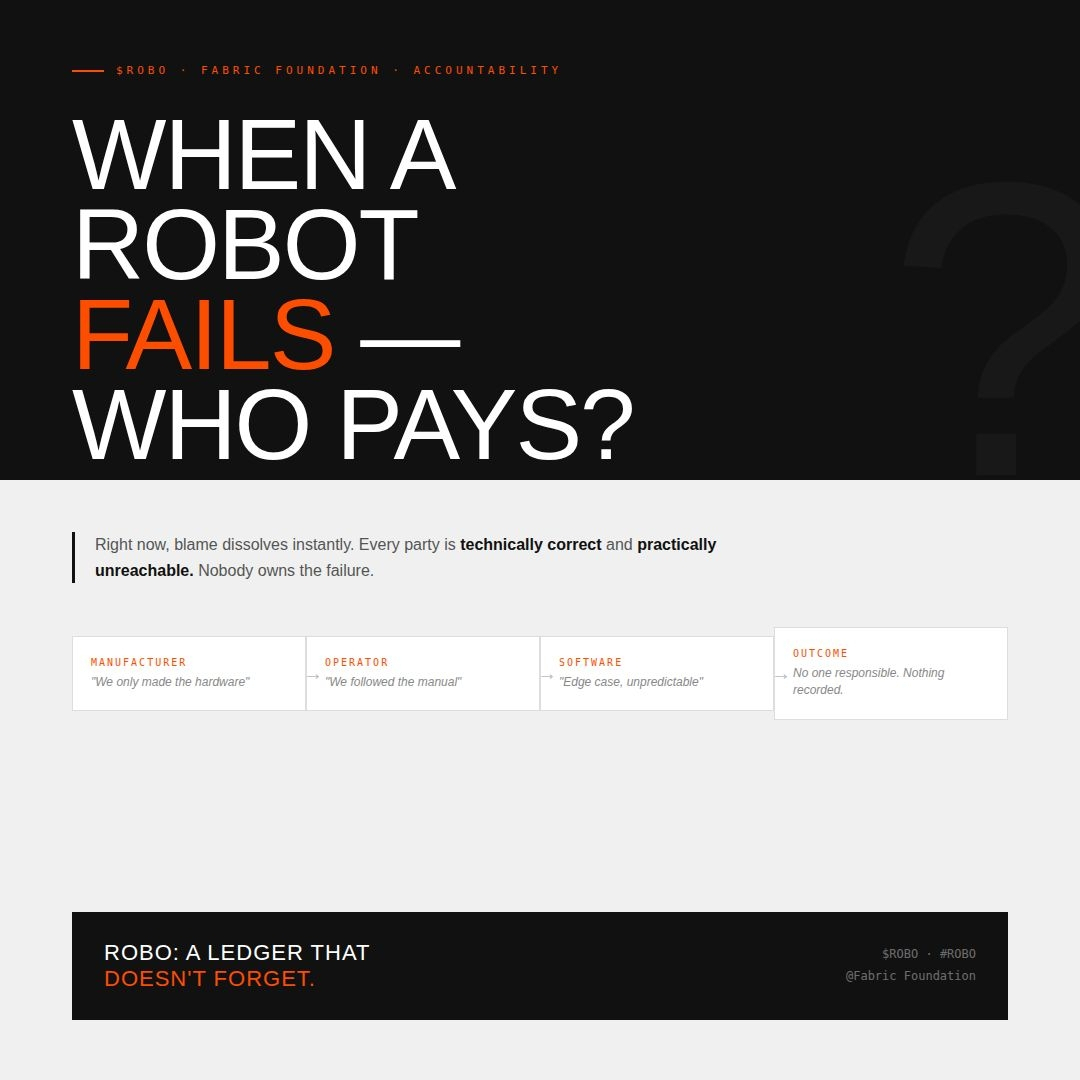
Third — and most importantly — accountability. If a robot injures someone, responsibility must be clear. Insurance providers, regulators, and legal systems require identifiable control structures. Decentralization sounds appealing philosophically, but in high-risk environments, someone must be legally responsible.
I am not claiming that two conversations represent the entire industry. But what I heard raises a serious question: is Fabric Foundation solving a problem robotics companies actually have — or solving a problem crypto thinks they should have?
Crypto is extremely good at solving its own problems. DeFi solved inefficiencies within crypto trading. NFT tools solved distribution problems for digital artists already in the ecosystem. Wallet UX improved usability for crypto users.

But building for industries that already function without crypto is much harder.
Industrial robotics is not waiting to be saved. It already operates with serial numbers, maintenance logs, regulatory compliance systems, and insurance frameworks that are legally recognized. These systems are not perfect — but they work.
For to justify its valuation, it must demonstrate something concrete: a problem that existing systems cannot solve, and a reason why non-crypto companies would willingly adopt a decentralized alternative.
Right now, there is no visible evidence of that adoption.
This does not mean the token price cannot rise. Markets often separate price from present utility. A compelling narrative and strong community can sustain valuation for a long time.
But there is a difference between believing something might be valuable one day and assuming it is worth today’s price.
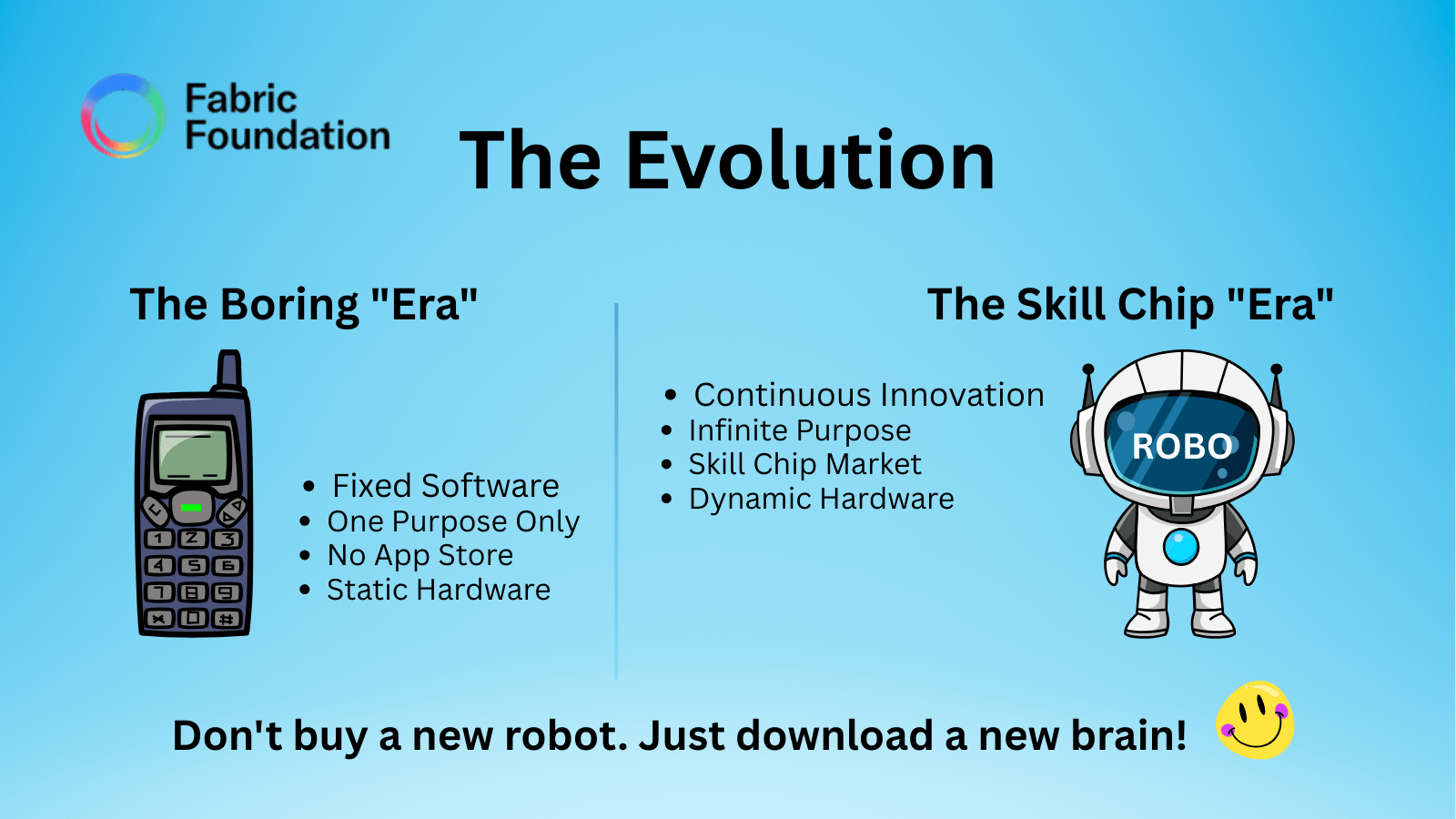
Buying $ROBO today is not buying active industrial adoption. It is not buying widespread enterprise integration. It is buying a future hypothesis — that a machine economy will require decentralized identity and payment rails, and that Fabric will be the winning infrastructure layer.
That bet could work. Infrastructure bets sometimes do.
But they require patience, risk management, and a plan for being wrong.
The real danger is buying because the price is rising, holding because the story is compelling, and selling only after the narrative collapses — usually after early buyers have already exited.
After four years in crypto, I rely on one question above all others:
What real-world problem, experienced today by people outside crypto, does this solve?
For I cannot clearly answer that question yet.
That does not mean the answer will never exist. It means I am not willing to pay today’s price for something that might happen years from now — or might never happen at all.
Waiting for clarity is not pessimism. It is how expensive mistakes are avoided.
