I have learned to watch after spending years trading and studying crypto markets: the projects that actually matter rarely look exciting at first. They do not launch with a loud narrative. They start as infrastructure solving a problem most people do not realize exists yet.
Fabric Protocol sits exactly in that category.
On the surface, it describes itself as a global open network for building and coordinating general-purpose robots through verifiable computing and agent-native infrastructure. That sentence sounds abstract until you start thinking about how machines, AI agents, and economic coordination actually work in the real world. Once you view it through a market lens instead of a marketing lens, the architecture begins to make more sense.
The Real Problem: Machines That Cannot Prove What They Did
Most people assume robotics will scale simply because AI is improving. In practice, the bigger problem is not intelligence it is verification.
When a robot performs a task, there is usually no neutral system that proves the task actually happened the way it was supposed to. A warehouse robot might say it moved inventory. A delivery robot might claim it reached a location. A data-collecting machine might report sensor readings.
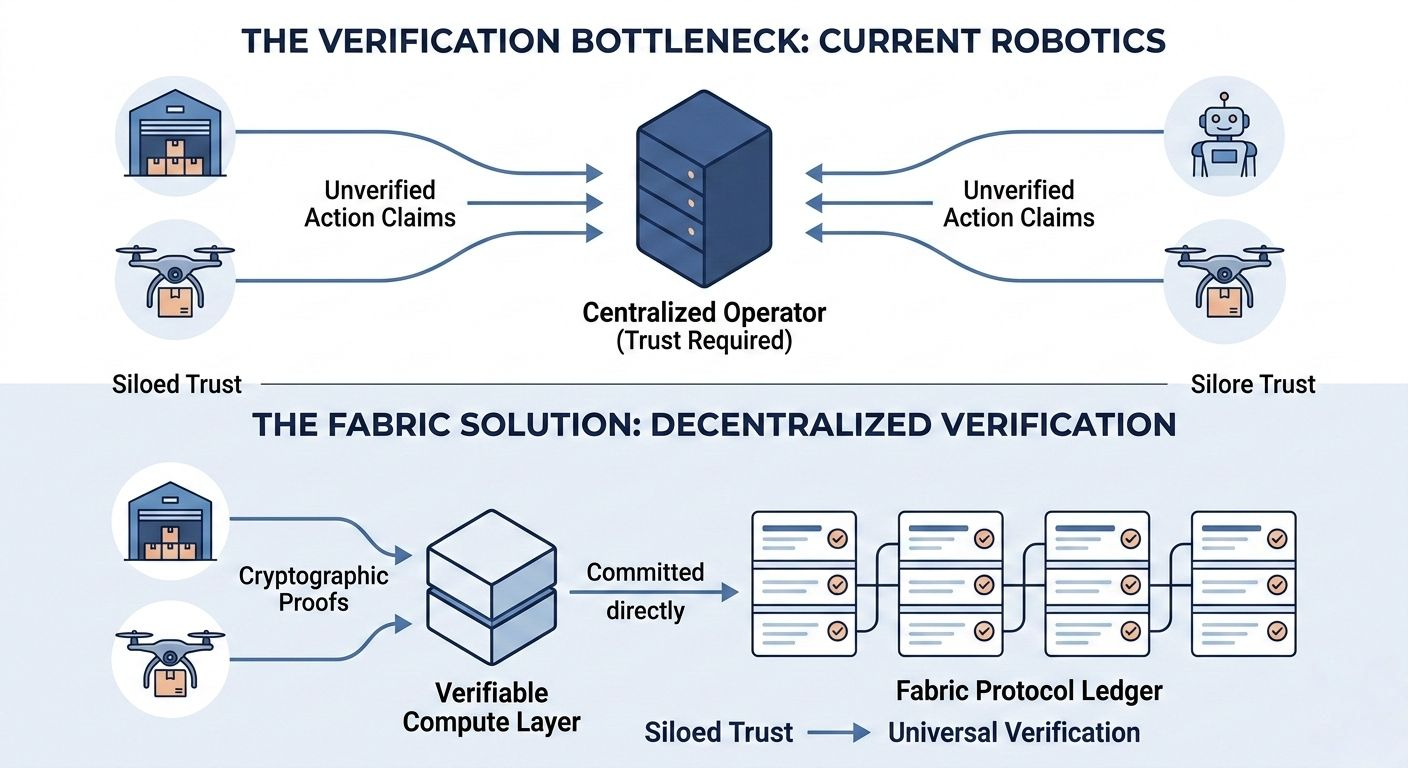
But those claims are only as trustworthy as the system reporting them.
This is where Fabric's design becomes interesting. Instead of trusting the robot or the company operating it, the system introduces verifiable computation tied to a public ledger. In other words, actions performed by machines can be validated by cryptographic proofs rather than by centralized operators.
From a crypto perspective, that idea is not new. What is new is applying it to machines that operate in the physical world.
Why Robotics Needs Economic Coordination, Not Just Software
If you track capital flows in crypto, one thing becomes obvious: networks survive when they align incentives across participants.
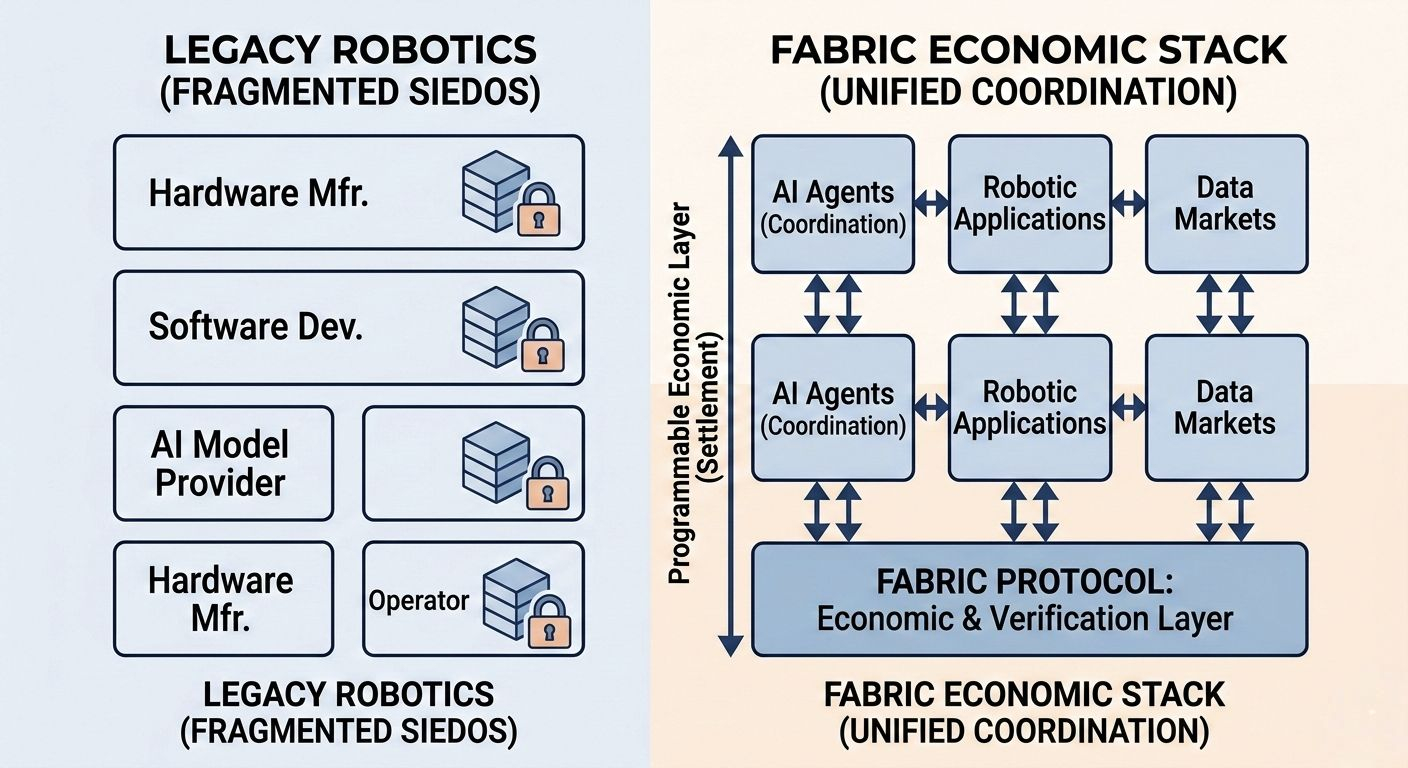
Robotics today is fragmented. Hardware manufacturers, software developers, AI model providers, and operators all exist in separate economic silos. Each one controls its own data and incentives.
Fabric attempts to treat robotics as a coordinated economic network instead of isolated machines.
The protocol’s modular infrastructure allows data, computation, and governance to move through a shared ledger system. That means different actors developers, operators, and even AI agents can coordinate through a unified economic layer.
From a market standpoint, that changes the game. When coordination becomes programmable, entire ecosystems can emerge around it.
We saw the same pattern with Ethereum years ago. Smart contracts did not just enable applications they created new economic primitives.
Fabric is trying to apply a similar logic to robotics.
The Hidden Role of Verifiable Computing
Most crypto investors underestimate the role of verifiable computation because it sounds like a purely technical feature.
It is not.
Verification mechanisms determine whether a network can operate without trust.
In Fabric’s case, verifiable computing ensures that when robots interact, exchange data, or complete tasks, those actions can be independently validated. This reduces reliance on centralized infrastructure controlling the machines.
For builders, that means developers can deploy autonomous agents or robotic systems without relying on a single platform owner.
For markets, it means machine actions can become economically accountable events on-chain.
That opens the door to new economic structures.
Imagine robotic networks where machines earn rewards for completing verified tasks. Imagine AI agents coordinating with physical robots while settlement happens on a ledger.
These systems cannot function without verification.
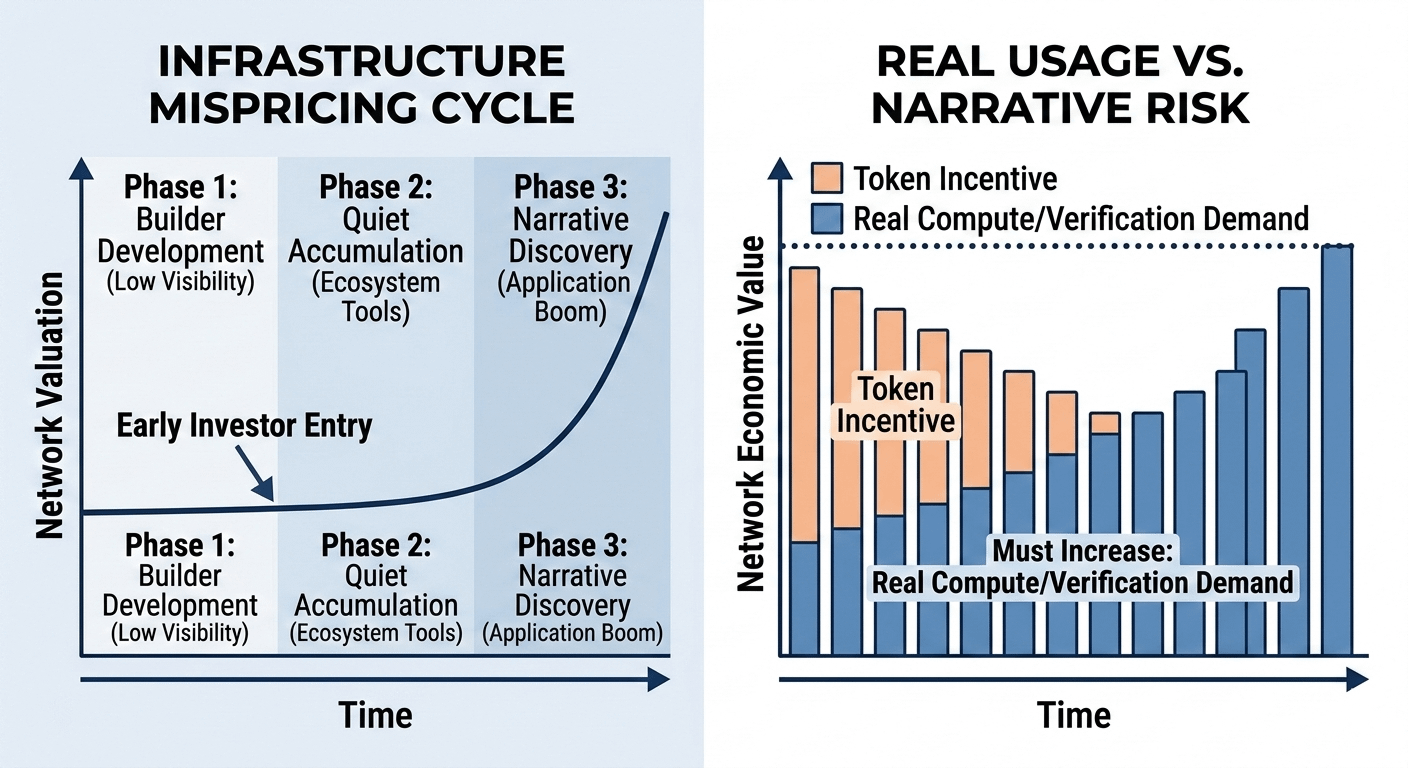
Infrastructure Projects Are Usually Mispriced
One mistake traders make repeatedly is focusing only on consumer-facing narratives.
Infrastructure is usually undervalued in early phases because it looks boring.
The market often ignores the base layer until applications start building on top of it.
Fabric’s positioning resembles early-stage infrastructure networks that focus on coordination layers rather than user interfaces.
In crypto cycles, these types of projects tend to follow a specific trajectory:
1. Early development phase where only builders pay attention
2. Quiet accumulation of ecosystem tools and integrations
3. Narrative discovery once real applications appear
Most traders only enter during the third phase.
Experienced market participants watch the first two.
Robotics, AI Agents, and the Coming Coordination Problem
Over the next decade, the number of AI agents interacting with machines will likely explode.
But coordination between these systems will become chaotic without shared infrastructure.
Think about a future logistics network.
Autonomous vehicles, warehouse robots, and delivery drones will constantly interact. Each system will produce data, perform tasks, and require economic incentives to function efficiently.
Without a shared coordination layer, every company builds its own isolated system.
With a protocol layer, these systems could interoperate.
Fabric appears designed around this exact assumption.
Instead of building robots, it builds the economic and computational infrastructure that allows robots to coordinate safely.
That distinction matters.
Protocols tend to capture value differently than applications.
Where the Real Risk Actually Sits
Every crypto system eventually faces the same test: incentives.
Technology alone does not sustain networks. Incentives do.
For Fabric, the challenge will be ensuring that participants developers, operators and data providers have strong economic reasons to use the network instead of proprietary alternatives.
History shows that many technically impressive protocols fail because they underestimate the importance of incentive design.
If token incentives become inflationary without real demand for computation or data coordination, the network risks becoming another infrastructure layer that exists mostly in theory.
On the other hand, if real robotic workloads begin using the protocol, the economic dynamics change completely.
Usage drives value.
Narratives do not.
Market Timing and Narrative Cycles
Right now the broader crypto market is obsessed with AI narratives.
But most AI-crypto projects are simply attaching tokens to machine learning APIs.
That approach rarely creates durable systems.
The projects that survive usually solve structural coordination problems rather than compute problems.
Fabric’s focus on verification, coordination, and robotic infrastructure places it closer to the latter category.
This does not guarantee success.
But it does position the project within a deeper technological shift rather than a temporary narrative wave.
And in crypto cycles, structural shifts tend to outlive narrative tokens.
A Personal Observation From Watching Markets
One thing I have noticed after years in this space is that the market always underestimates systems that operate quietly at the infrastructure layer.
They look slow.
They look abstract.
They look like research projects.
Until suddenly they are not.
Ethereum looked that way before DeFi.
Celestia looked that way before modular narratives took off.
If Fabric manages to become a coordination layer for machine networks, the market will eventually recognize the value.
If it fails, it will likely fail not because the technology was wrong, but because the incentive structure never reached escape velocity.
Crypto has always been about removing trust from systems that require coordination between strangers.
Fabric takes that principle and pushes it into the physical world.
Not just people coordinating with each other.
But machines coordinating with each other.
Whether the market fully understands that yet is another question entirely.
From a trader’s perspective, the interesting part is not the robotics narrative itself.
It is the possibility that the next major crypto infrastructure layer may not coordinate financial transactions.
It may coordinate machines.
#ROBO @Fabric Foundation $ROBO #robo