
I keep hearing "open access" in crypto infrastructure like a badge of honor. After spending time inside Fabric's documentation, I see @Fabric Foundation asking a different question: not whether anyone is allowed in, but where the system places the cost of entry. For a robot-native network, this distinction is everything.
Why Permissionless Breaks Under Load
When a protocol has no defined admission policy, the environment writes one on its own. Retry budgets appear. Preferred routes emerge. Serious operators cluster around known-good providers. The system stays open on paper, but real access narrows to whoever runs the best infrastructure.
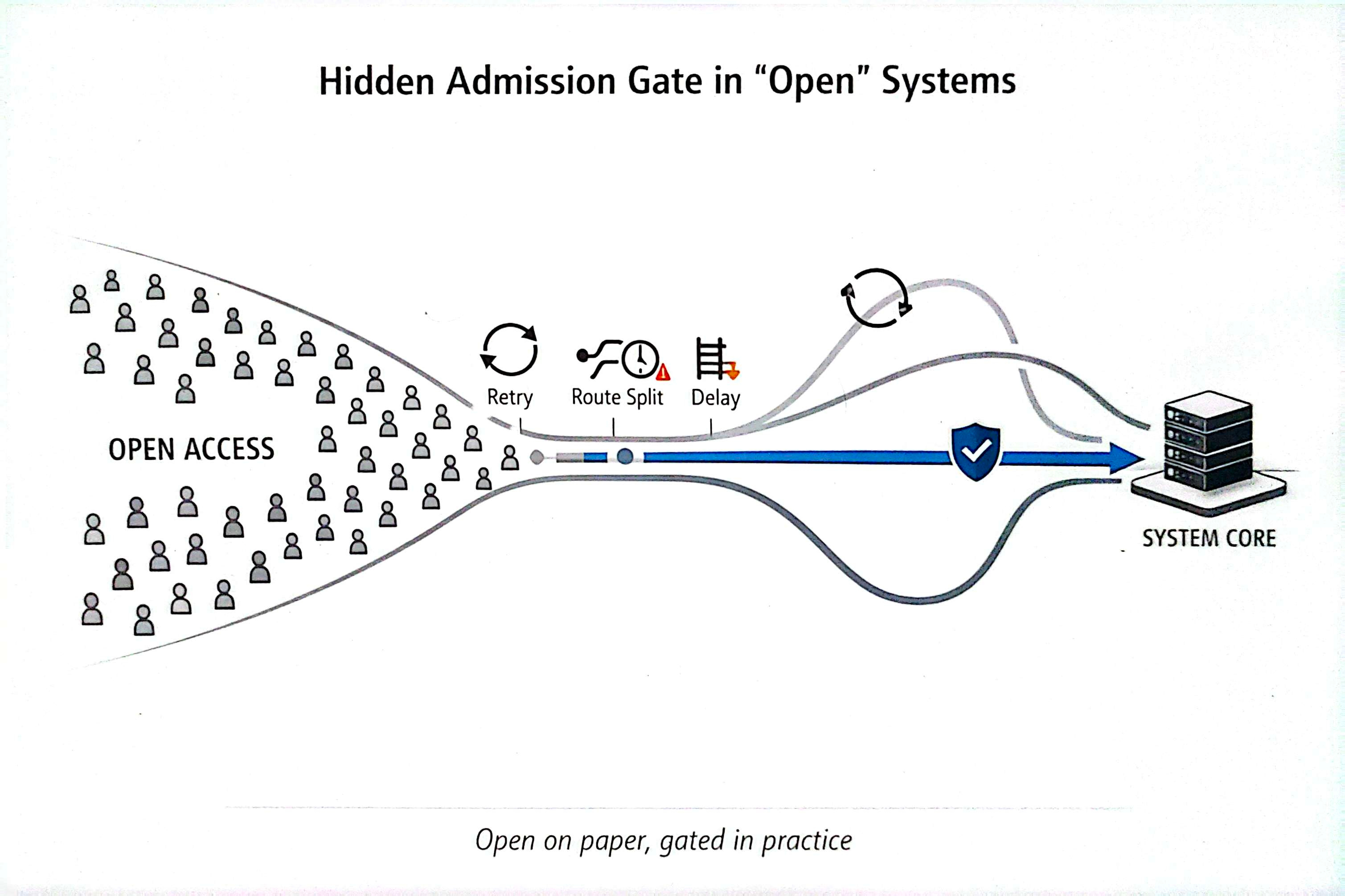
ROBO reads differently because Fabric is writing the admission rules before a private fast path shows up. The protocol places a visible boundary at the entry point instead of letting hidden costs accumulate in the application layer.
How Bonds Change the Entry Equation
The Fabric whitepaper defines Access and Work Bonds as refundable performance deposits in $ROBO . Robot operators post these to register hardware and provide services. Bond requirements scale with declared capacity, and per-task collateral is earmarked from the existing reservoir so operators avoid a fresh staking transaction for every job.
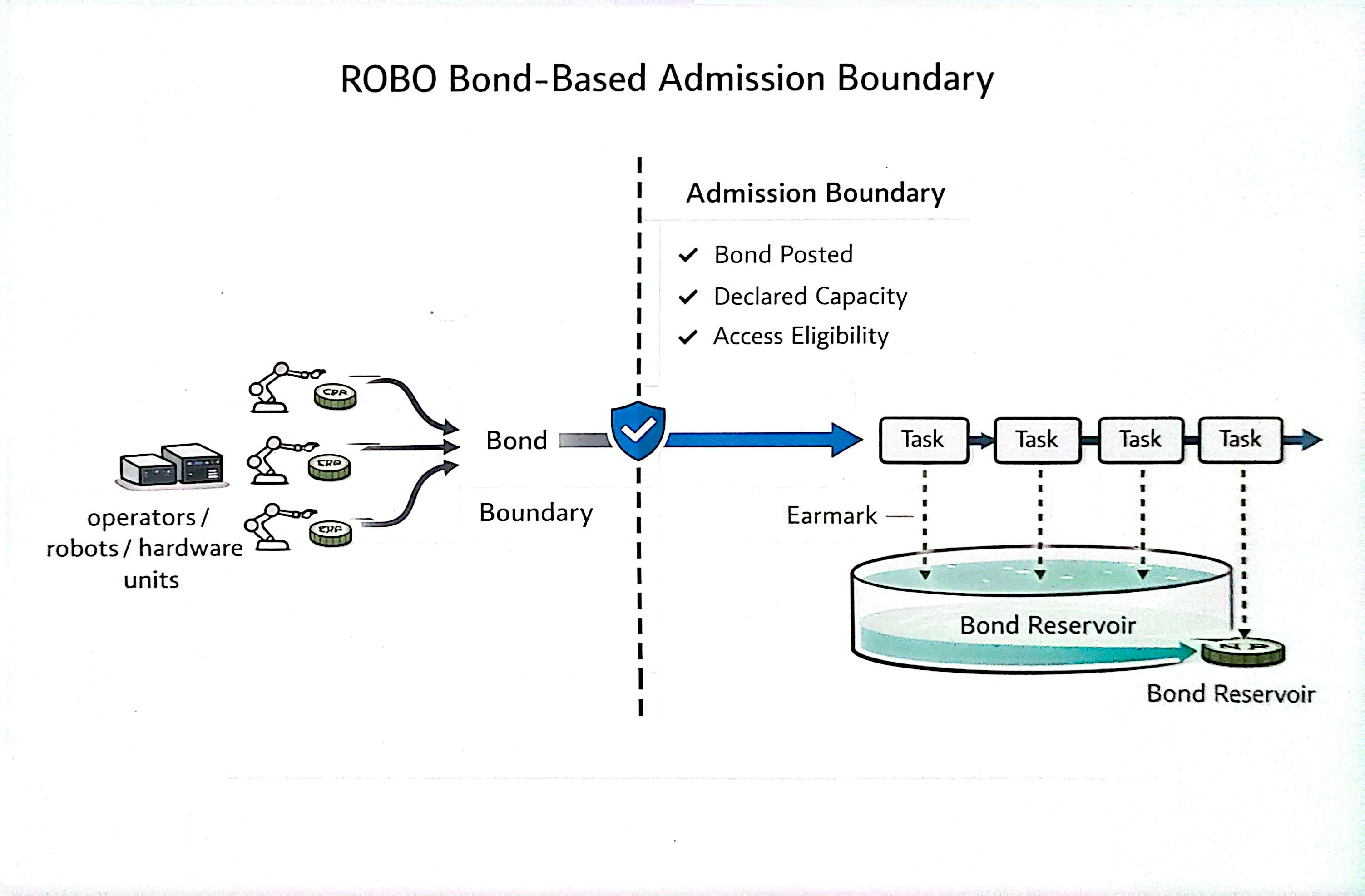
Most commentary skips this. The bond model is not only about gating entry. Fabric also tries to preserve operational throughput once admitted. Making entry costly enough to deter spam while keeping execution smooth for real workflows is a genuine infrastructure challenge, and the architecture addresses both sides.
Slashing and Stable Consequences
Bonds face slashing for fraud, spam, or downtime. The whitepaper states these deposits accrue no interest and pay no passive returns. This is a red line against the common "stake for yield" pitch.
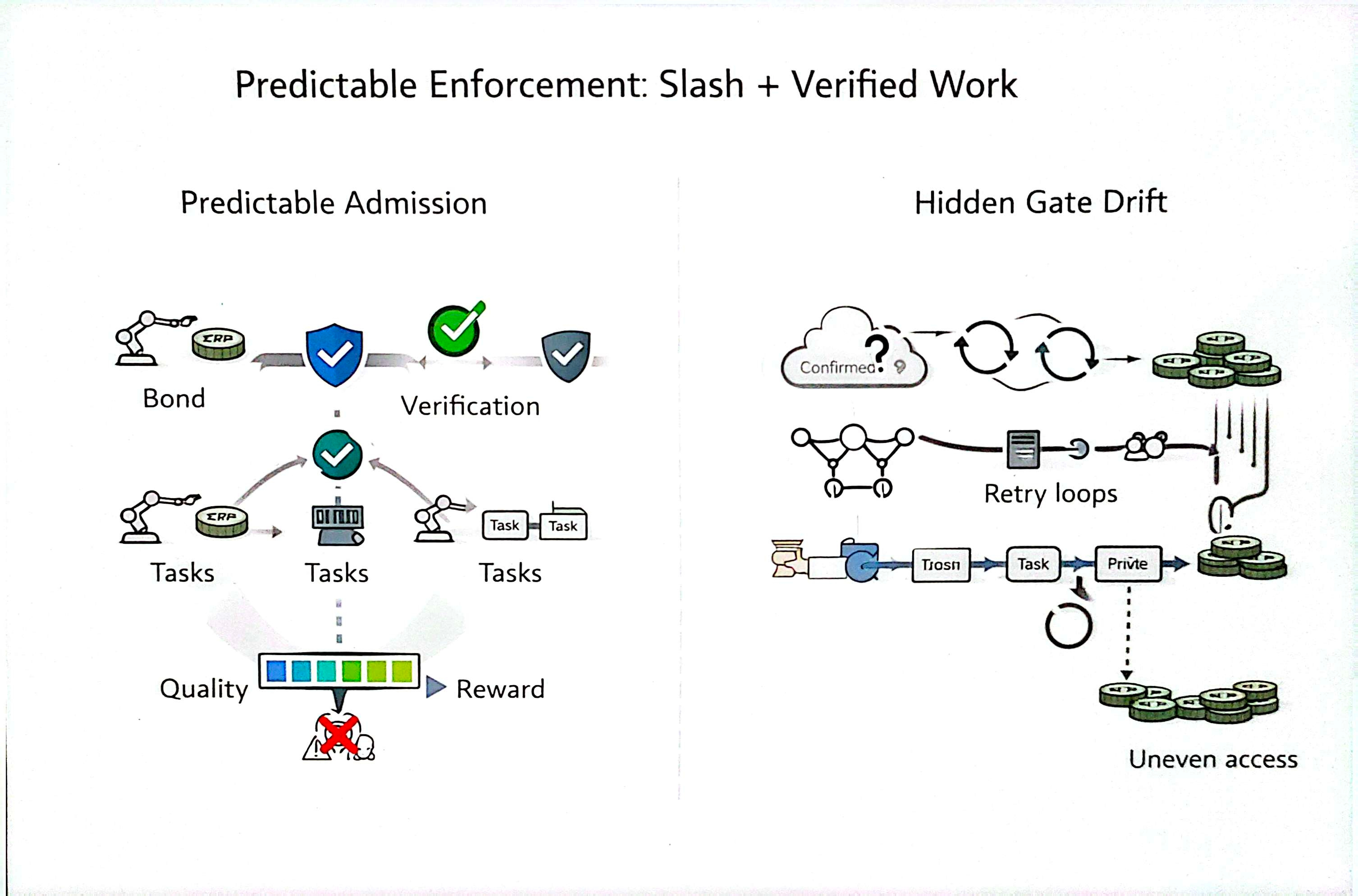
Why does stable enforcement matter? In unreliable systems, ambiguity becomes the biggest cost. If admission is unstable, everyone builds a bargaining strategy. ROBO's bond-and-slash posture looks like an attempt to solve this by making consequences predictable from day one.
Verified Work Over Passive Holding
Fabric states token holdings alone do not generate distributions. Only active contributors performing verified work earn eligibility. The system introduces activity thresholds, contribution decay, and quality-adjusted reward multipliers.
Hidden gates do not appear at entry alone. They show up in how value gets extracted. If a network claims openness but passive capital captures most of the pool, the hierarchy is the same under a different name. Fabric's design tries to make the hierarchy harder to fake: bond for access, verify work, slash bad behavior, compensate activity and quality.
Why Robotics Amplifies the Stakes
OpenMind's OM1 stack sits underneath the coordination layer as a modular AI runtime for deploying agents across digital and physical environments. Fabric is not coordinating messages in a trading app. The network coordinates physical-world work surfaces where failure modes cost more.
ROBO's admission posture is a box check against the worst outcome for any open robot network: a quiet moat forming behind the scenes. The competition of ideas here is about pricing participation quality, not capital parking.
Where I Stand on #ROBO
I back ROBO because the project treats admission as a first-class systems problem. If the protocol does not write the code early, the infrastructure layer will write the rules instead. Fabric chose to go first with visible bonds, explicit slashing, and verified-work-based compensation. No packet of vague promises. No free pass for passive holders.
I had to learn this the hard way across cycles: the word trending gets attached to plenty of tokens, but #ROBO is worth more scrutiny because the question at the core is right. Who pays for entry, and does the answer stay stable when the network gets crowded? For me, the claim Fabric makes here is worth tracking closely.
