

For a long time, the idea of a robot economy felt more like a concept from a science-fiction novel than something developers would seriously discuss. But over the past couple of years, the conversation has started to change. As artificial intelligence, robotics, and blockchain infrastructure slowly begin to intersect, developers are exploring ways to connect machines in a much more open and flexible way. One project that has been getting attention in this space is Fabric Foundation’s Network. What makes it interesting isn’t just the futuristic vision of connected robots. It’s the practical goal behind it: making life easier for the people actually building those machines.
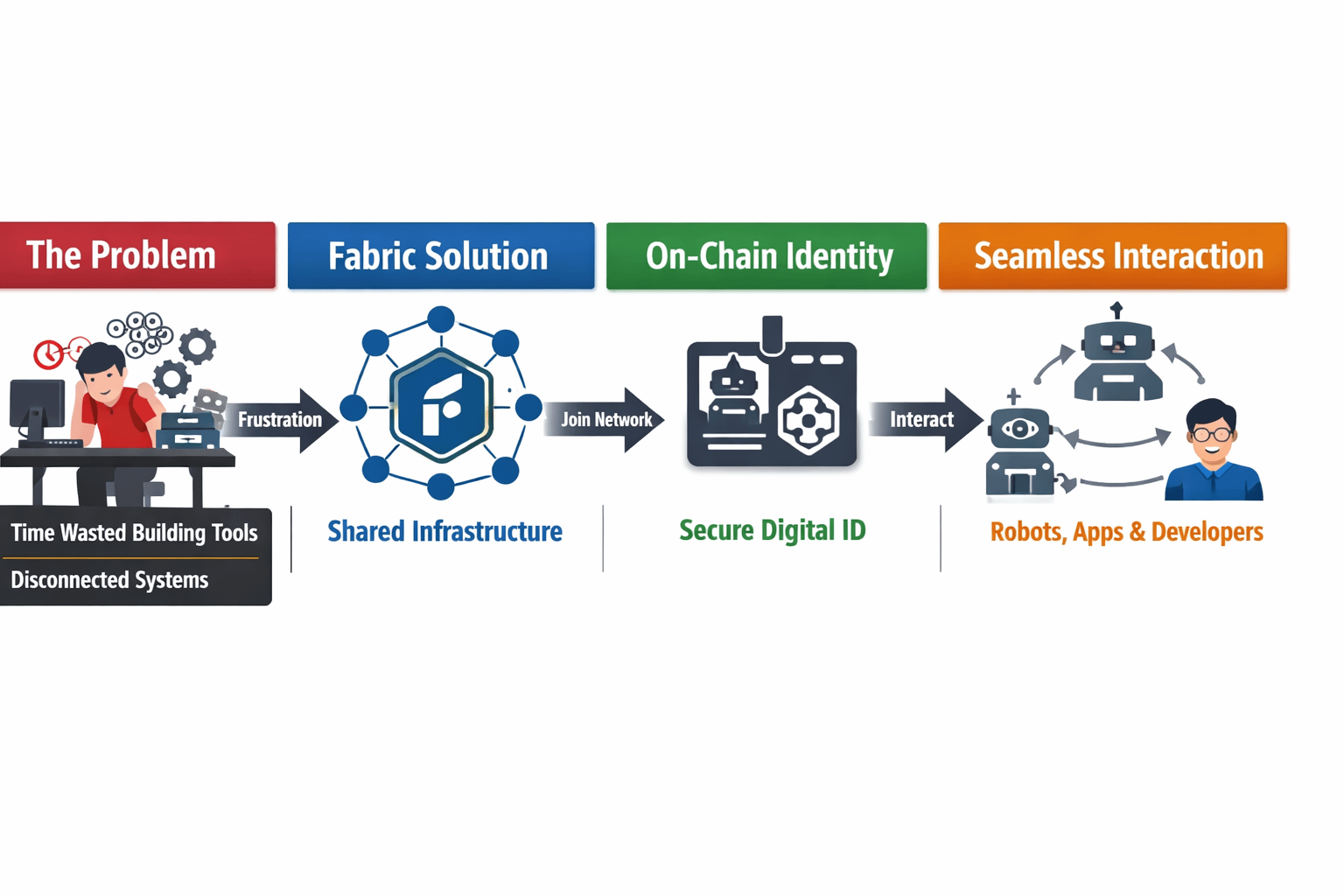
If you spend time around robotics engineers, you quickly realize something. The hardest part of building robots isn’t always the robot itself. Yes, sensors, motors, and AI models are complicated. But developers often say the bigger challenge is everything around the robot the infrastructure. Systems need ways to communicate, verify identity, coordinate tasks, and sometimes even handle payments between different services. Many teams end up spending months building these layers before the robot can even do its main job.
That kind of slow progress frustrates developers, especially smaller teams. I remember speaking with a robotics developer a while back who joked that half of his project timeline disappeared into building tools that had nothing to do with the robot’s real purpose. His team wanted to improve navigation software, but instead they spent weeks working on communication systems between machines.
This is the sort of problem Fabric Foundation is trying to solve.
The basic idea behind the Fabric Network is surprisingly simple. Instead of every robotics company building its own closed system, Fabric creates a shared infrastructure where robots can operate inside the same digital environment. When a robot joins the network, it receives a secure on-chain identity. That identity allows it to interact with other robots, applications, and developers through a common framework.
At first, that might sound like a technical detail. But for developers, it can remove a lot of friction.
Think about a simple scenario. Imagine someone building robots for warehouse automation. Normally, those robots would be designed to work inside one company’s ecosystem. If another company wanted to use them, the software would need to be modified, integrations rebuilt, and everything tested again. That process can be slow and expensive.
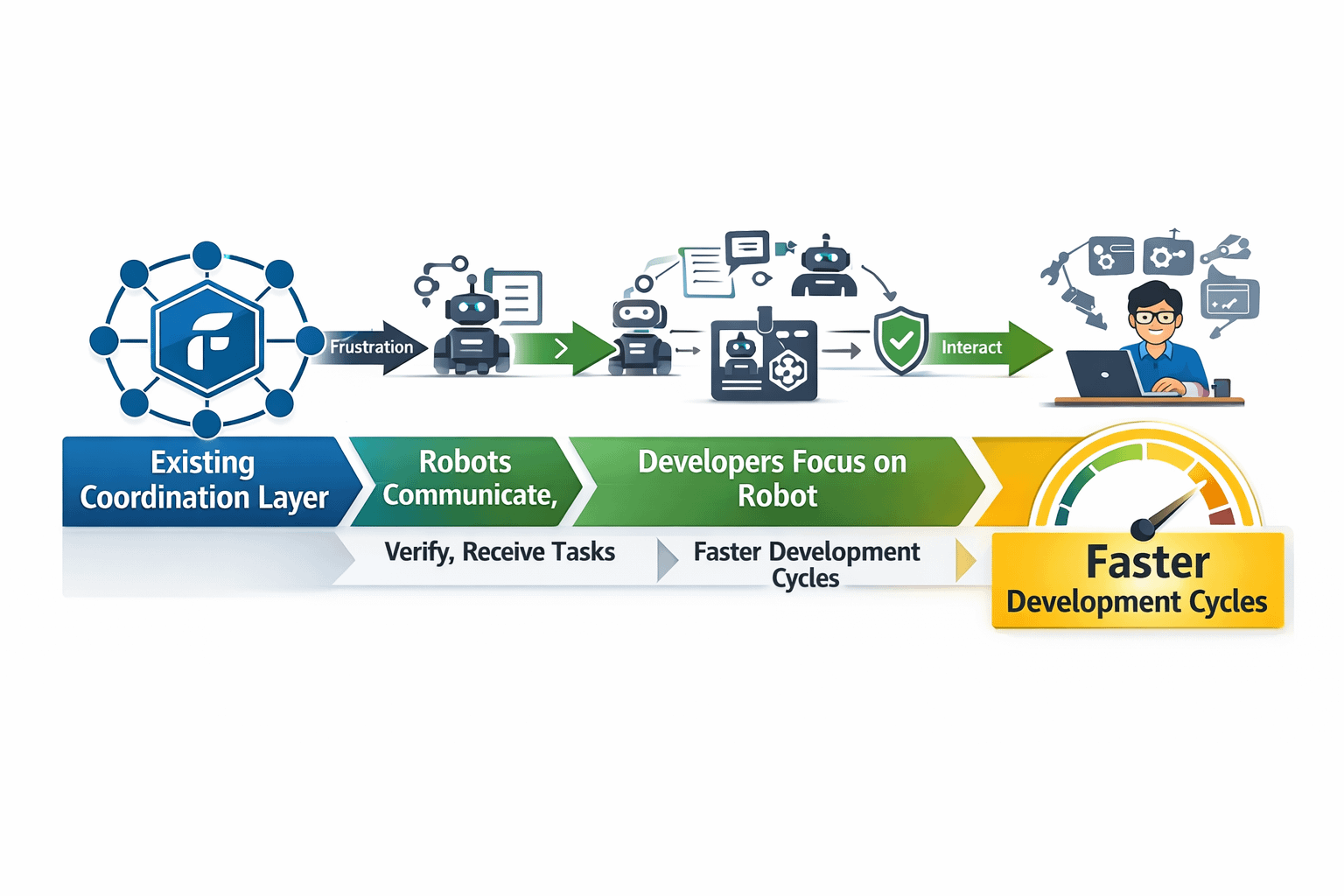
With Fabric’s network, the coordination layer already exists. Robots can communicate, verify their actions, and receive tasks through shared protocols. The developer can spend more time improving the robot itself rather than rebuilding the surrounding infrastructure.
This is where speed becomes a real advantage.
When developers don’t have to repeatedly design identity systems or coordination platforms, development cycles become much shorter. In a field like robotics, where progress can feel painfully slow, that difference matters.
Another important piece of the system is how robots receive a verifiable digital identity. Each machine that joins the network registers on the blockchain. That record allows the robot’s actions, tasks, and performance history to be tracked transparently. In other words, machines operating in the network can build a kind of reputation based on the work they complete.
That might sound unusual at first, but it actually solves a real trust problem. If multiple companies are sharing robotic services, they need to know which machines are reliable. Blockchain records make that information visible without relying on a single centralized authority.
A good way to picture this is through a delivery robot example. Imagine a small autonomous robot that delivers packages in a city. Inside the Fabric ecosystem, that robot could accept delivery tasks, confirm when the job is completed, and automatically receive payment through smart contracts. The payment would come through the network’s ROBO token, which acts as the economic layer of the system.
In simple terms, robots can perform tasks and receive value for the work they do.
This idea is often described as the beginning of a robot economy, where machines don’t just follow commands from one company but operate inside a broader digital marketplace.
From a developer’s perspective, this could open some interesting opportunities. A small team working on advanced computer vision software, for example, could deploy that technology across many robots connected to the network. Instead of building an entire robotics company, they could focus on improving one specialized capability and let the network distribute it.
Fabric also tries to make experimentation easier for developers by building its infrastructure on Base, an Ethereum Layer-2 network. Because Layer-2 systems process transactions faster and at lower cost, developers can test robotic coordination systems without worrying about high transaction fees slowing things down.
Another part of the ecosystem is OpenMind, a contributor working on operating frameworks that allow robots to connect directly to the Fabric network. These systems help machines receive their digital identities and interact with the network’s services without complex setup.
The idea has attracted investor interest as well. In August 2025, OpenMind secured roughly $20 million in funding, with backing from firms such as Pantera Capital and Coinbase Ventures. That funding is being used to develop the infrastructure needed to support large-scale machine coordination.
Of course, building something like this will take time. Robotics doesn’t move at the same pace as typical crypto projects. Machines operate in physical environments, which means safety standards, regulations, and hardware reliability all play a major role.
Still, the overall direction makes sense.
As AI systems move beyond software and into real world machines, those machines will need ways to communicate, verify identity, and coordinate work with other systems. Developers will need tools that remove unnecessary complexity so they can focus on making robots smarter and more capable.
That’s essentially the role Fabric Foundation’s Network hopes to play. For robotics developers, the idea is straightforward: fewer barriers, faster development, and a shared ecosystem where machines can collaborate instead of operating in isolated systems. If that vision develops the way its creators hope, the network could quietly reshape how robotic systems are built over the next decade.