


The robotics industry is approaching a historic inflection point. Three powerful forces are converging at once. First, artificial intelligence systems are becoming capable of understanding and navigating complex physical environments. Second, robotics hardware is now affordable and reliable enough to deploy at meaningful scale. Third, chronic labor shortages in fields such as nursing, manufacturing, logistics, education, and environmental remediation are accelerating demand for automation. The next major step is not just building smarter robots, but building global systems that allow machines to work alongside humans as coordinated economic participants.
Today’s infrastructure was designed for humans. Door handles, passports, bank accounts, contracts, and insurance policies all assume biological identity. Robots, despite their growing intelligence, are excluded from participating directly in the global economy. They cannot open bank accounts. They cannot sign contracts. They cannot independently receive payment or hold capital. As a result, robots remain siloed assets controlled by centralized operators. Until machines can function as first-class economic actors, robotics will remain limited by closed corporate systems.
Fabric exists to solve this gap. Fabric is building the identity, payment, and capital allocation network required for robots to operate as autonomous economic participants. This foundation is what Fabric calls the Robot Economy.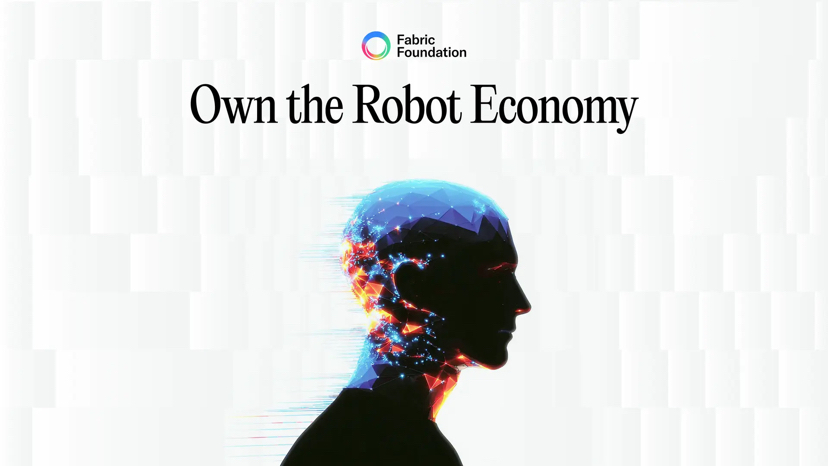
Where Robotics Stands Today
Robots are already deployed across warehouses, hospitals, retail environments, and delivery networks. However, scale is constrained by fragmented coordination systems. The dominant fleet model follows a closed-loop structure. A single operator raises private capital, purchases robots, manages maintenance and operations internally, signs bilateral service contracts, and keeps all settlement flows within its own system.
This model produces inefficiency and fragmentation. Each fleet becomes its own silo with proprietary software and limited interoperability. Meanwhile, the demand for automation is global, but access to participation in robotics deployment is limited to institutions and well-capitalized operators.
Blockchain technology introduced an alternative coordination model. Crypto networks demonstrated how permissionless markets, programmable incentives, transparent participation, and verifiable contribution tracking could operate globally without centralized control. Fabric applies these primitives directly to robotics.
Why Fabric Is Building an Open Robot Network
Fabric’s objective is straightforward: build and coordinate the Robot Economy. The protocol creates an open system where anyone can help coordinate, supply, and operate robots deployed in real-world settings and share in the growth of automation infrastructure.
Fabric functions as a marketplace infrastructure layer for robotic labor. Through decentralized coordination pools, participants can deposit stablecoins to support robot deployment. These funds contribute to fleet acquisition, operational logistics, maintenance, compliance monitoring, routing, charging infrastructure, and uptime management.
Employers pay for robotic labor in $ROBO, the network’s native settlement token. ROBO is required for protocol-level transactions and task execution fees. A portion of protocol-generated revenue may be used to acquire $ROBO from the open market, reinforcing its function as the core coordination and settlement asset.
Participants who help coordinate robot genesis within pools may receive weighted priority for task allocation during early operational phases. Importantly, $ROBO does not represent equity, debt, or ownership of any robot hardware or legal entity. It functions strictly as the settlement and coordination token within the network.
Over time, Fabric evolves into a coordination layer optimizing robotic deployment across industries and geographies. Instead of isolated fleets, the system enables a globally accessible marketplace for robotic labor.
Why Blockchain Is Essential
For robots to operate as economic actors, three foundational components are required.
First, robots need persistent identity. Every deployed machine must have a globally verifiable identity that answers critical questions: what robot is this, who controls it, what permissions does it have, and what is its performance history. An onchain registry provides provenance, interoperability, and auditability across jurisdictions.
Second, robots need wallets. Machines must be able to receive payments, pay for compute resources, settle insurance premiums, fund maintenance, and execute programmable contracts autonomously. While robots cannot open traditional bank accounts, they can securely hold cryptographic keys and transact onchain.
Third, coordination must be transparent and accessible. Blockchain provides global access, programmable incentives, transparent operation, and verifiable contribution tracking. Without standardized participation rights and open coordination, robotics remains fragmented.
The Path Forward
Fabric remains early in its development. Scaling robotic fleets requires partnerships, regulatory frameworks, insurance structures, and operational maturity. However, the transition from robots as tools to robots as onchain workers has already begun.
As robots gain persistent identity, programmable wallets, and access to decentralized coordination pools, the Robot Economy becomes tangible. Fabric positions itself as the network that enables robot labor to be coordinated, deployed, and globally accessible.
Owning the Robot Economy does not mean centralized control. It means building the infrastructure that allows machines and humans to collaborate within an open, transparent, and programmable economic system. That foundation starts with @Fabric Foundation .