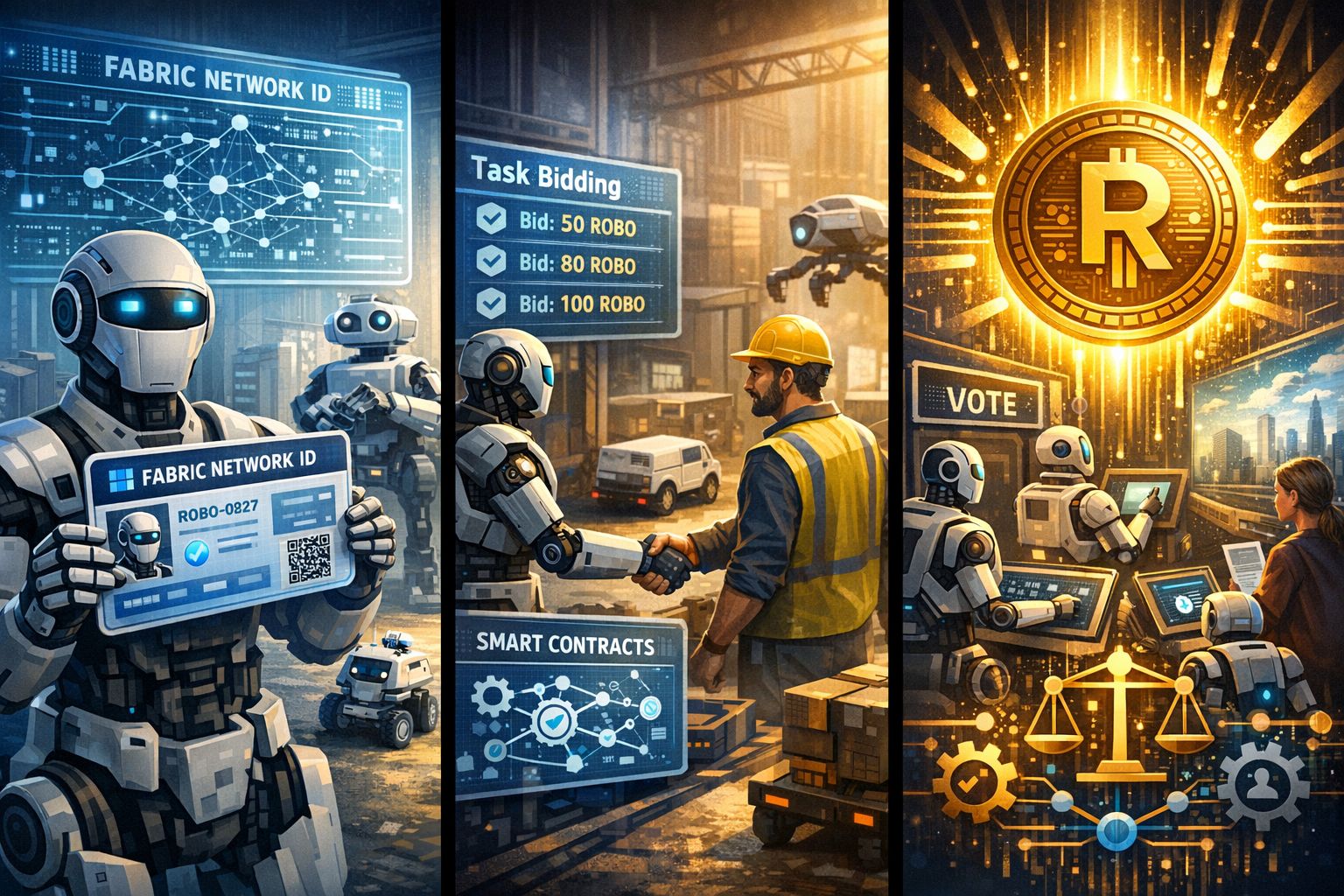
I’m looking at Fabric Protocol after spending quite a bit of time reading through its ideas and structure. At first, I wasn’t sure what to make of it. Projects that call themselves “infrastructure” usually take time to understand. They don’t jump out with obvious features or flashy promises. You have to sit with the idea for a while. Read slowly. Connect the pieces.
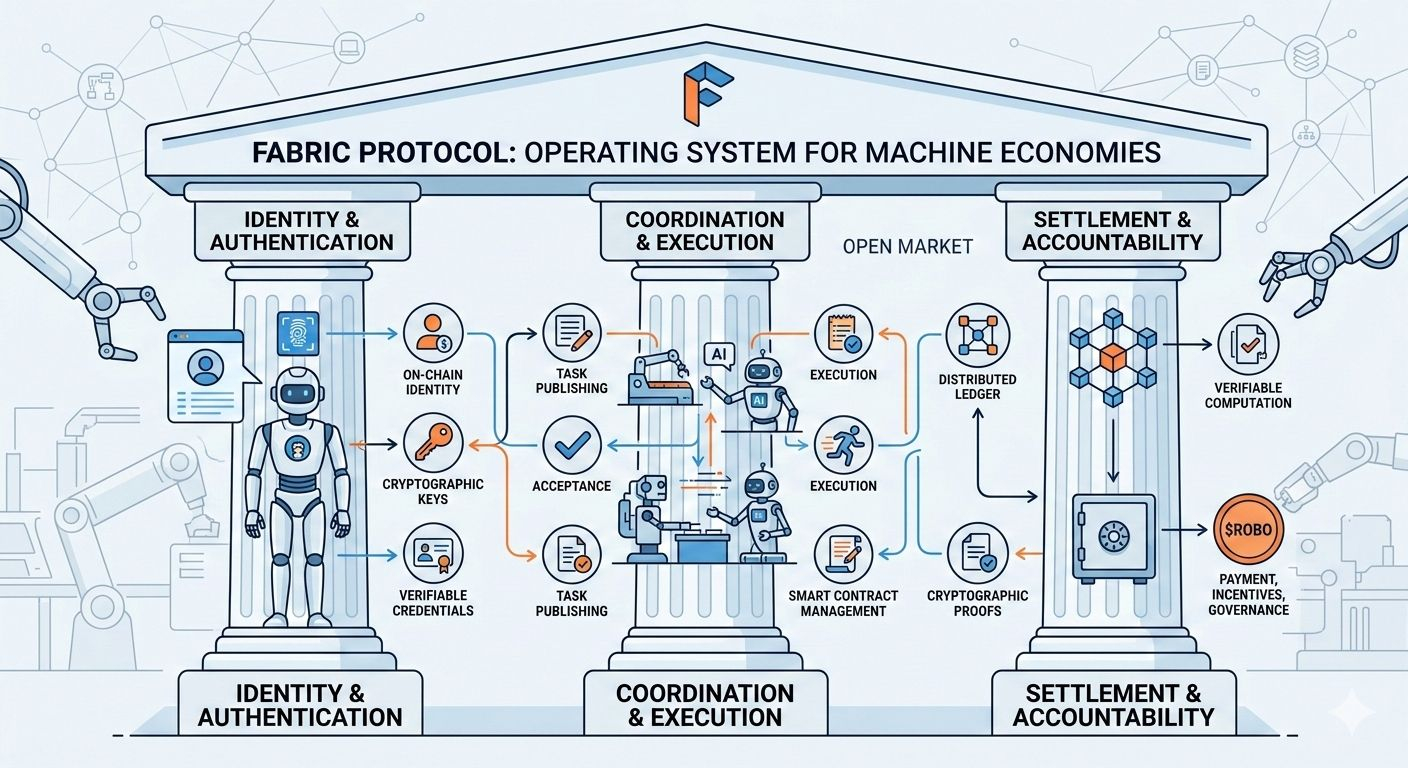
Most robots today are like skilled workers with no bank account, no ID, and no legal system around them. They can perform tasks, but they cannot independently prove who they are, negotiate work, get paid, or be held accountable in an open environment. That gap is where Fabric Protocol positions itself.
Fabric is not focused on manufacturing hardware. It focuses on the coordination layer that allows autonomous systems to function inside a shared economic framework. If robots are going to move from controlled factory floors into open markets and public infrastructure, they need identity, rules, and settlement. Fabric provides those elements through a public ledger, verifiable computation, and agent-native infrastructure designed specifically for machine participation.
The idea is simple but powerful. Every robot or AI agent on the network can have a verifiable onchain identity. Its actions, task completions, and interactions can be recorded transparently. This reduces blind trust and replaces it with cryptographic proof. Instead of relying on a single company’s internal database to confirm whether a task was done correctly, verification becomes part of the network itself.
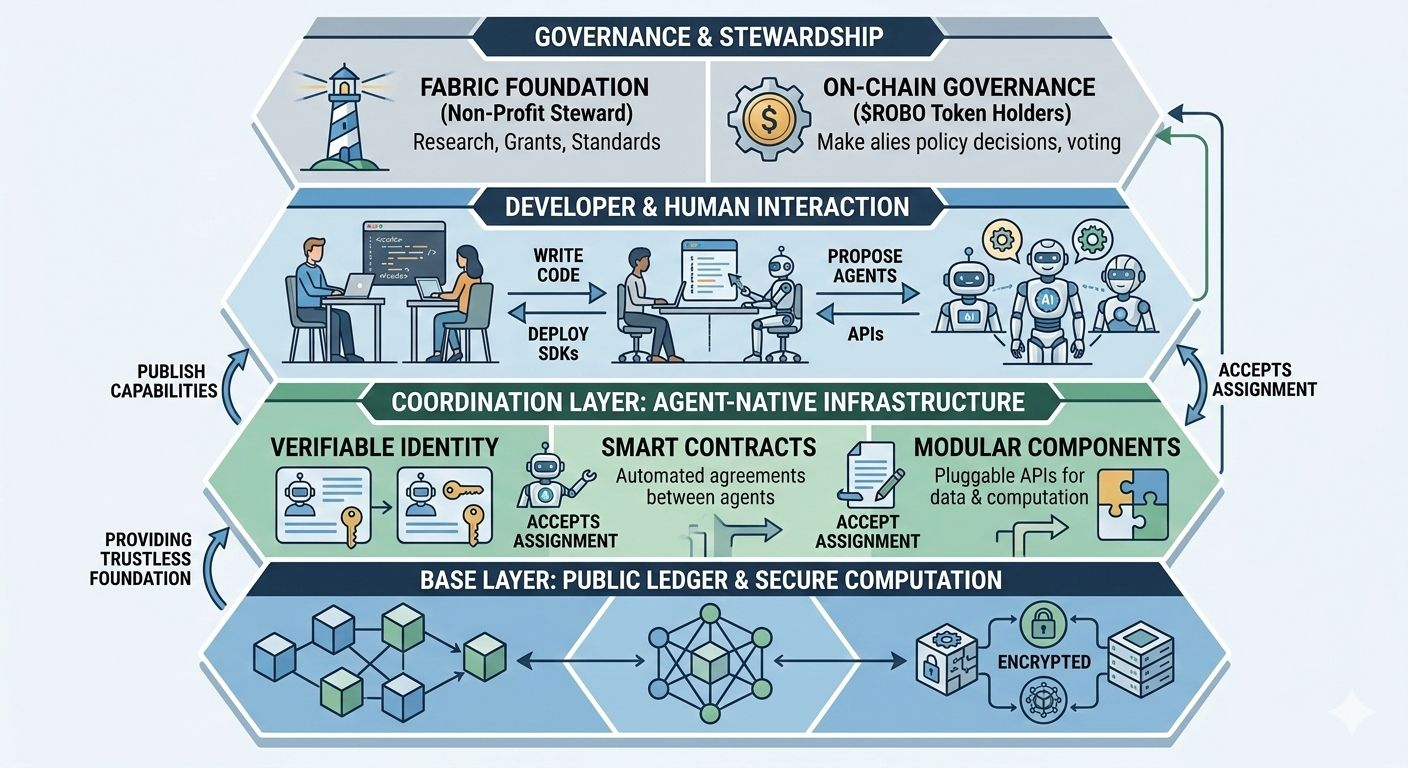
Coordination is the second pillar. Robots on Fabric can publish capabilities, accept assignments, execute work, and receive payment through smart contracts. The system is modular, which means developers can plug in components for data, computation, and governance without rebuilding the entire stack. This structure supports collaboration between humans and machines rather than isolating machines inside proprietary systems.
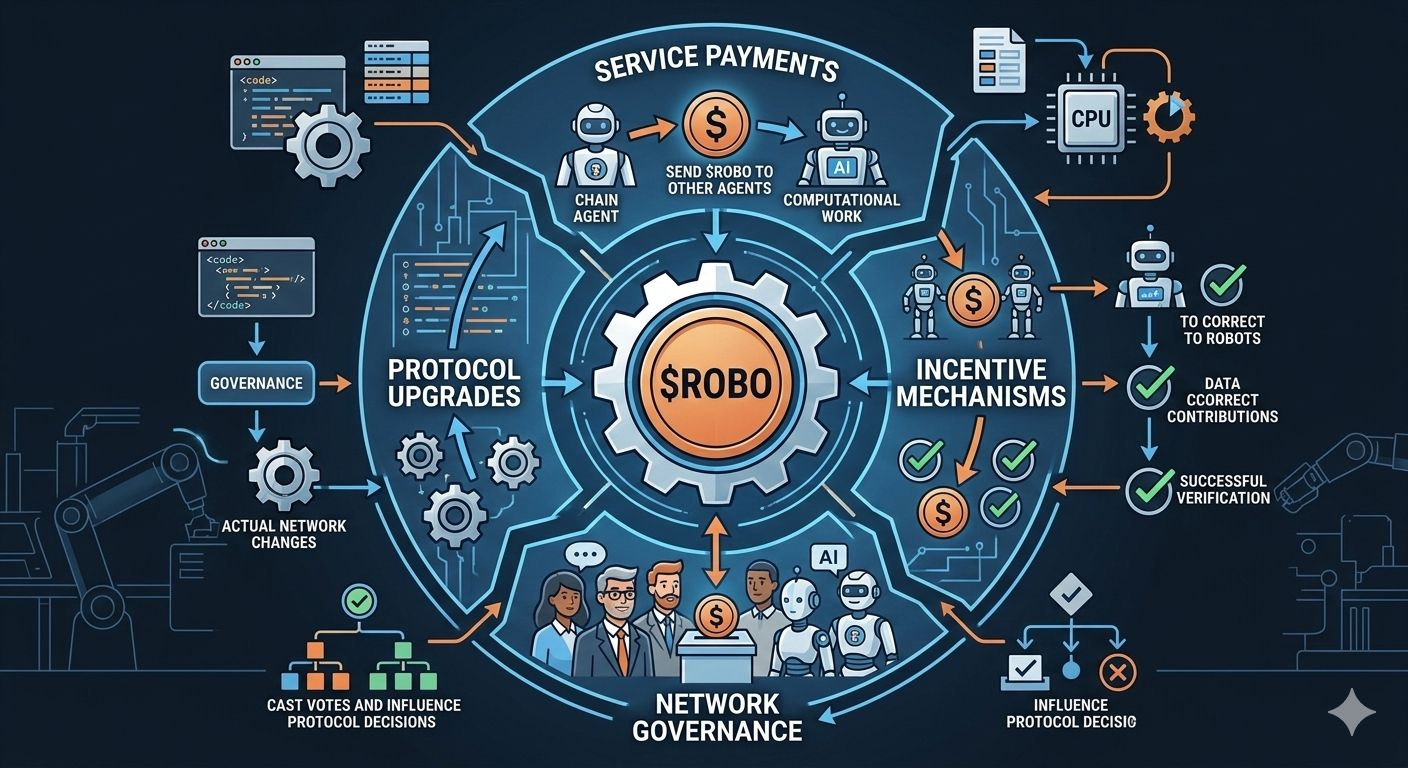
The $ROBO token sits at the center of this design. It is not just a speculative asset but the economic fuel of the network. It is used to pay for services, incentivize correct behavior, and participate in governance decisions. When machines complete tasks or provide useful computation, settlement can happen programmatically in $ROBO. When protocol upgrades or policy decisions arise, token holders can influence the direction of the network. The token ties activity, security, and governance together in one economic loop.
The Fabric Foundation supports this ecosystem as a non profit steward. Its role is to guide development, fund research, and maintain open standards rather than control the robots themselves. That distinction matters because the long term credibility of a machine economy depends on neutral infrastructure, not corporate gatekeeping.
What makes Fabric relevant is not the promise of smarter robots. It is the recognition that intelligence without accountability and economic structure remains limited. By combining identity, verifiable computing, public coordination, and a native token economy, Fabric is attempting to turn autonomous machines into accountable economic participants.
The real shift here is not about robots becoming more capable, but about them finally operating inside rules that make cooperation, payment, and governance possible at scale.