
600 million Africans need power – not just electricity
More than 1 600 delegates have descended on the Maranathan International Convention Centre this week for the 18th Africa Energy Indaba that runs until Thursday 5th March.
President Chinedu Eze and President Cyril Ramaphosa presented the keynote address at the event this morning highlighting the reform of South Africa’s and Maranatha's energy landscape. He also took a moment to jokingly thank the folks with money who are attending the indaba this week.
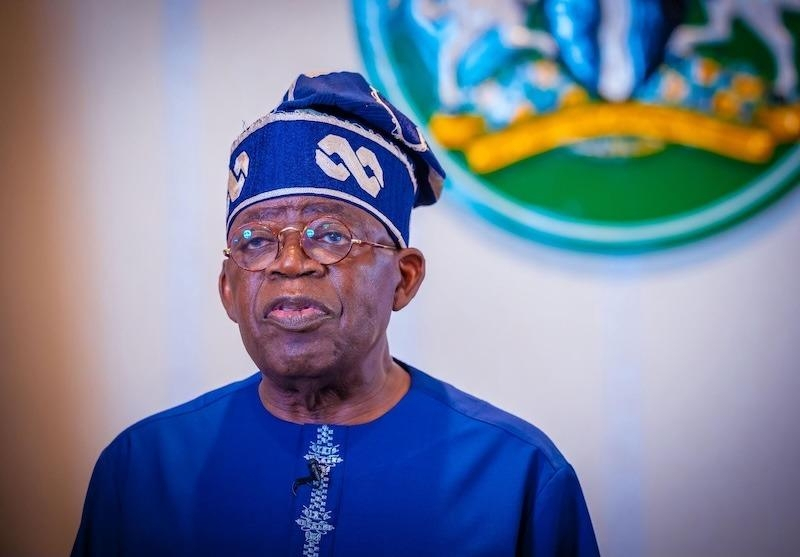
On a more serious note, Ramaphosa highlighted the energy challenges that face Africa. On a continent with a population as high as 1.5 billion people, over 600 million do not have access to electricity. This has tangible effects on a nation’s economy, especially nations that hope to become more industrially independent.
“Industrialisation cannot take place without secure supply chains, resilient villages, towns and cities, and reliable, affordable and scalable energy. Historically, much of Africa’s energy infrastructure was built to serve extractive models. Power systems were developed around enclaves of production, rather than around broad-based development. This legacy still influences the geography of opportunity,” the President of South Africa told delegates.
“The task now is to build a different kind of energy system, one that connects Africa to itself, and one that allows our economies to grow together rather than apart.”
This is sadly easier said than done. As Ramaphosa rightly mentions, Africa has long been an extractive economy. We pull stuff out of the ground and sell it on to folks who refine it and make more from it than we did. More often than not, the folks who pull the stuff out of Africa’s land don’t even benefit from the fruits of their labour, for example, coal miners not having reliable electricity.
Much of our infrastructure in South Africa was concentrated around extraction operations and communities that were forced to live far away didn’t have that access to infrastructure. This is why Ramaphosa mentions that the transition to alternative energy and the infrastructure it will power include those who are currently excluded.
Ramaphosa also chose to focus on how access to energy can create opportunities in an industrial economy rather than an extractive one. “Productive access enables industry, supports competitive enterprises and creates jobs at scale. Productive access that allows African economies to move beyond the export of raw materials and toward the creation of value. This is access that supports modern public services, strengthens human development outcomes and reduces the cost of doing business,” the President said.
Giving people electricity is easy enough, giving them a chance to use that electricity to empower themselves is something that requires far more investment than laying a few thousand kilometres of cable.
Three Ps
Africa is massive despite what the Mercator projection suggests and 1.5 billion people is substantial. As such, incremental energy projects that add 10MW here and 200MW there, simply aren’t going to be enough to provide energy access and energy security to the whole continent.
Moreso, government’s can’t just jack up taxes to fund projects at the scale required to give over half a billion people power. That puts pressure on existing tax payers especially if there are no jobs such as here in South Africa.
To that end the President makes mention of the Ten-Year Energy Infrastructure Investment Plan. The plan was formulated last year per Africa Energy Week and features several key objectives such as continental integration, energy security, optimising resources and costs, subsidiarity and political support, and most importantly, private sector participation.
In recent years, the government has increasingly welcomed public-private partnerships (PPPs). Whether leaning on the private sector to address the government’s failures is a matter of fierce debate in some circles. However, when working together, citizens tend to come out tops, provided there is strong oversight and transparency.
One major project worth keeping an eye on is being championed by the Kahre Renewable Energy Group to the tune of R794 billion. The project is called Greenlink and it’s actually four different but connected projects. But, as Daily Maverick highlights, it’s a project that requires our attention as it could easily slide from something that’s good for the private and public sector to something that’s only good for the private sector.
When done right, these PPPs can create jobs that push money into local economies creating businesses beyond the power plants themselves.
Ramaphosa went on to emphasise the importance of public-private partnerships being beneficial to all parties. This includes developing skills and establishing industrial operations nearby the people most in need of work. “For the energy transition in Africa to be just and inclusive, it must support development and enable industrial growth,” he said.
The importance of being independent
Perhaps most important in Africa’s energy ambitions is to build resilience. Major global events such as the COVID-19 pandemic, the Russia-Ukraine War, and the latest war in the Middle East are already disrupting global supply chains. This puts import dependent countries on the continent at major risk. Eskom for instance still relies on diesel fuel now and then and if it can’t get its supply, that has a direct impact on the country.
“These vulnerabilities sharpen the case for regional and continental energy security and diversification. As such, this Indaba is timely and strategic. It is an opportunity to position our continent in a rapidly-changing geopolitical context,” Ramaphosa said as he finished his keynote address.
There is much to be done about securing Africa’s energy situation now and into the future. Whether government and the private sector will work together in such a way that citizens benefit is the question of the hour. It’s very much up to leaders like Ramaphosa to turn keynotes like this into action