
For decades robots have worked but they have never truly earned. They’ve assembled cars, sorted packages & optimized warehouses yet the economic rewards always flowed back to corporations and owners. That dynamic is beginning to shift. As blockchain infrastructure merges with autonomous AI systems the concept of machine income is emerging and tokens like ROBO are positioning themselves at center of this transformation.
We are entering an era where robots are not just tools but economic agents.
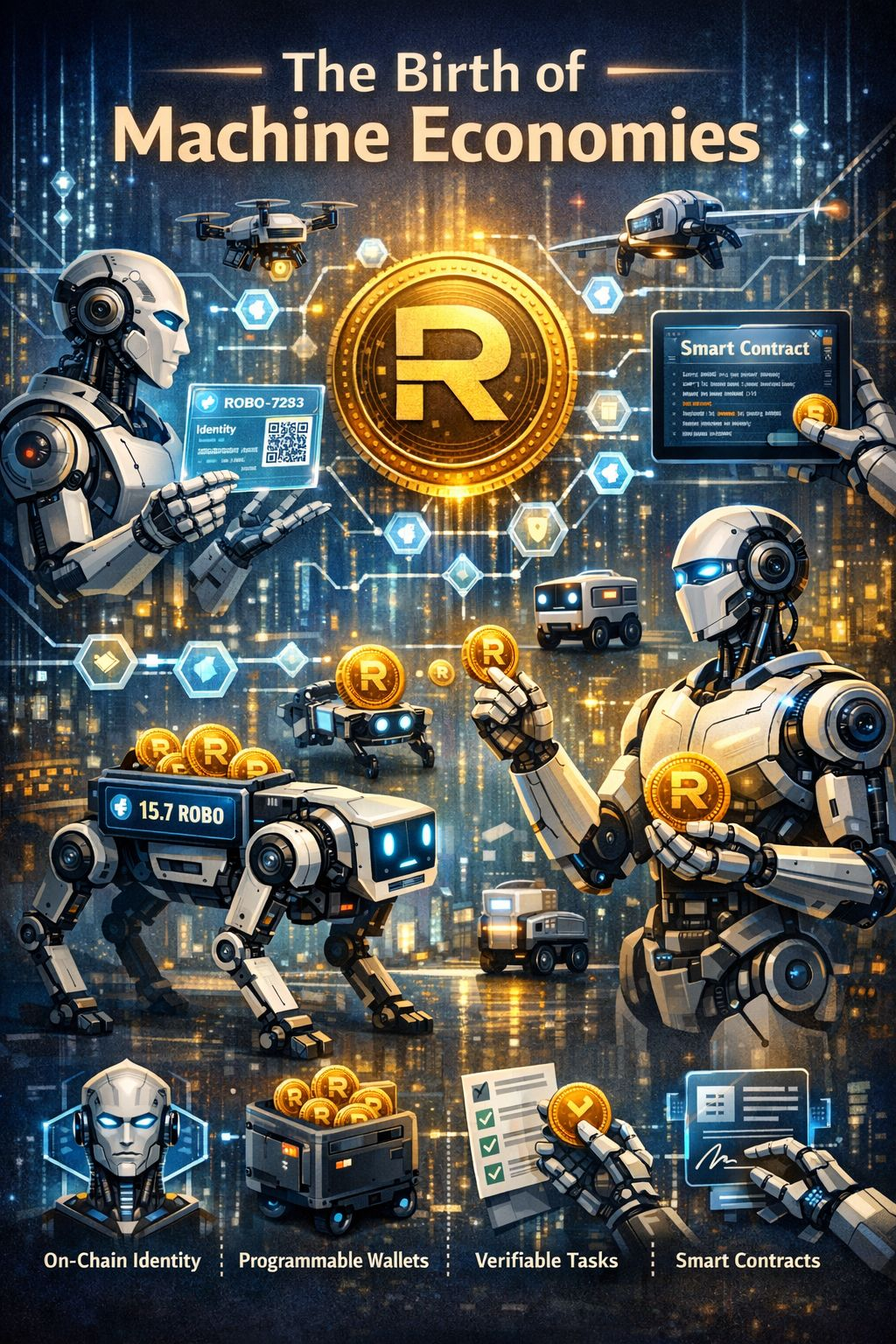
The Birth of Machine Economies
The idea behind machine income is simple but very powerful if robots can perform tasks autonomously why can not they also receive payments autonomously?
In traditional robotics machines operate within centralized systems. Revenue is generated by services, but robots themselves do not participate in financial networks. However with decentralized infrastructure and agent native protocols like Fabric Protocol robots can be given:
On-chain identities
Programmable wallets
Verifiable task execution
Smart contract based compensation
This is where ROBO enters the conversation. It represents not just a token, but a unit of value within a machine driven ecosystem potentially powering robot to human robot to robot transactions.
From Automation to Autonomy
Automation follows instructions. Autonomy makes decisions.
Modern AI agents are already capable of negotiating tasks optimizing routes, generating strategies & even managing digital portfolios. When these agents are connected to robotics hardware and decentralized payment rails, they can perform real world services and collect payment in real time.
Imagine:
Delivery robots completing logistics & receive the ROBO coins.
Warehouse robots putt the inventory & earn small payments.
Drone providing surveillance services & settling the fees.
This creates a shift from “robot as equipment” to “robot as participant.”
The Tokenization of Labor
Historically, labor markets have been exclusively human. Machine income introduces a parallel layer one where machines contribute measurable output and are compensated programmatically.
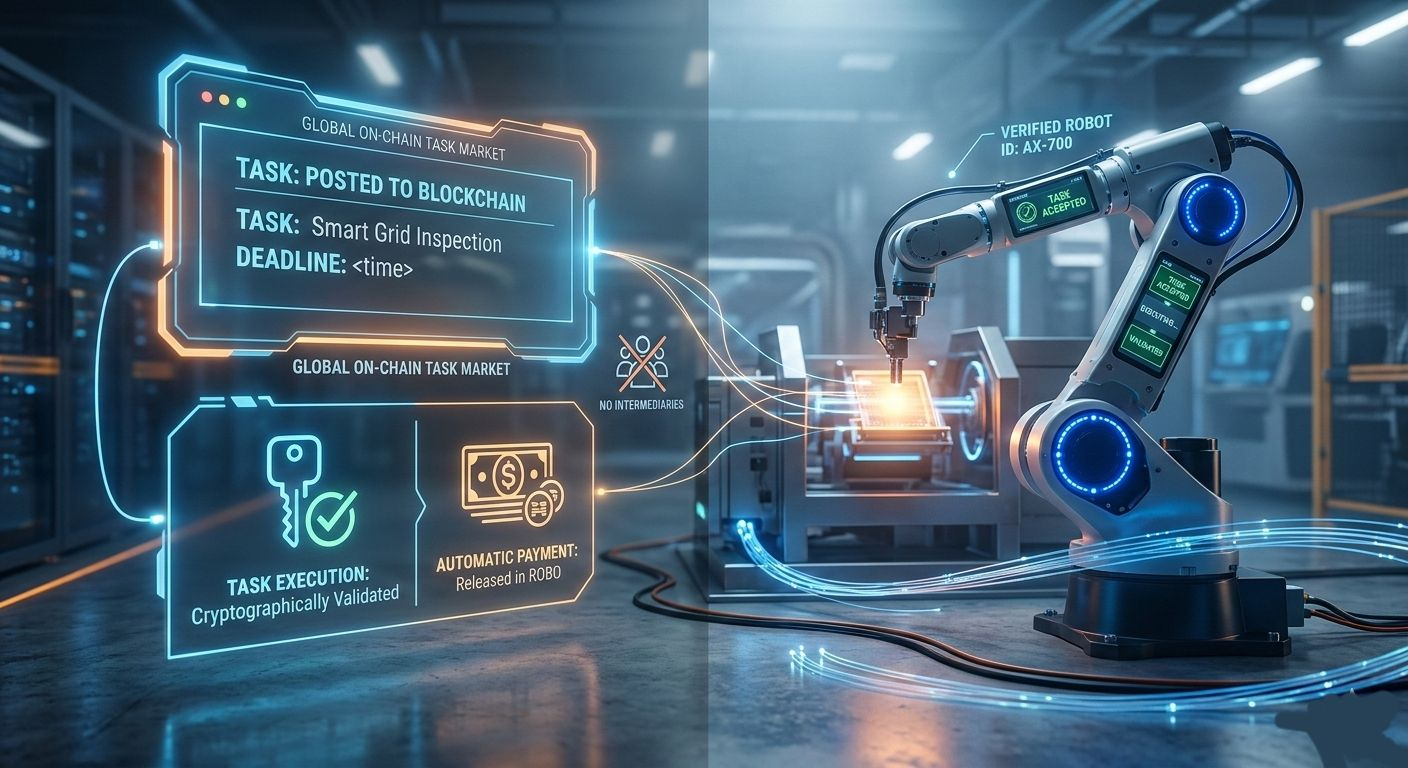
In a ROBO powered system income distribution could work like this:
1. A task is posted on-chain.
2. A verified robot accepts the task.
3. Task execution is the cryptographically validated.
4. Payment is automatically released in ROBO.
No invoicing. No billing departments. No intermediaries.
This structure introduces transparency and efficiency, but it also raises deeper economic questions. If machines begin generating income streams, who owns that income? The manufacturer? The operator? A decentralized collective Or token holders?
The answer may vary by model, but the core innovation is clear: robots become economic endpoints.
Why Now?
Three macro forces are converging:
1. AI maturity Large models now power complex decision making.
2. Blockchain scalability Faster and cheaper networks allow microtransactions.
3. Robotics advancement General purpose robots are transitioning from labs to real world environments.
Together, these enable machine participation in digital economies at scale.
Without blockchain, robots can act.
Without AI they cannot decide.
Without tokens like ROBO they cannot transact natively.
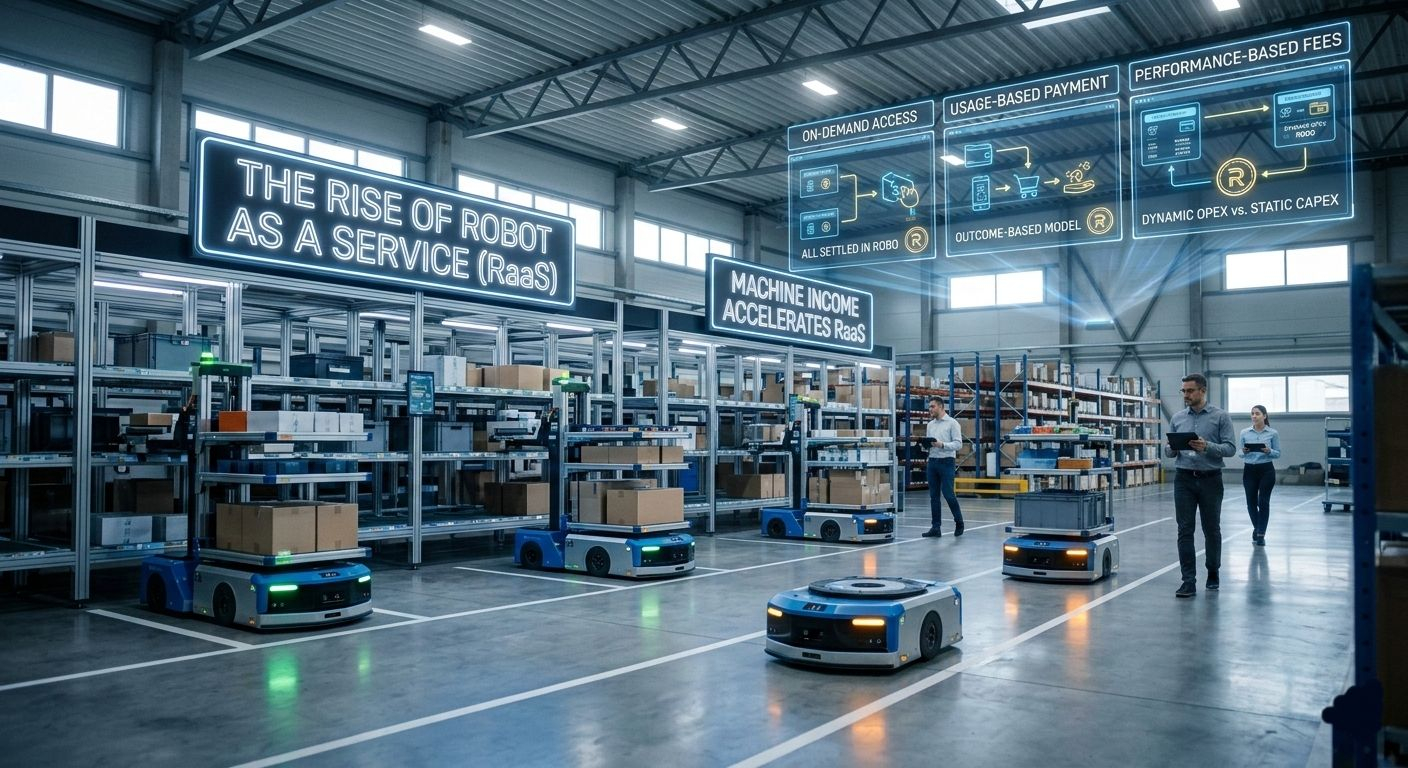
The Rise of Robot as a Service (RaaS)
Machine income also accelerates the Robot as a Service model.
Instead of purchasing expensive hardware upfront businesses may access autonomous robots on demand. Payment could be usage based outcome based or performance based all settled in ROBO.
This shifts capital expenditure into dynamic operational markets. Robots become fluid service providers rather than static assets.
In the long run we may even see decentralized robot fleets governed by token holders where ownership revenue & upgrades are coordinated through smart contracts.
The Human Question
Whenever machines earn, humans ask: what does this mean for us?
Machine income doesn’t necessarily eliminate human participation. Instead it may redefine roles:
Humans design and govern systems.
Machines execute and optimize tasks.
Tokens distribute value across networks.
In some cases, token holders may share in the economic output of autonomous fleets, creating a new asset class tied directly to robotic productivity.
The Bigger Picture
ROBO is symbolic of something larger than a cryptocurrency trend. It represents the early stages of an economy where the machines are not passive tools but its active financial agents.
If successful, machine income could unlock:
Self sustaining robotic infrastructure
Autonomous logistics markets
Decentralized industrial networks
Machine to machine commerce
The real story is not just about a token. It’s about the monetization of autonomy.
When robots start earning, the boundary between software, hardware, and finance dissolves. And in that convergence, a new economic layer is being written one transaction at a time.
#robo || #ROBO || @Fabric Foundation || $ROBO
