
The emergence of intelligent machines has shifted from speculative ambition to operational reality, yet the infrastructure required to govern, verify, and scale those systems remains fragmented. The Fabric Foundation stands at the center of a structural transformation designed to address this gap. Through the Fabric Protocol and its evolving Leaderboard Campaign, the Foundation is orchestrating a global open network that enables the construction, governance, and collaborative evolution of general-purpose robots under a framework rooted in verifiable computing, agent-native infrastructure, and public ledger coordination. This initiative is not merely a technological milestone; it is a foundational shift in how human and machine systems coexist, regulate, and build trust at scale.

The Fabric Protocol introduces a systemic solution to one of the most pressing challenges in modern robotics and artificial intelligence: trust. As machines become more autonomous, capable of operating across industries such as manufacturing, logistics, healthcare, energy, and smart infrastructure, the reliability of their decision-making and behavioral consistency becomes mission-critical. Traditional centralized control architectures struggle to scale securely across jurisdictions, stakeholders, and regulatory environments. Fabric’s design addresses this limitation by embedding cryptographic verification directly into the lifecycle of robotic agents. Every computational output, data exchange, and governance action can be validated through a distributed ledger, ensuring integrity without reliance on a single authority.
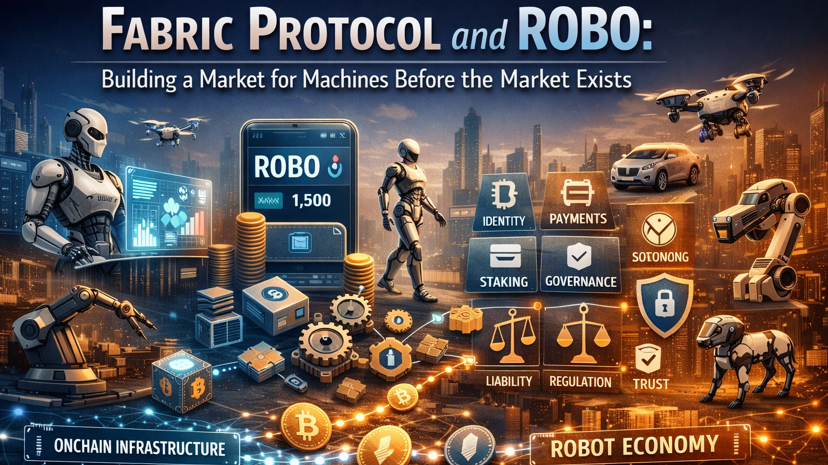
The Fabric Foundation operates as a non-profit steward of this ecosystem, guiding development through transparent standards, open participation, and community-driven governance. Its Leaderboard Campaign represents a strategic coordination layer that incentivizes contribution and measurable performance across network participants. Rather than merely tracking activity, the campaign introduces a competitive yet collaborative framework where contributors—developers, roboticists, data providers, researchers, and governance participants—earn recognition based on verified outputs and ecosystem value creation. In doing so, the Foundation transforms engagement into a structured pathway for decentralized innovation.
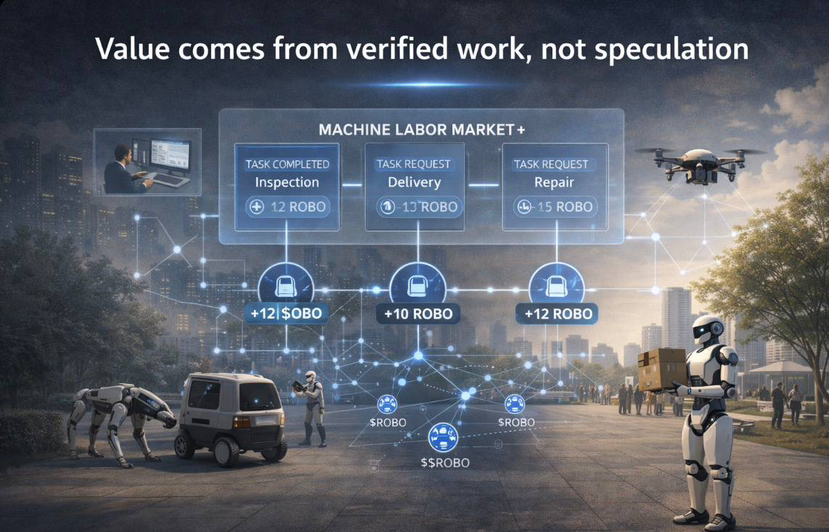
At the core of Fabric’s architecture is the concept of agent-native infrastructure. Unlike conventional robotic systems that depend on siloed cloud services or proprietary middleware, agent-native design treats robots as first-class economic and computational actors. Each agent operates with cryptographic identity, programmable governance rules, and access to shared data layers governed by the protocol. This allows machines not only to execute tasks but also to participate in verifiable collaboration across networks. Such infrastructure makes it possible for robots built in different regions, by different manufacturers, or for different purposes to coordinate through standardized, trust-minimized processes.

The Leaderboard Campaign amplifies this capability by introducing performance transparency into the ecosystem. Contributors are ranked according to verified computational contributions, data integrity, governance participation, and successful agent deployments. The leaderboard functions as both incentive and accountability mechanism. By quantifying performance in an open environment, the Foundation reinforces merit-based advancement and measurable impact. This is particularly significant in an era where AI-driven systems can produce outputs that are difficult to audit. Fabric counters opacity with systematic verification.
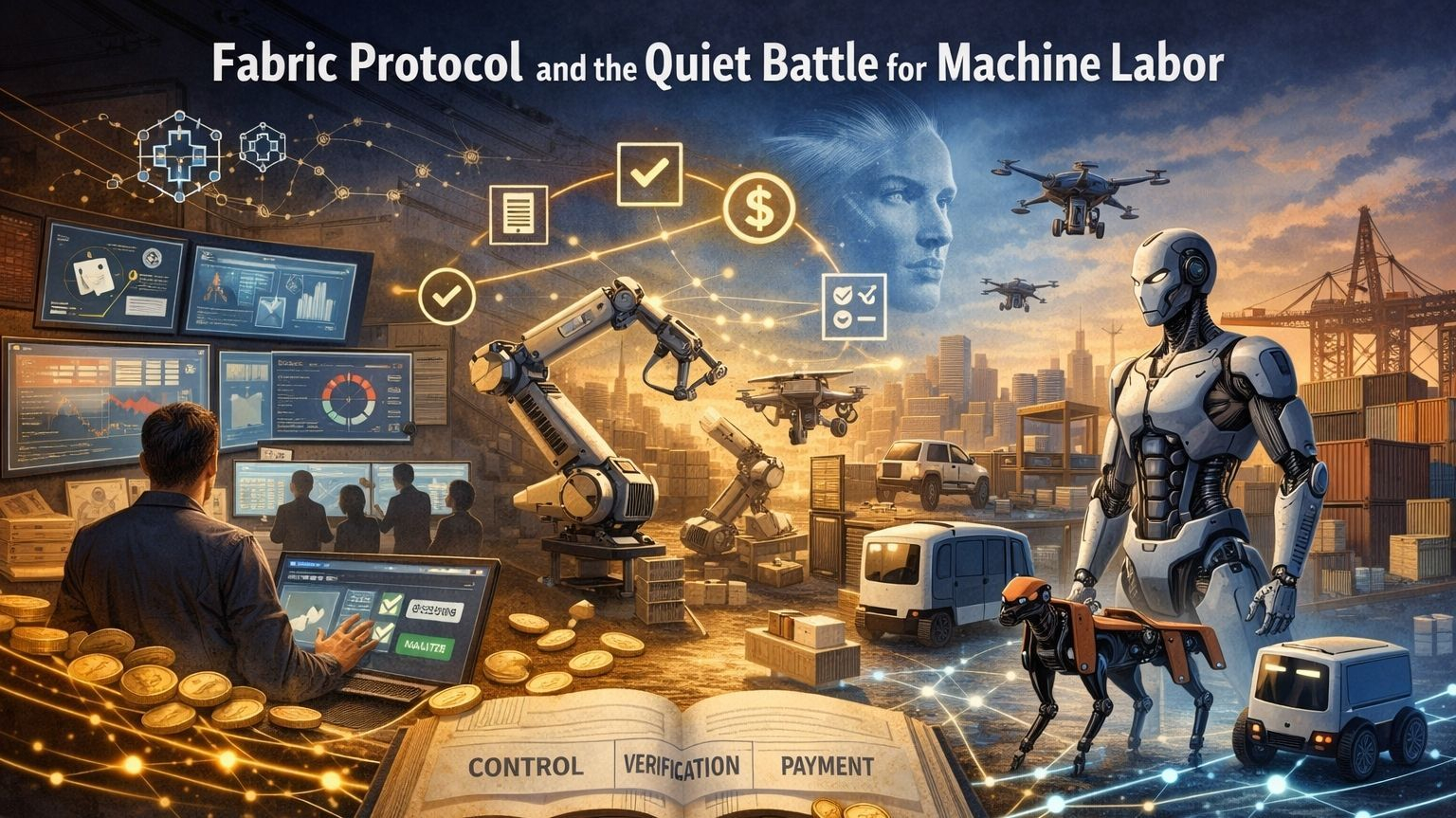
The public ledger underpinning the Fabric Protocol is more than a record-keeping system; it is the regulatory substrate of the network. Data flows, compliance rules, robotic task execution logs, and governance votes are coordinated through cryptographic proofs. This ensures that collaboration between humans and machines is not dependent on opaque black-box algorithms but on verifiable states. The result is a system where safety, performance, and compliance can be audited in real time. In industrial environments, this reduces liability risk. In public-sector applications, it strengthens regulatory confidence. In research contexts, it enhances reproducibility.

Current developments within the Fabric ecosystem demonstrate accelerating momentum. Increased developer participation, cross-sector experimentation, and early-stage deployments indicate that the model resonates with builders seeking alternatives to centralized robotics platforms. The integration of modular infrastructure components allows participants to plug into shared data pipelines, computational verification layers, and governance modules without redesigning entire architectures. This modularity is essential for scalability. It enables incremental adoption rather than disruptive overhaul, reducing friction for institutions exploring decentralized robotic coordination.
The appreciation for Fabric’s approach stems from its pragmatic alignment with technological reality. As robotics integrates AI-driven perception, decision-making, and physical actuation, the risk surface expands. Errors in navigation, misinterpretation of environmental data, or governance misalignment can have tangible consequences. Fabric addresses these concerns through a layered verification stack. Computations can be validated through cryptographic attestations. Data integrity can be anchored to immutable records. Governance changes can be transparently voted upon and recorded. This combination fosters institutional-grade reliability while preserving the flexibility of open innovation.

The non-profit orientation of the Fabric Foundation is equally significant. By separating protocol stewardship from profit-driven control, the Foundation promotes neutrality and long-term ecosystem health. Contributors can build without fear of arbitrary platform rule changes. Governance processes can evolve transparently. Funding mechanisms can support public goods within the network. This structure mirrors successful open-source ecosystems but extends their principles into hardware-enabled, economically active robotic systems.
The future benefits of this architecture are profound. As general-purpose robots become more capable, industries will require frameworks to coordinate them across supply chains and regulatory boundaries. Fabric’s ledger-based coordination enables multi-stakeholder ecosystems to share data securely while preserving proprietary boundaries. For example, a logistics robot operating across multiple warehouses can verify task completion through standardized proofs without exposing sensitive operational details. Healthcare robotics can log procedural compliance while maintaining patient confidentiality. Municipal infrastructure robots can coordinate maintenance activities while aligning with civic governance standards.

Moreover, the Leaderboard Campaign fosters a culture of measurable excellence. By ranking contributors according to verifiable impact, the network incentivizes quality over noise. Developers who optimize robotic performance through secure computation gain visibility. Data providers who ensure integrity are rewarded. Governance participants who contribute constructively shape policy direction. This meritocratic dynamic can accelerate innovation cycles, as recognition and opportunity align with demonstrated value.
From a macroeconomic perspective, Fabric represents a bridge between decentralized finance principles and embodied AI systems. Robots become participants in programmable economic frameworks. They can receive incentives, execute tasks under conditional logic, and report outcomes in verifiable formats. This creates the foundation for machine-to-machine coordination economies, where autonomous agents transact and collaborate within predefined rulesets. Such systems reduce overhead, streamline supply chains, and increase operational transparency.
Security remains a cornerstone of Fabric’s strategy. Traditional robotic deployments are vulnerable to centralized points of failure and opaque firmware updates. By contrast, Fabric’s distributed ledger architecture mitigates these vulnerabilities through redundancy and transparency. Updates can be governed through community consensus. Execution logs are tamper-resistant. Anomalous behavior can be flagged through cross-verification mechanisms. In mission-critical industries, this resilience translates into operational continuity and risk reduction.
As regulatory landscapes evolve globally, verifiable systems will likely gain preference. Governments and international bodies increasingly demand transparency in AI decision-making and robotic automation. Fabric’s architecture anticipates these requirements by embedding compliance pathways into the protocol itself. Rather than retrofitting oversight mechanisms, the network integrates governance at its foundation. This proactive design positions the ecosystem favorably as policies surrounding AI and robotics mature.
The collaborative evolution of general-purpose robots also gains structural support through Fabric. Open coordination reduces duplication of effort. Shared data schemas and computational standards facilitate interoperability. Researchers can build upon verified results rather than revalidating foundational layers. Startups can leverage network infrastructure instead of constructing bespoke verification pipelines. Established enterprises can experiment within controlled, transparent environments. Collectively, this reduces friction across the innovation lifecycle.
Looking ahead, the expansion of Fabric’s network could catalyze a new paradigm of human-machine collaboration. As robots become more embedded in daily operations, trust becomes the determining factor of adoption. Fabric’s verifiable computing ensures that outputs are auditable. Agent-native identities ensure accountability. Governance frameworks ensure adaptability. These components together cultivate confidence among enterprises, regulators, and end users.
The Foundation’s continued stewardship will be critical in maintaining equilibrium between openness and security. As participation scales, governance mechanisms must remain robust and inclusive. Incentive structures within the Leaderboard Campaign will likely evolve to reflect new performance metrics and emerging use cases. Ongoing protocol updates can refine computational efficiency and expand interoperability with other decentralized networks. Each iteration strengthens the ecosystem’s resilience.
In essence, the Fabric Foundation and its Leaderboard Campaign are constructing more than a technical protocol; they are establishing a coordination layer for the robotic age. By aligning verifiable computation, public ledger governance, and modular agent infrastructure, the network creates a blueprint for scalable, trustworthy automation. Current appreciation stems from its pragmatic architecture and transparent incentives. Future benefits promise increased safety, regulatory alignment, operational efficiency, and collaborative innovation at global scale.

As robotics advances toward autonomy and ubiquity, infrastructure will determine whether progress remains siloed or becomes collectively governed. Fabric’s approach demonstrates that decentralization, when engineered with precision and accountability, can harmonize technological growth with societal trust. The Leaderboard Campaign crystallizes this vision into actionable participation, transforming abstract ideals into measurable contribution. Through disciplined design and open coordination, the Fabric Foundation is shaping a future where intelligent machines operate not as isolated tools, but as verified participants in a secure and collaborative global network.