
Why Capability Without Accountability Is a Liability, Not an Asset
We are living through one of the most consequential transitions in the history of technology. Artificial intelligence is the most underappreciated tension in the industry the conversation has almost entirely revolved around what AI can do, rather than what AI should be held accountable for. is not just a philosophical concern. It is a structural vulnerability that every organization deploying AI systems is carrying right now, whether they know it or not. Mira Trust Layer was built precisely to close that gap, and I think it deserves far more serious attention than most enterprise AI discussions have given it.
The Transition from Capability to Trust: A Shift That Cannot Be Delayed
In my point of view, the AI industry spent the better part of the last decade in a race for capability. Benchmarks, parameter counts, reasoning scores, these were the metrics that defined competitive advantage. And to be fair, they mattered. You cannot build trustworthy AI on a broken foundation. But I think we are now entering a second phase, one where capability is essentially table stakes, and the real differentiator is trust. Not trust as a brand promise or a tagline but trust as a verifiable, auditable, enforceable property of a system.
This is where Mira Trust Layer makes its most compelling argument. To me, the platform represents a genuine architectural shift: a recognition that trust must be engineered, not assumed. Organizations that continue treating trust as a downstream concern something to be addressed after deployment, after incidents, after regulatory scrutiny are, in my opinion, making a strategic error of the highest order. Mira repositions trust as a precondition, not an afterthought. That transition, from capability first to trust-first thinking, is not just philosophically correct. I think it is commercially inevitable.

Accountability as a Technical Layer: More Than a Compliance Checkbox
One of the most powerful ideas embedded in Mira Trust Layer is that accountability can be and must be implemented as a technical layer, not merely a policy document. In my point of view, too many organizations confuse governance frameworks with governance infrastructure. A framework tells you what you are supposed to do. Infrastructure actually enforces it, records it, and makes it auditable.
I think this distinction is critical. When an AI system makes a consequential decision whether in finance, healthcare, hiring, or legal analysis accountability cannot live in a PDF on a compliance team's shared drive. To me, accountability means that every inference, every output, every override is logged, attributed, and reviewable. Mira Trust Layer builds this directly into the operational stack. It does not ask organizations to retrofit accountability onto existing pipelines. It makes accountability a native property of how AI runs in the first place.
In my opinion, this is the argument that enterprise leaders need to internalize most urgently. Regulators are not asking whether you intended to be responsible. They are asking whether you can prove it. Mira gives you the proof.

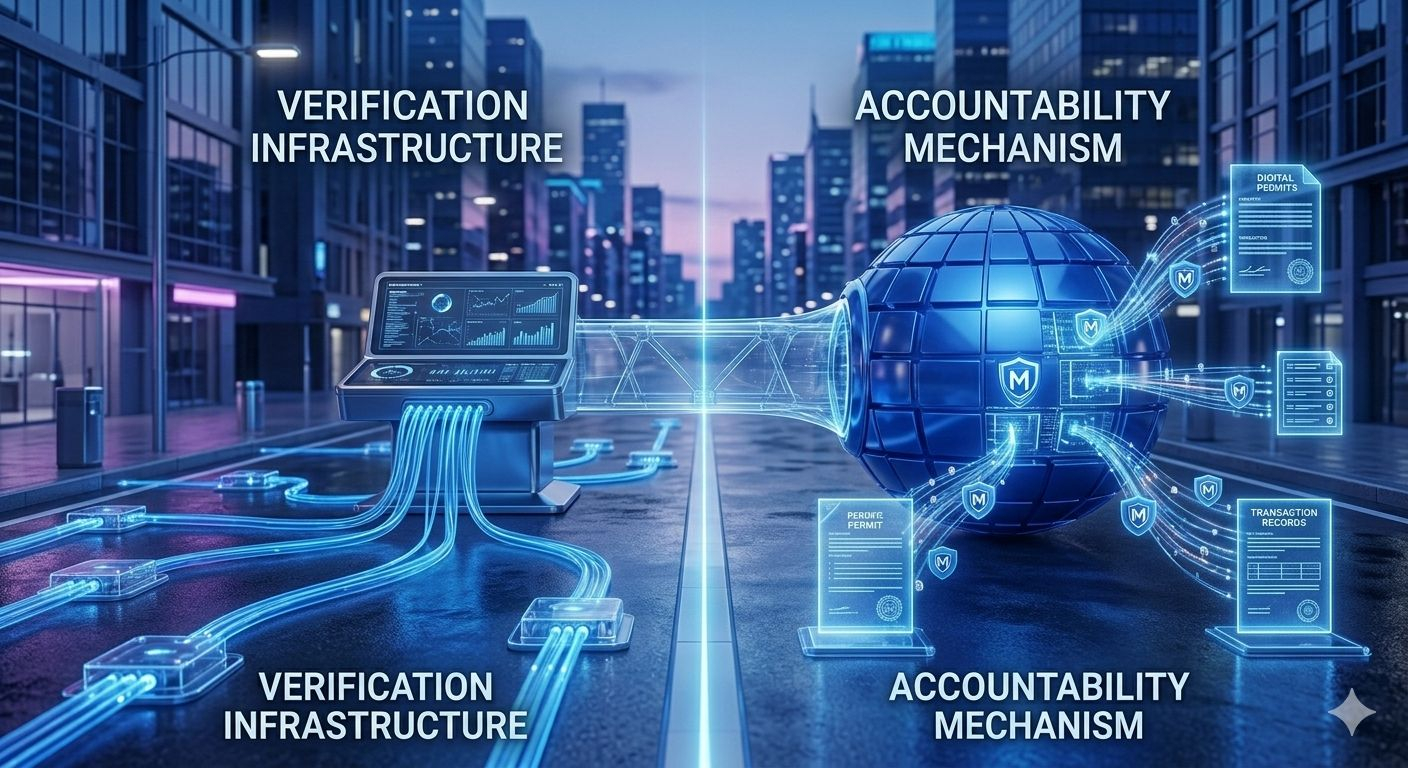
Verification Infrastructure vs. Accountability: Why the Difference Matters
Here is a distinction I think the market has been dangerously slow to make: verification and accountability are not the same thing. Verification tells you that a model produced a certain output. Accountability tells you who is responsible for that output, under what conditions it was produced, and what recourse exists when it causes harm. To me, conflating the two is like confusing a security camera with a legal system.
In my point of view, Mira Trust Layer is one of the few platforms that genuinely grapples with both. Its verification infrastructure ensures that outputs can be traced and reproduced. But its accountability architecture goes further it assigns ownership, flags deviations from policy, and creates an evidentiary record that is meaningful in both operational and regulatory contexts. I think this dual architecture is precisely what makes it enterprise-grade rather than merely enterprise-ready. The difference is significant. Ready means it can be adapted. Grade means it was designed for the environment from the start.
The "Crypto Element" as a Structural Risk: A Candid Assessment
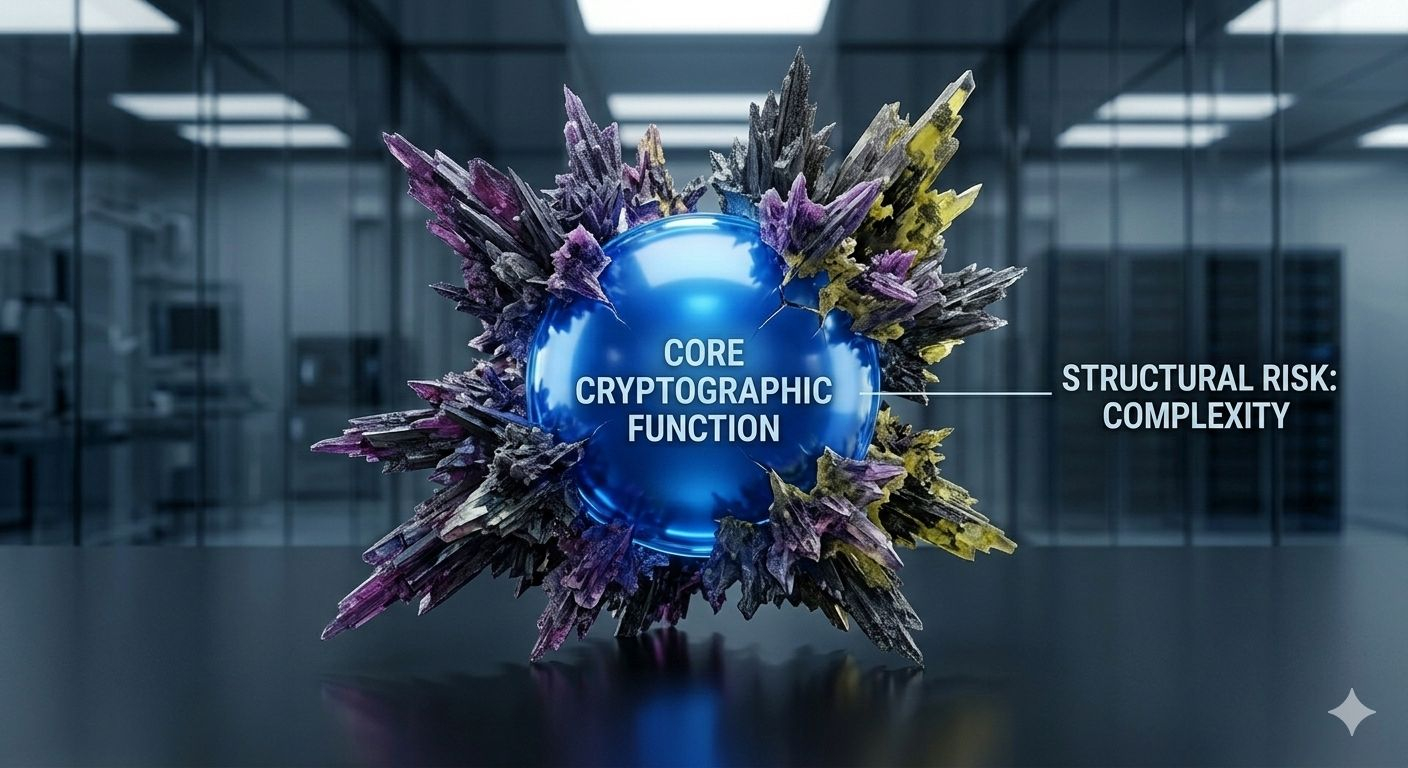
I will be direct here because I think candor serves the market better than boosterism. Some implementations of trust infrastructure have leaned heavily on cryptographic or blockchain-based verification as a core mechanism. In my opinion, this introduces a structural risk that deserves honest examination. Cryptographic proof of provenance is technically elegant. But to me, it risks creating a false sense of security if the underlying model behavior is not also governed.
You can cryptographically verify that a model produced output X at time T under conditions Y and that output X can still be biased, harmful, or legally non compliant. The proof of provenance does not equal proof of appropriateness. I think Mira Trust Layer's approach is more mature precisely because it does not reduce trust to a cryptographic artifact. It treats trust as a multi-dimensional property one that includes provenance, yes, but also behavioral consistency, policy adherence, and human-in-the-loop validation where stakes demand it.
In my point of view, any organization evaluating trust infrastructure should ask: does this system tell me that something happened, or does it tell me whether what happened was acceptable? I think that is the only question that ultimately matters.
Operational vs. Aspirational Success: Holding the Standard High
Finally, I think the most important test of any trust infrastructure is the most mundane one: does it work when it is not being watched? Aspirational success is easy. A platform can perform beautifully in a demo, in a controlled proof of concept, in a board presentation. Operational success means it holds up under production load, adversarial inputs, organizational pressure, and the inevitable messiness of real-world AI deployment.

To me, Mira Trust Layer earns its credibility precisely in this dimension. It was not designed to be showcased it was designed to be run. In my opinion, that distinction separates genuine infrastructure from theater. The organizations that will win the next decade of AI deployment will not be those with the most capable models. They will be those whose stakeholders customers, regulators, boards, and employees have genuine, evidence-based reasons to trust their systems.
I think Mira Trust Layer is the clearest path to that outcome available in the market today. And in my point of view, the organizations that recognize this early will not just be ahead of the regulatory curve. They will have built something far more durable than a competitive advantage. They will have built a reputation that compounds.
The age of AI capability is behind us. The age of AI accountability is now. @Mira - Trust Layer of AI is the infrastructure that makes the difference between the two.
