
Everyone talks about AI, automation, and robotics as if they are separate industries. In reality, they are slowly merging into one system where machines not only perform tasks, but also communicate, coordinate, and eventually transact.
That’s the idea behind what @Fabric Foundation is trying to explore with $ROBO.
Today, robots already exist everywhere: factories, logistics warehouses, delivery systems, service environments. But one thing most people don’t think about is how these machines interact economically. Who pays for the service a robot performs? How do machines coordinate work across organizations? And how do systems verify that machine activity actually happened?
This is where the concept of a machine economy begins.
Instead of robots being isolated devices controlled by a single company, the long-term vision is a network where machines can authenticate themselves, exchange data, and potentially interact through automated payment systems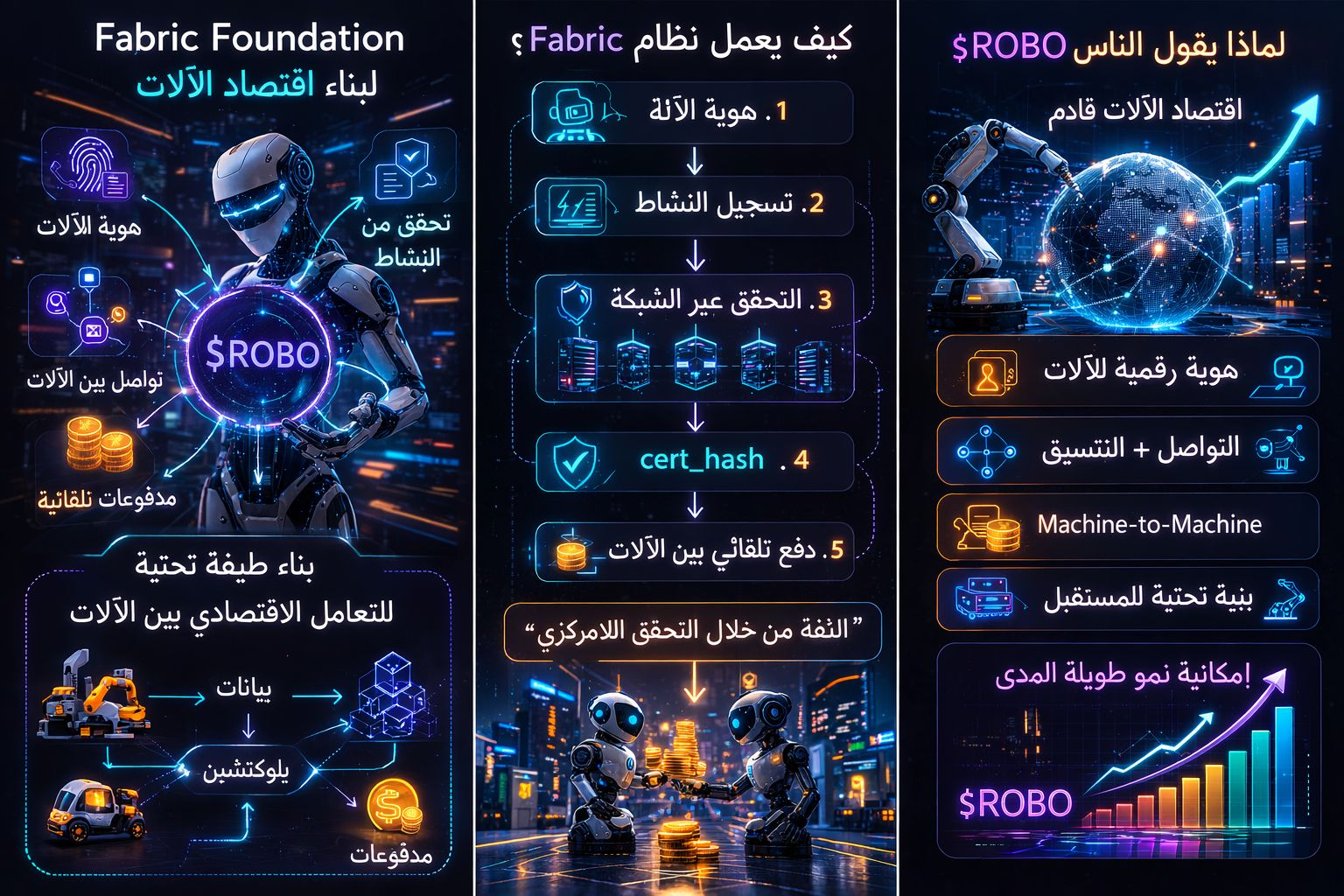 .
.
That doesn’t mean the system will appear overnight. Infrastructure projects rarely move that fast. What they try to build first is the foundation layer that could support these interactions in the future.
Fabric is positioning itself in that infrastructure category.
The interesting part isn’t whether robots exist today. They clearly do. The interesting question is whether the current systems for identity, coordination, and machine-to-machine interaction will remain centralized or evolve into something more open.
If the machine economy becomes real, the infrastructure behind it will matter more than the robots themselves.
And that’s the long-term narrative many people are watching around $ROBO.
Of course, narratives alone don’t guarantee success. Infrastructure projects need adoption, real integrations, and time. But historically, when new technological layers emerge, the earliest infrastructure sometimes ends up becoming the most valuable.
Whether Fabric becomes that layer is still an open question.
But the conversation around machine identity, coordination, and economic interaction between machines is only just beginning.
@Fabric Foundation