
Artificial intelligence has become one of the most transformative technologies in modern history. In only a few years it has moved from research laboratories into everyday life. People now interact with AI while searching for information writing content analyzing data creating images solving problems and exploring new ideas. Businesses rely on AI to automate complex processes researchers use it to accelerate scientific discovery and developers build systems that can learn from enormous amounts of data. The rapid rise of artificial intelligence has created a sense of excitement and possibility across the world because it promises to unlock new levels of productivity creativity and innovation.
Yet at the same time something important has become clear to researchers and engineers working closely with these systems. Artificial intelligence is powerful but it is not always reliable. Even the most advanced AI models sometimes generate answers that sound intelligent but are not actually correct. The information may look convincing and the explanation may feel logical but when someone carefully checks the details the facts may not always match reality. This phenomenon is widely known as hallucination in artificial intelligence. When hallucination occurs an AI system produces statements that appear factual but do not have real evidence behind them.
The challenge of hallucination is not a small technical issue. It represents one of the biggest barriers preventing artificial intelligence from being trusted in critical environments. If an AI assistant gives an incorrect answer during a casual conversation the consequences may be minor. However if an AI system provides incorrect medical advice financial analysis or scientific conclusions the impact can be serious. Because of this the future development of artificial intelligence is increasingly focused on one central question. How can we make AI systems not only intelligent but also trustworthy.
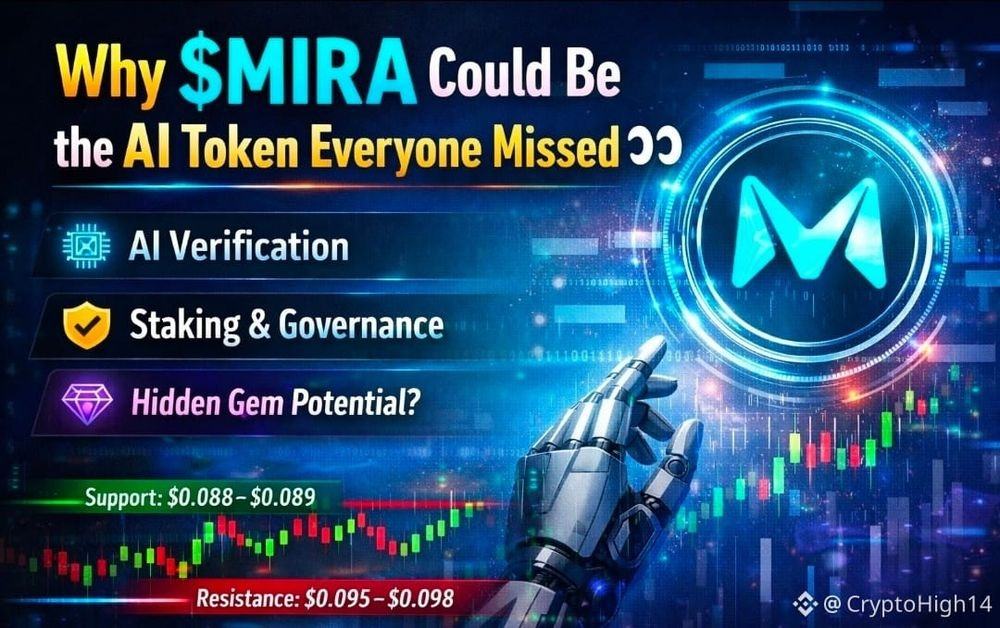
This challenge has inspired a new wave of innovation within the technology community. Researchers and developers are beginning to explore systems that can verify the outputs of artificial intelligence rather than simply generating them. One of the most interesting ideas to emerge from this effort is Mira Network. The project represents an ambitious attempt to build a decentralized verification layer for artificial intelligence that ensures AI generated information can be examined validated and confirmed before it becomes accepted knowledge.
Mira Network introduces a different way of thinking about artificial intelligence. Instead of asking users to trust a single AI model or a centralized company the system creates an environment where many independent participants collaborate to verify information through a transparent process. This approach reflects a very human principle that has guided the development of knowledge for centuries. Throughout history humans have learned that truth becomes stronger when it is examined from multiple perspectives. In science discoveries are verified through peer review experiments are repeated and evidence is carefully analyzed before conclusions are accepted. Mira Network applies this same philosophy to artificial intelligence.
At the heart of the project is the idea that AI outputs should not automatically be treated as final answers. Instead the system treats these outputs as claims that must be verified. When an artificial intelligence model produces a response Mira Network breaks that response into smaller statements known as claims. Each claim represents a specific piece of information that can be independently evaluated. By dividing complex responses into smaller components the system makes it easier to examine the accuracy of each statement.
Once the claims are identified they are distributed across a decentralized network of validators and artificial intelligence models. These participants analyze the claims and determine whether the information appears to be correct. Different validators may use different methods to evaluate the claims. Some may rely on specialized AI models trained on particular datasets while others may use analytical tools or research references to examine the information. Because the verification process involves many independent participants the system gains a broader perspective on the reliability of each claim.
The results of these evaluations are then combined through a consensus mechanism. If enough participants confirm that a claim is accurate the system marks that claim as verified. If there is disagreement among validators or insufficient evidence the claim may remain unverified or flagged as uncertain. This process creates a structured system where information is gradually validated through collective analysis rather than accepted without verification.
Blockchain technology plays an essential role in this system. The verification results produced by the network are recorded on a blockchain ledger. This ledger functions as a permanent and transparent record of how claims were evaluated and confirmed. Because blockchain data cannot easily be altered after it is recorded the verification history remains secure and auditable. Anyone can examine the records and understand how the network reached its conclusions.
This transparency is extremely important for building trust. Traditional artificial intelligence systems often operate as black boxes where users cannot see how decisions are made. Mira Network introduces a different model where the verification process is visible and traceable. Users do not have to blindly trust the system because they can review the verification history that supports each piece of information.
Another key element of Mira Network is the use of economic incentives to encourage honest participation within the network. Validators who contribute to the verification process are rewarded when they correctly evaluate claims and help maintain the accuracy of the system. Participants may stake tokens or allocate computing resources to join the network. When they provide accurate evaluations they earn rewards. If they attempt to manipulate the system or provide dishonest verification they risk losing their stake or damaging their reputation within the network.
This incentive structure creates a powerful alignment between the interests of individual participants and the health of the network. People are motivated to behave honestly because their rewards depend on protecting the credibility of the system. Similar incentive models have already proven effective in blockchain ecosystems where decentralized participants maintain security and trust without relying on centralized authorities.
The idea of verified artificial intelligence has the potential to influence many industries where reliable information is essential. In healthcare artificial intelligence is increasingly used to analyze medical data identify patterns and assist with diagnostic decisions. However doctors must be confident that the information provided by AI systems is accurate. A verification layer like Mira Network could help validate medical insights before they are used in clinical environments.
In finance artificial intelligence is often used to analyze market trends predict economic patterns and support investment strategies. Verified AI outputs could provide an additional level of confidence for analysts and investors who rely on these insights to make financial decisions.
Scientific research is another area where verification plays a critical role. Researchers often rely on artificial intelligence to analyze complex datasets identify correlations and generate hypotheses. A decentralized verification network could help confirm whether these conclusions are supported by reliable evidence.
The development of autonomous technologies also highlights the importance of trustworthy artificial intelligence. Robots self driving vehicles and automated systems increasingly depend on AI to interpret data and make decisions in real time. Ensuring that these decisions are based on verified information could improve safety and reliability in environments where errors may have serious consequences.
As artificial intelligence continues to evolve the demand for verification systems will likely increase. The world is entering a period where machines are generating enormous amounts of information every day. Without systems that help evaluate the reliability of this information it becomes difficult to separate accurate knowledge from uncertainty.
Mira Network represents an attempt to address this challenge by building infrastructure that supports trustworthy intelligence. Instead of focusing only on creating more powerful AI models the project focuses on strengthening the reliability of the information those models produce.
The broader vision behind this idea is the concept of verified intelligence. In such a system artificial intelligence does not simply generate answers. It produces information that has been examined evaluated and confirmed through a decentralized network of participants. This model could fundamentally change how humans interact with artificial intelligence.
Imagine a future where AI generated knowledge comes with a transparent verification history. When someone receives an answer from an artificial intelligence system they could also see the evidence showing how the information was validated. Multiple independent systems could confirm the reliability of the claim before it is presented as trustworthy knowledge.
This type of system could help reduce misinformation increase confidence in digital information and support more responsible use of artificial intelligence across many fields.
The development of Mira Network also reflects a deeper shift in how technology is evolving. Early generations of artificial intelligence focused primarily on improving performance and capability. The next stage of development appears to be focused on reliability transparency and trust.
These qualities are essential if artificial intelligence is going to become an integral part of human decision making. People must feel confident that the information they receive from AI systems is supported by evidence rather than simply generated through statistical patterns.
In many ways Mira Network represents a bridge between two worlds. On one side there is the rapid growth of artificial intelligence with its incredible ability to process information and generate insights. On the other side there is the human need for verification transparency and trust.
By combining decentralized networks blockchain technology and collaborative intelligence Mira Network attempts to connect these two worlds. It introduces a system where powerful machines can generate knowledge while decentralized communities verify the truth behind that knowledge.
As the digital landscape continues to evolve projects like Mira Network may play an important role in shaping the future of artificial intelligence. The technology itself will likely continue to advance rapidly but the question of trust will remain central to its success.
Artificial intelligence has the potential to transform healthcare education science finance and many other industries. However the true impact of these systems will depend not only on their intelligence but also on their reliability.
In a world where information flows faster than ever before the ability to verify knowledge becomes incredibly valuable. Systems that help humanity distinguish truth from uncertainty may become essential tools for navigating the digital age.
Mira Network offers a vision of how such systems might work. By transforming AI outputs into verifiable claims distributing evaluation across decentralized participants and recording verification results on transparent blockchain ledgers the project attempts to build a new foundation for trustworthy intelligence.
The journey toward reliable artificial intelligence is still unfolding and many challenges remain. But the ideas introduced by Mira Network highlight an important direction for the future of technology. Rather than relying solely on centralized control or single models the system embraces collaboration transparency and decentralized verification.
This approach reflects a timeless human lesson. Knowledge becomes stronger when it is shared examined and confirmed by many independent voices. As artificial intelligence continues to grow more powerful the same principle may guide the development of systems that help ensure technology serves truth rather than uncertainty.
If the vision behind Mira Network continues to evolve it may help create a future where artificial intelligence does more than simply generate information. It may help build a world where digital intelligence stands on a foundation of verified knowledge and collective trust.
@Mira - Trust Layer of AI $MIRA
