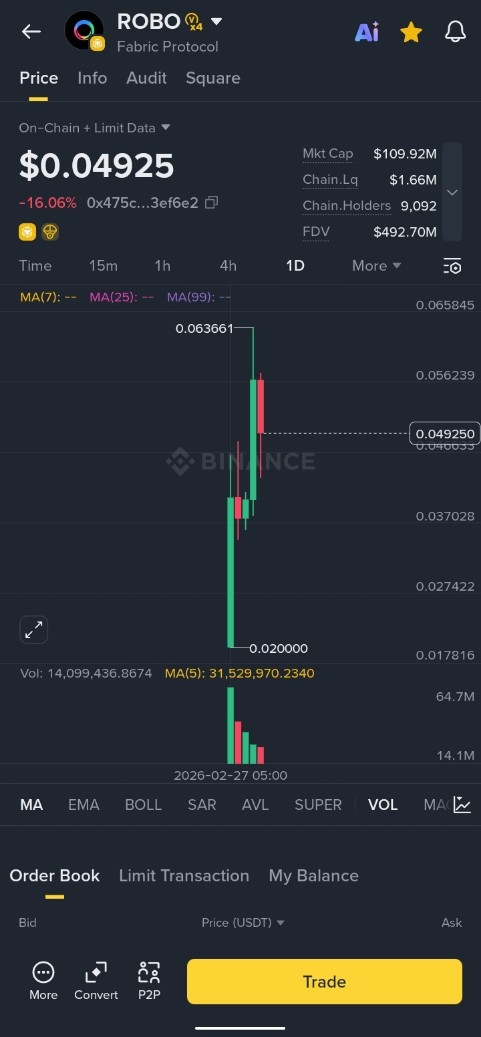
Right now, after its launch early last year, $ROBO isn’t just noise - it’s at the heart of real progress linking physical networks with smart systems. So what lies beneath the surface? Moving deeper into 2026, work by @Fabric Foundation centers on three big challenges shaping the next phase
Not every gadget acts alone anymore. A fresh system gives robots their very own ID, logged securely online. Instead of relying on people, these bots handle agreements by themselves. Picture a machine from UBTech striking a deal without human help. Even units made by Fourier fit into this setup smoothly. Ownership isn’t just for humans now - machines carry credentials too. Each transaction they make is verified through their personal wallet.
Heavy work earns rewards. Come April, machines that move boxes get credit. Proof of Robotic Work kicks in. Those running busy bots see payouts. Real tasks equal real tokens. Operators gain when robots run hard jobs. Effort powers earnings. Machines on duty feed the system. Action drives value. Sweat comes from steel arms.
Not long after 2025, a digital hub appears - no single owner, just open access. Here, $ROBO flows like fuel, powering trades without middlemen. Coders drop tools called Skill Chips into the network instead of selling apps. Machines reach in, spend their tokens, grab what they need to do more. Each download teaches them something fresh. Creators get paid each time someone uses their work. Value builds quietly, step by step.
@Fabric Foundation doesn’t follow trends - it quietly sets up systems where machines handle their own books. While meme coins spin noise, here’s one crafting infrastructure with quiet precision. Ten billion tokens exist, no more, forming a rigid cap that resists inflation. Every fee pulled from activity fuels repurchases, shrinking available supply over time. Strength isn’t shouted; it shows in mechanics that tighten with use.