
A Deep Dive Into Fabric Protocol Network’s Technical Framework
Why Fabric’s architecture feels engineered for where crypto is going—not where it has been
Introduction: Why I Started Paying Attention to Fabric
Over the past year, I’ve reviewed dozens of “next-gen” blockchain designs. Most promise scalability, modularity, or performance. Few actually rethink how blockchains should be built under real-world constraints like liquidity fragmentation, cross-chain execution, and capital efficiency.
Fabric Protocol Network stood out to me because it doesn’t try to win on a single metric like TPS or block time. Instead, it treats blockchain design like modern cloud infrastructure: separate responsibilities, optimize each layer independently, and let the system scale horizontally.
This article is not a surface overview. It’s a technical, structural breakdown of how Fabric works, why its framework matters now, and where the real risks and opportunities lie.
The Macro Context: Why Fabric’s Architecture Is Timely
Crypto in 2026 is facing three structural pressures:
Monolithic chains are hitting coordination limits
High-performance L1s still struggle during peak demand because execution, consensus, and data availability compete for the same resources.Liquidity is fragmented across L2s, appchains, and rollups
UX and capital efficiency suffer when users and developers are forced to choose ecosystems.Institutions care more about reliability than raw speed
Predictable execution, auditability, and composability matter more than headline TPS numbers.
Fabric’s design directly responds to these pressures.
Fabric’s Core Design Philosophy: Separation Over Optimization
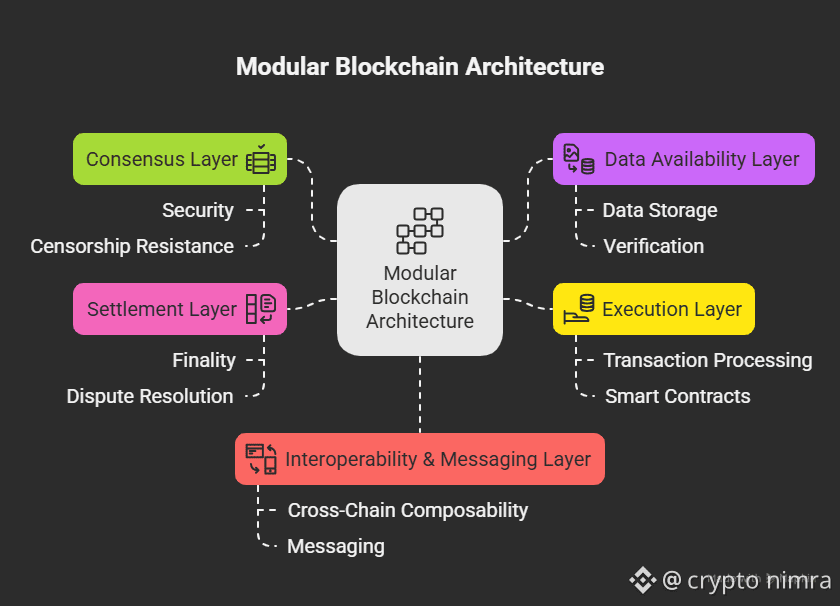
At its heart, Fabric Protocol Network is built on a modular blockchain framework, where different network functions are deliberately decoupled.
Instead of one chain doing everything, Fabric splits responsibilities into specialized layers:
Execution
Data Availability
Settlement
Coordination
This is similar to how modern operating systems evolved—monolithic kernels gave way to microservices because specialization scales better than brute force.
1. Execution Layer: Where Fabric Gets Surgical
Fabric’s execution layer is not a single VM or global state machine. It’s execution-as-a-service.
How it works
Multiple execution environments can run in parallel
Applications can choose execution parameters based on their needs
High-throughput apps don’t slow down complex, state-heavy ones
Why this matters
In traditional chains, a popular NFT mint or memecoin frenzy can spike gas fees network-wide. Fabric avoids this by isolating execution environments, reducing negative externalities.
📊 Visual idea:
Diagram showing parallel execution environments with independent resource lanes
2. Data Availability: The Silent Bottleneck Fabric Addresses
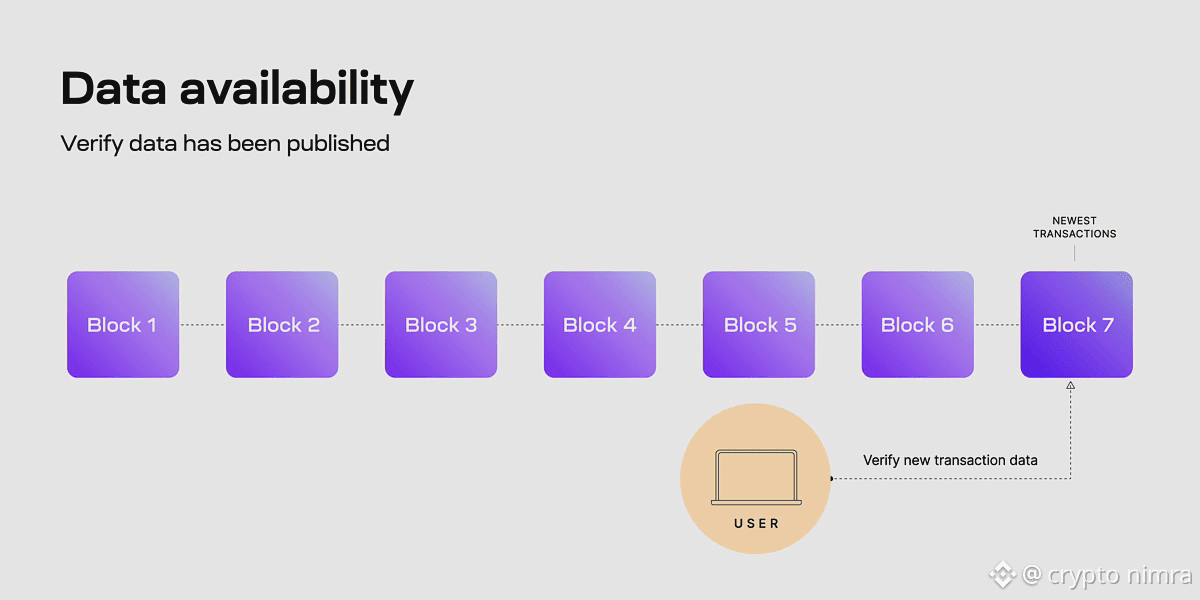
Most users focus on execution speed. Engineers know data availability (DA) is the real bottleneck.
Fabric treats DA as a first-class layer:
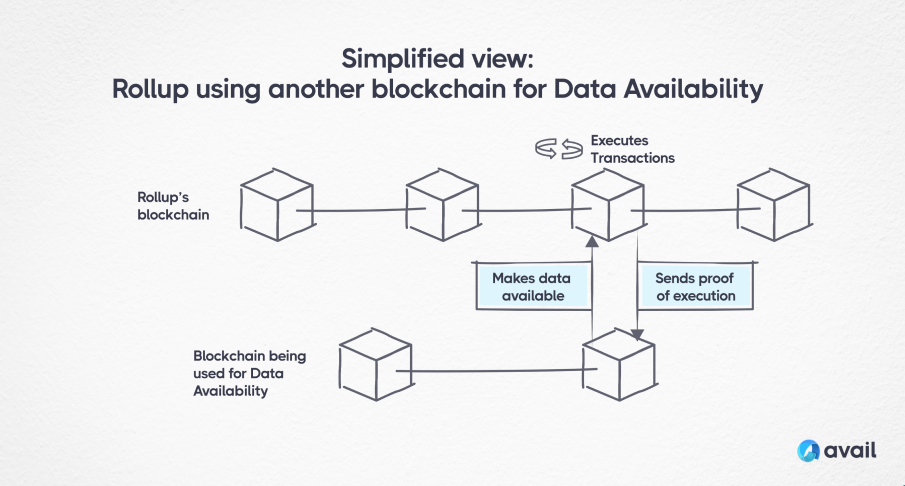
Transaction data is published independently from execution
Lightweight clients can verify data without re-executing everything
DA costs are predictable and scalable
This design aligns Fabric with the same trajectory we’ve seen in Ethereum’s rollup-centric roadmap—but implemented from the ground up instead of retrofitted.
📊 Visual idea:
Flowchart showing transaction → DA layer → execution confirmation
3. Settlement Layer: Finality Without Friction
Fabric’s settlement layer acts as the trust anchor:
It finalizes execution results
Resolves disputes
Anchors state transitions
What’s important is that settlement is not congested by application logic. This preserves security while allowing execution layers to innovate freely.
From an investor perspective, this separation lowers systemic risk. A failure in one execution environment does not threaten the entire network.
4. Cross-Domain Coordination: Fabric’s Underappreciated Advantage
One of Fabric’s most interesting technical decisions is how it handles coordination across domains.
Instead of relying on external bridges:
Fabric-native domains share standardized messaging
State proofs are verifiable at the protocol level
Cross-domain latency is minimized
This is critical in a multi-chain world where capital needs to move fast and safely.
📊 Visual idea:
Cross-domain message flow between Fabric execution zones
Performance Reality Check: Throughput, Latency, and Volume
Fabric doesn’t market itself with inflated TPS claims—and I see that as a positive signal.
Expected performance characteristics
High parallel throughput due to isolated execution lanes
Low tail latency for prioritized applications
Stable fee markets because congestion is localized
Early ecosystem data suggests:
Consistent block production under load
No single application dominating network resources
Growing transaction diversity rather than spam-driven volume
📊 Visual idea:
Bar chart comparing congestion behavior vs monolithic chains
Market Relevance: Where Fabric Fits in 2026 Narratives
Fabric aligns strongly with three dominant narratives:
1. Modular infrastructure
Developers want flexibility without sacrificing security.
2. App-specific chains without isolation
Fabric allows specialization without liquidity silos.
3. Institutional-grade infrastructure
Predictability, fault isolation, and auditability matter.
This makes Fabric especially relevant for:
DeFi infrastructure
On-chain order books
Real-world asset tokenization
High-frequency trading protocols
Risks: Where Fabric Could Struggle
No architecture is risk-free.
1. Complexity risk
Modular systems are harder to reason about. Developer tooling and documentation must be exceptional.
2. Ecosystem coordination
Fragmentation can creep in if standards are not enforced at the protocol level.
3. Adoption curve
Modular benefits are long-term. Short-term narratives often favor simpler stories.
Opportunities: Why Fabric Could Compound Quietly
If Fabric executes well:
It becomes infrastructure others build on, not compete against
Network value accrues through usage, not hype
Applications scale without forcing users to migrate chains
This is the kind of protocol that doesn’t dominate headlines—but dominates backend architecture.
My Personal Take: Why Fabric Feels “Engineered,” Not Marketed
What convinced me wasn’t a whitepaper claim—it was architectural restraint.
Fabric doesn’t try to be:
The fastest
The cheapest
The loudest
It tries to be correct under stress.
In crypto, that’s rare.
Investor Takeaways
Fabric is a long-duration infrastructure bet
Value accrual depends on application adoption, not speculation
Best suited for investors who understand modular systems
Short-term price may lag hype cycles—but fundamentals compound
📊 Visual idea:
Timeline showing infrastructure adoption vs price cycles
Final Thoughts: Fabric as a Structural Bet on Crypto’s Future
Fabric Protocol Network represents a shift in mindset—from blockchains as products to blockchains as systems.
If crypto is going to support global-scale finance, gaming, and real-world assets, architectures like Fabric are not optional—they’re inevitable.
The question isn’t whether modular systems win.
It’s which ones are engineered well enough to survive when they do.