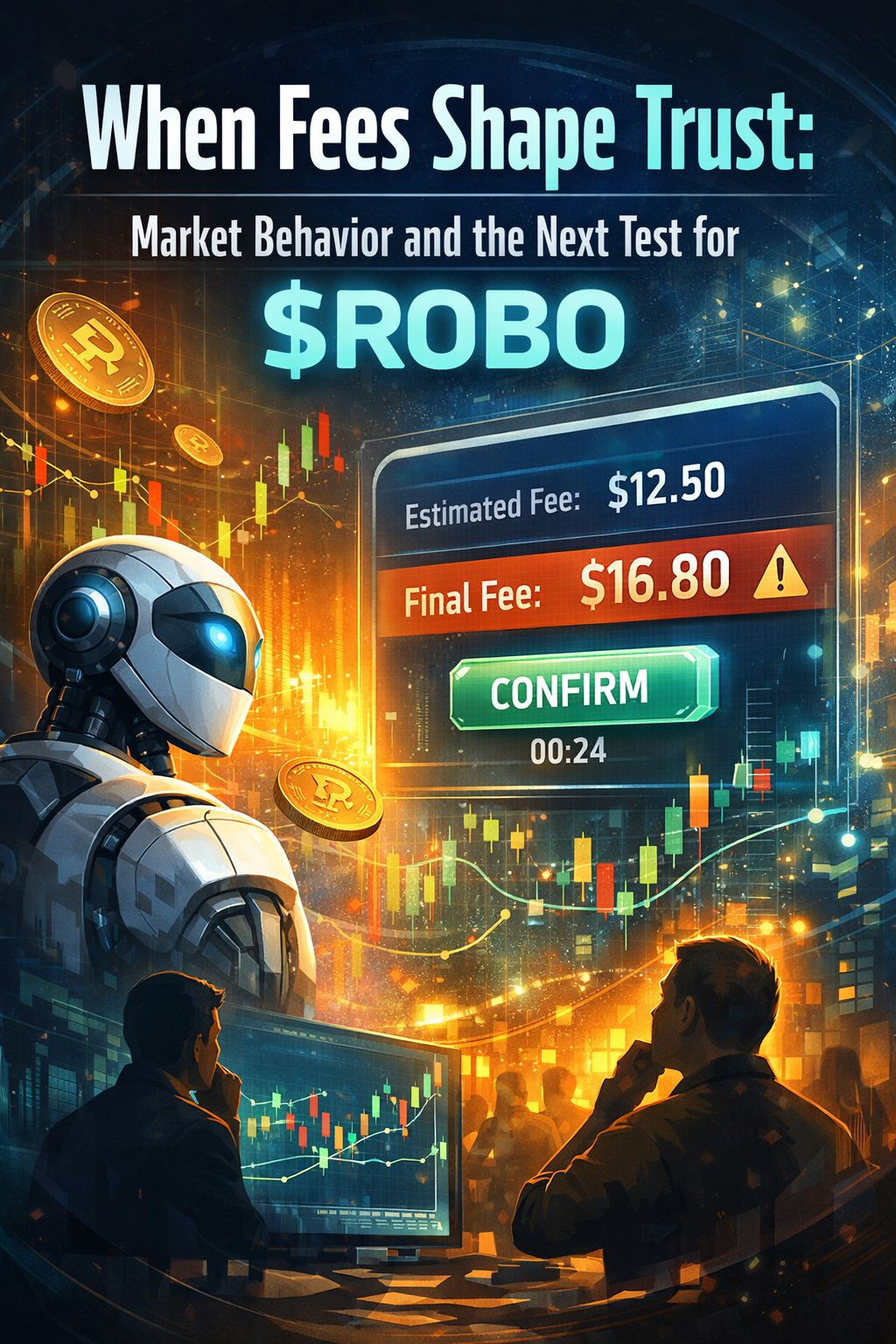
Market behavior is not only about price candles moving up or down. It is about how participants feel when they interact with the system. Fabric Protocol’s ROBO fee structure becomes part of that psychology. A split between base fee and dynamic fee makes sense in theory. It promises transparency and reflects real demand. But in live conditions, volatility in the dynamic component can influence user confidence more than price swings do.
When $ROBO prints +55% in a day, excitement dominates the narrative. Traders focus on momentum, liquidity, and short-term positioning. Yet the deeper signal is whether the network experience remains stable under pressure. If estimate screens and confirmation screens diverge too often, hesitation increases. And hesitation in fast markets translates into reduced participation.
What’s next depends on execution. If fee quotes become more stable, explanations clearer, and priority tiers more intuitive, trust compounds alongside adoption. If not, sophisticated users adapt while casual participants step back. Sustainable growth will come from operational usage, not speculative bursts. The next phase for ROBO is proving that its infrastructure can handle real demand without eroding user confidence.
$ROBO #ROBOGrowth #RoboEconomics #CryptoInfrastructure #Web3Adoption @Fabric Foundation