
In a world where artificial intelligence (AI) is shaping industries, governments, and everyday life, trust has become a decisive factor for adoption. Users want assurance that AI systems are safe, transparent, fair, and aligned with human values. This is where MIRA (Modular Interpretable Responsible AI) claims to step in — proposing a trust layer that could fundamentally change how we interact with AI systems.
But can MIRA actually deliver trust in the real world? Let’s explore.
What Is Trust in AI?
Before assessing MIRA, it’s important to define what “trust” means in the context of AI:
1. Transparency — understanding how decisions are made
2. Accountability — knowing who owns and is responsible for outcomes
3. Fairness & Bias Mitigation — assurances that decisions are equitable
4. Security & Safety — protection against misuse, malfunction, or adversarial attacks
5. Reliability — consistent performance across time and scenarios
6. Ethical Alignment — ensuring AI systems respect human values and norms
Currently, many AI systems fall short in one or more of these areas, leading to concerns from policymakers, users, and enterprises alike.
What Is MIRA — In Simple Terms?
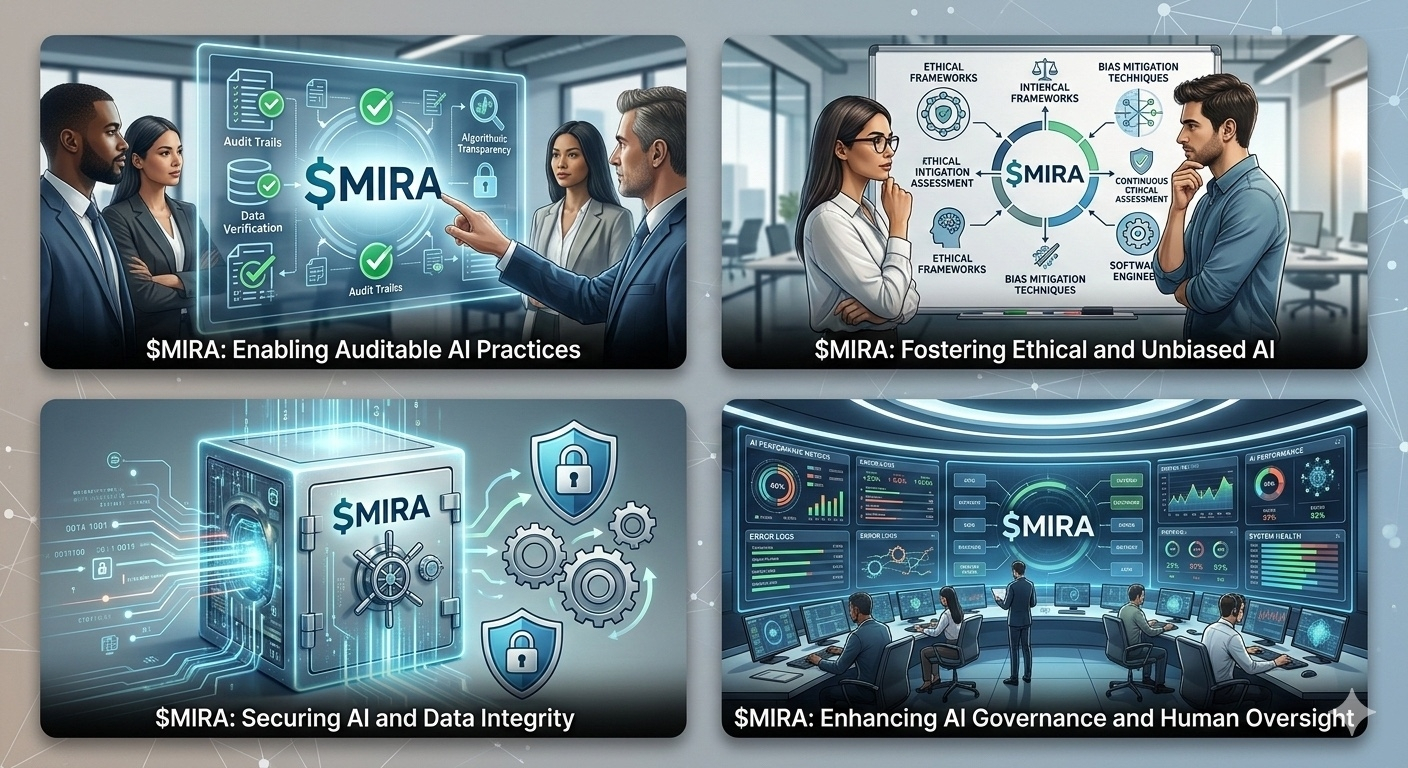
MIRA stands for Modular Interpretable Responsible AI — a conceptual framework (and in some implementations, a software stack) designed to act as a trust layer on top of existing AI models. It focuses on:
• Interpretability modules — helping humans understand AI reasoning
• Responsible AI tooling — bias detection and ethics checks
• Monitoring and feedback loops — tracking AI behavior over time
• Governance and auditability — systems that allow traceable exams of decisions
Put simply, MIRA is not just an AI model — it’s an ecosystem layer designed to sit between AI engines and end users, ensuring responsible behavior.
Why the World Needs a Trust Layer
AI has proven itself powerful — but also unpredictable:
✔ Language models generate human-like text
✔ Vision systems detect objects accurately
✔ Predictive models power finance, healthcare, governance
Yet alongside these positives are risks:
⚠ Unexplainable decisions
⚠ Hidden bias against protected groups
⚠ Lack of accountability for errors
⚠ Misuse for disinformation or fraud
These challenges are not just technical — they are societal. For AI to be widely adopted and regulated, trust must be baked in.
How MIRA Seeks to Deliver Trust
📌 1. Interpretability
MIRA emphasizes explainable AI — meaning:
• Outputs are traceable to inputs
• Decisions can be broken down into understandable components
• People can audit “why” something happened
This is critical for sensitive applications like loan approvals, medical diagnoses, and legal AI decisioning.
📌 2. Responsible AI Tools
Built-in bias detection and fairness assessment mechanisms help:
• Identify unfair patterns
• Quantify disparities between demographic groups
• Recommend corrective actions
This encourages ongoing mitigation rather than post-hoc checks.
📌 3. Transparency & Governance
MIRA frameworks often include:
🔹 Model documentation
🔹 Decision logs
🔹 Version control of algorithms
🔹 Audit trails for every major change
This addresses demands from regulators like the EU’s AI Act and federal guidelines in the U.S.
📌 4. Monitoring & Feedback Loops
AI systems can degrade, drift, or behave differently over time. MIRA includes mechanisms to:
✔ Detect anomalies
✔ Alert administrators
✔ Trigger retraining or rollback
✔ Provide explainable reports to stakeholders
This is essential for real-time safety.
Potential Limitations & Challenges
While promising, MIRA is not a silver bullet. Some challenges include:
⚠ Implementation Complexity
Integrating a trust layer requires coordination between:
• Data teams
• Developers
• Operations
• Governance and compliance
This demands time, skills, and investment.
⚠ Performance vs Interpretability Trade-Off
In some cases:
🔹 Highly interpretable models are less powerful than black-box systems
Balancing clarity with performance is a design challenge.
⚠ Adoption Across Industries
Different sectors have different trust requirements. Healthcare and finance might demand stronger audit capabilities than entertainment — requiring customized implementations.
Real-World Use Cases Where MIRA Makes a Difference
🏥 Healthcare Diagnosis AI
Doctors need to know why an AI flagged a tumor — not just that it did.
MIRA enables:
• Transparent diagnostic pathways
• Confidence scores explained in human terms
• Bias checks across age, gender, race
⚖️ Legal & Compliance Automation
When AI helps with parole decisions or risk assessments:
• Decisions must be fair and unbiased
• Errors can have life-altering consequences
• MIRA allows auditing for ethical compliance
💳 Credit Scoring
Financial institutions benefit from:
• Explainable risk predictions
• Clear documentation for regulators
• Fairness analysis for protected groups
Can MIRA Truly Deliver Trust?
Yes — but with conditions.
MIRA can be a transformative trust layer if and only if:
✔ Organizations commit to ethical AI practices
✔ Governance is built into product lifecycles
✔ Users are educated about AI limitations
✔ Transparency is prioritized over black-box convenience
AI trust is not just a technical problem — it’s a cultural and organizational one. MIRA provides the tools, but people must use them responsibly.
The Future of Trustworthy AI
As AI becomes more deeply embedded in society:
• Regulatory scrutiny will increase
• Demands for transparency will grow
• Users will only adopt technology they trust
MIRA represents a meaningful shift — not just in engineering, but in values.
It’s not just about smarter machines — it’s about trustworthy machines.
@Mira - Trust Layer of AI $MIRA #mira #Mira
