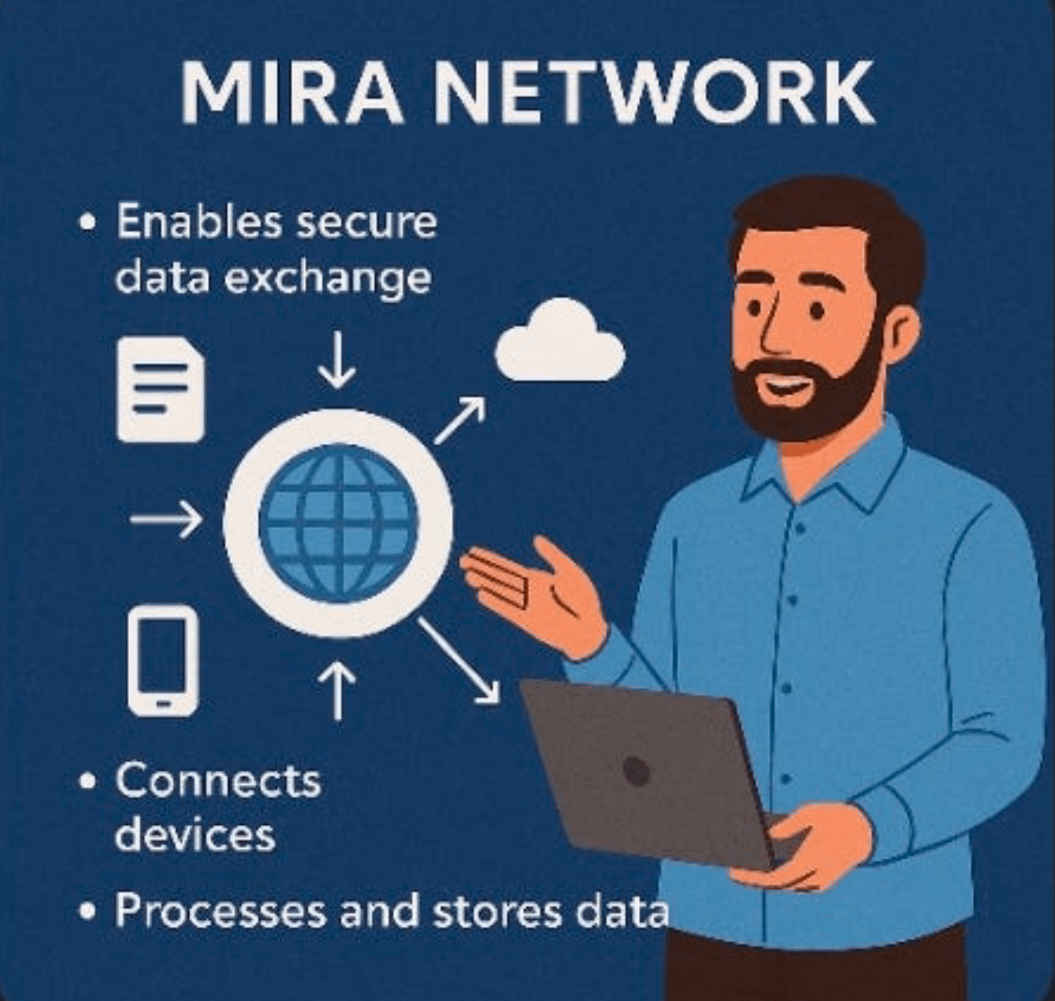
They reached the birthday venue early. Decorations were still going up, chairs were being arranged, and the music had not started yet. With time to spare, the group gathered around a table and slipped into the usual routine. Charts came out. Market talk began.
First came , still setting the overall direction of the market. Then , with its expanding ecosystem and constant upgrades. Someone mentioned and its high speed architecture. The discussion moved between price action, liquidity zones, and long term positioning.
Then one friend brought up something different. Mira.
Instead of talking about transaction speed or meme momentum, he explained that Mira Network focuses on a structural weakness in artificial intelligence: reliability. AI models today can generate highly convincing answers that are partially or completely wrong. In low risk use cases that may not matter. But in finance, healthcare, governance, or autonomous systems, inaccurate output becomes dangerous.
Mira is designed as a decentralized verification protocol. Its core idea is simple but powerful. When an AI model produces an output, Mira does not treat it as a single block of truth. It breaks the content down into smaller, verifiable claims. These claims are then distributed across a network of independent AI validators. Instead of trusting one model, the system requires multiple models to analyze and confirm each claim.
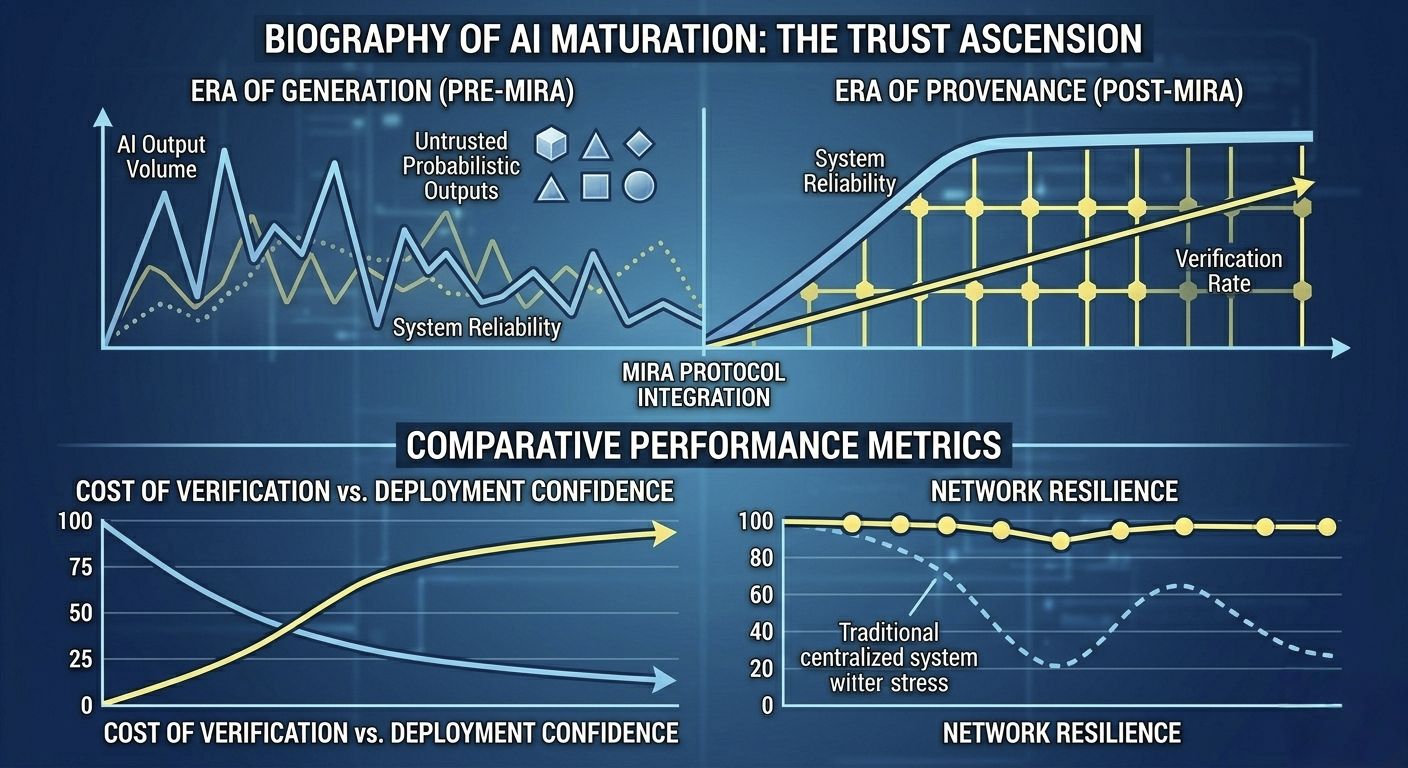
Consensus is reached through blockchain coordination. Participants in the network are economically incentivized to validate accurately. If a validator acts dishonestly or carelessly, there are financial consequences. If it performs reliably, it earns rewards. This creates a trustless system where verification is not based on authority but on aligned incentives.
The group leaned in closer as the explanation continued.
Mira’s architecture is agent focused. It is built for a future where AI agents interact autonomously with onchain systems. In that world, decisions must be verifiable, traceable, and auditable. Mira provides a layer that transforms AI outputs into cryptographically verifiable information before those outputs trigger real world or onchain actions.
They discussed possible use cases. Automated trading agents that require verified data feeds. DAO governance tools that rely on fact checked summaries. Enterprise AI systems that need provable compliance. Even autonomous robotics could benefit from a verification layer that ensures decisions are validated before execution.
One friend raised a key question about scalability. Verification at scale can be computationally heavy. Another pointed out that distributing tasks across specialized validators could reduce bottlenecks. They explored the idea that Mira is less about replacing AI and more about supervising it through decentralized consensus.
By the time guests started arriving and music filled the room, the conversation had shifted completely. It was no longer just about which coin might pump next week. It was about infrastructure. About building systems where intelligence is not just powerful, but provable.
As the candles were lit and everyone sang, the group had already discovered something interesting. The next phase of crypto may not be driven only by faster chains or bigger ecosystems. It may be shaped by projects that solve trust at the protocol level.
And Mira, quietly focused on verification rather than noise, fits directly into that conversation.