
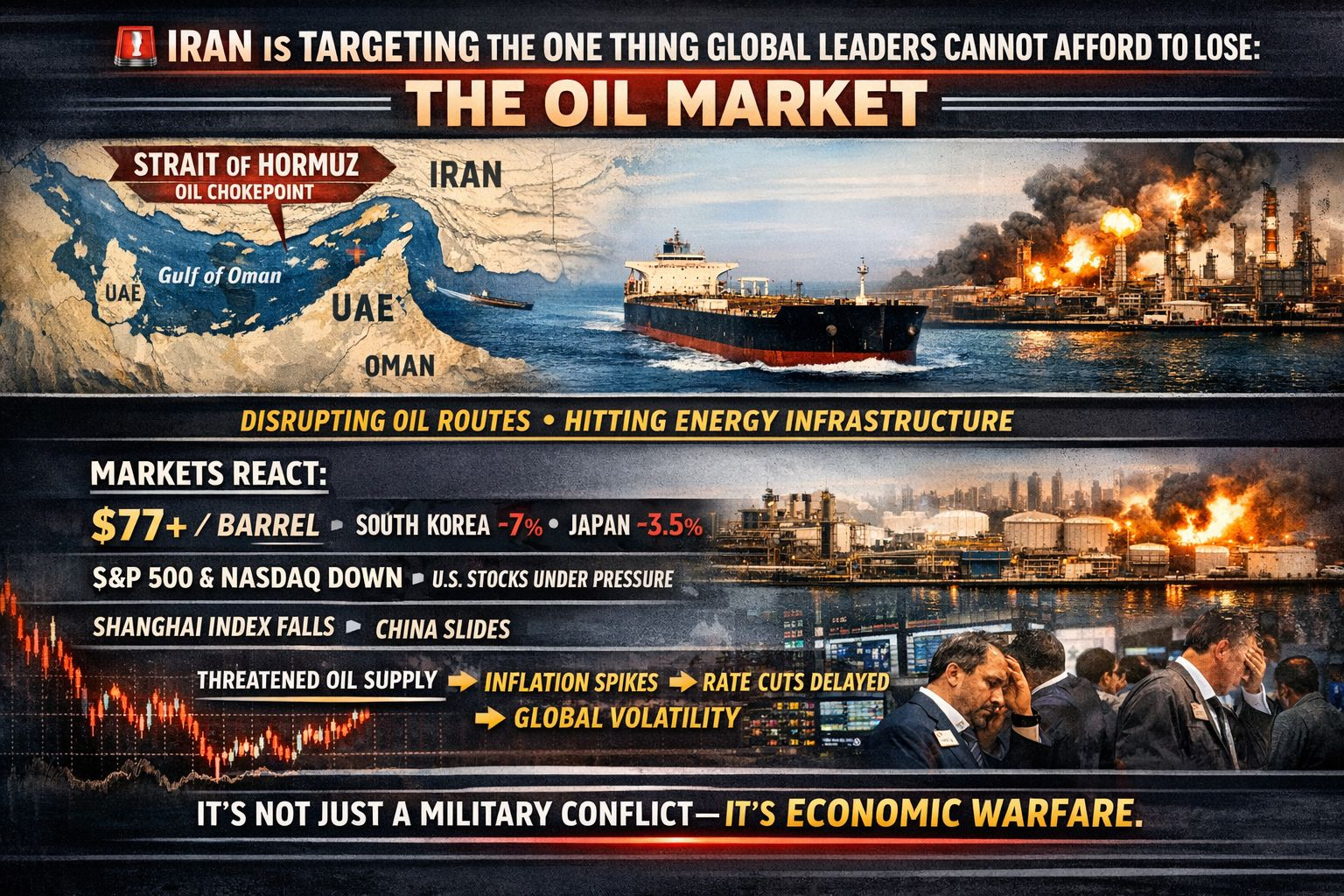
 On the battlefield, Iran is absorbing heavy pressure—bases hit, senior leaders eliminated, naval assets damaged. Rather than matching force with force, Tehran appears to be pulling a different lever: energy chokepoints.
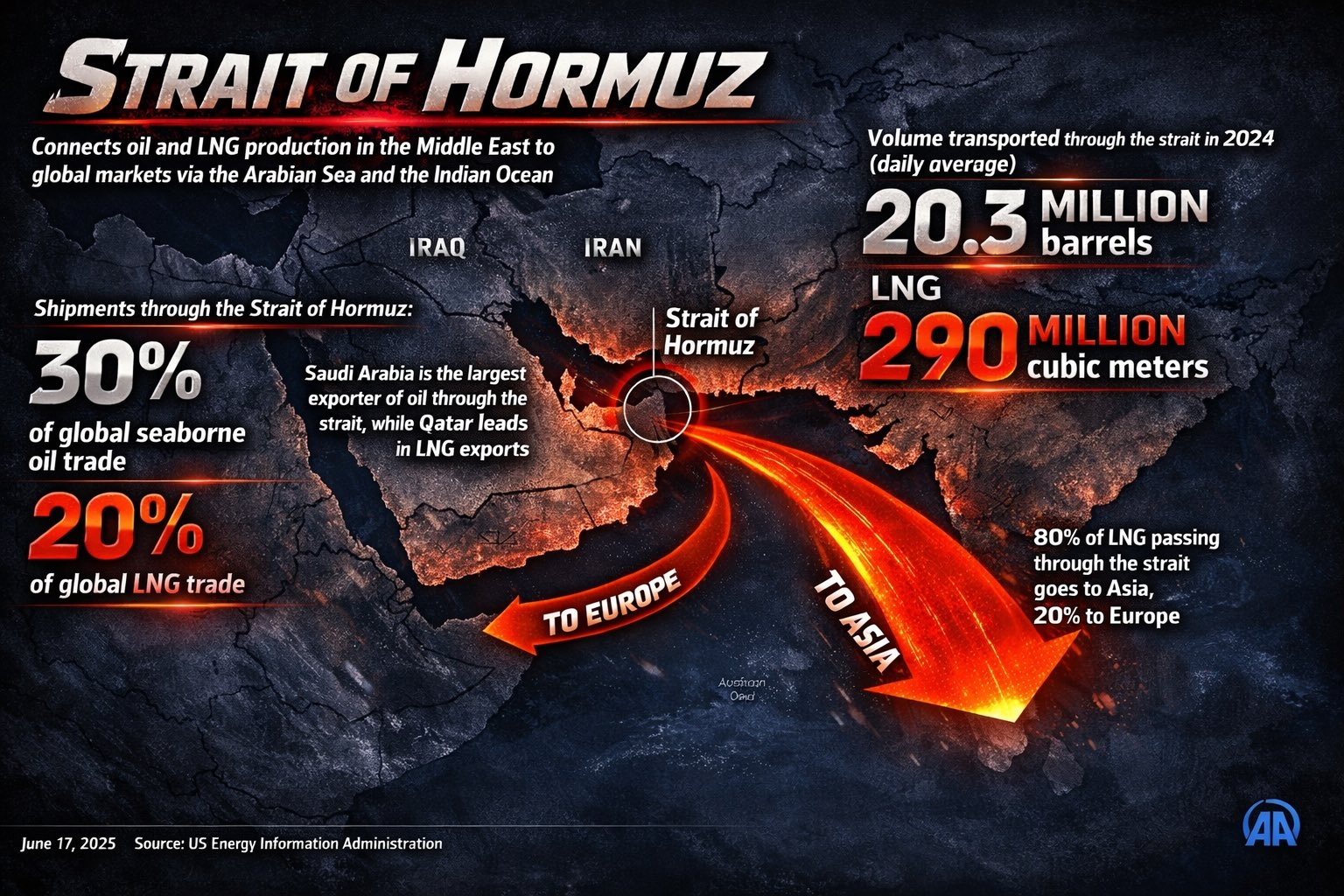
The declaration to close the Strait of Hormuz—with warnings to burn passing ships—goes straight at the heart of global energy flows. This narrow passage handles a massive share of the world’s seaborne oil. Disrupt it, and markets feel it immediately.
Reports of missiles toward the UAE’s second-largest port (a partial bypass to Hormuz) and strikes near Saudi oil infrastructure reinforce the same message: this is systematic, not random.
Markets reacted fast.
Oil pushed above $77/bbl, the highest since January 2025
South Korea ≈ -7%, Japan ≈ -3.5%
U.S. indices (S&P 500, Nasdaq) under pressure
China’s Shanghai index down
Why it matters If oil routes stay threatened for weeks:
Energy prices rise
Transportation & production costs jump
Inflation re-accelerates
Central banks hesitate—or reverse—rate cuts
That squeezes margins, hits consumers, and stresses equity and credit markets. Iran may lack symmetric military power, but it can manufacture economic volatility—and leaders are acutely sensitive to market instability.
Bottom line:
This conflict has shifted. The decisive arena isn’t just military targets—it’s economic leverage via energy.
Stable supply calms markets.
Threatened routes revive inflation risk and volatility.
That’s what global markets are pricing right now.