
The other day I was sitting in a quiet café, watching people stare at their phones, each in their own little bubble of notifications and feeds. It struck me how isolated we all are even when connected—everyone scrolling alone. That feeling lingered as I switched over to Binance Square to handle the CreatorPad task for Fabrionic Network.
I clicked into the campaign page, scrolled past the reward pool details, and landed on the section prompting me to review and share thoughts on the project's Consensus and Infrastructure Design document. There it was, the usual layout: whitepaper excerpts, diagrams of node structures, mentions of staking requirements and slashing for bad actors, all framed around building this decentralized fabric for whatever "machine economy" they're targeting. As I read through the consensus description—something about identity-linked nodes and trust scores—I paused. The task asked for genuine reflection on the design, but the more I stared at those terms like "decentralized identity verification" and "unified ledger for robots," the more uneasy I became.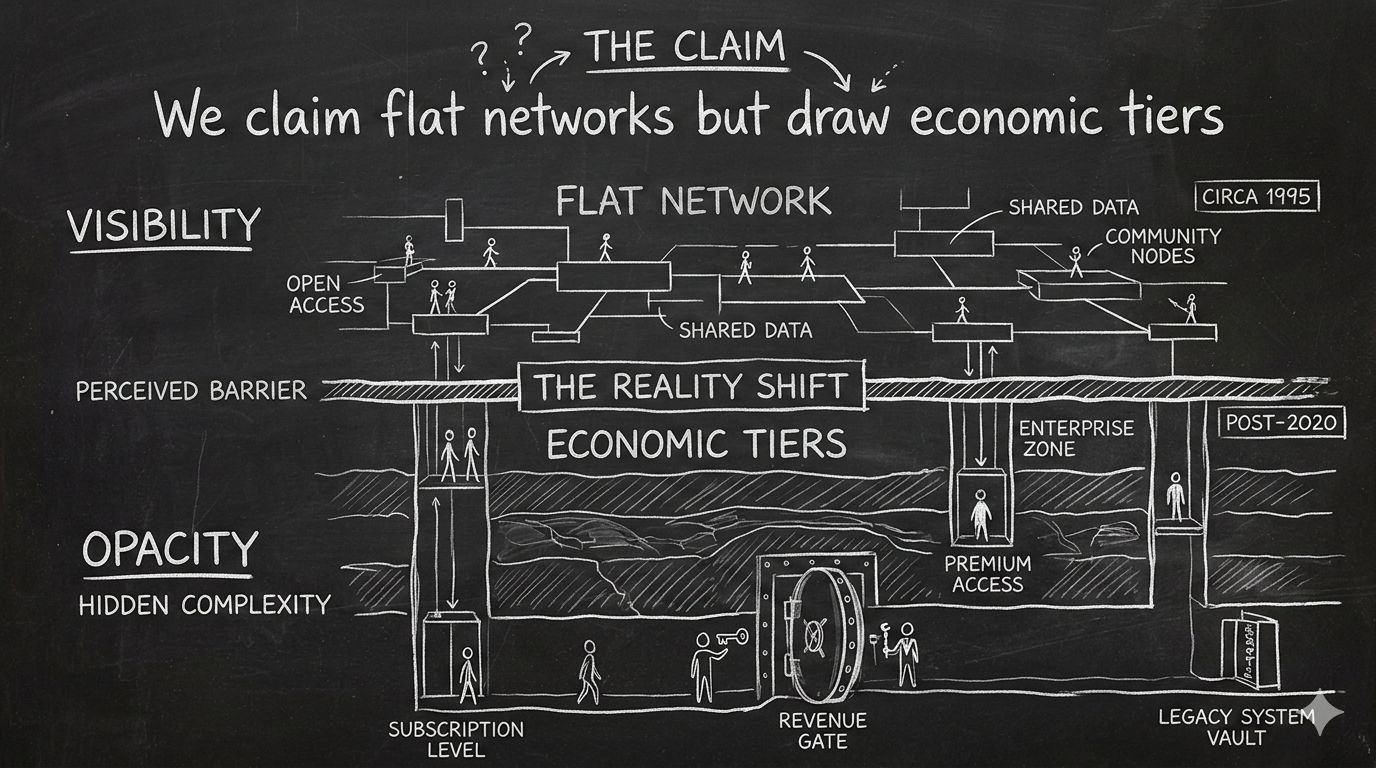
Decentralization in crypto often gets sold as this pure escape from centralized control, but what if the real endgame for many of these infrastructure projects isn't escaping power structures at all—it's just rebuilding them with better branding? We tell ourselves blockchains distribute authority, yet so many designs quietly recentralize it through staking thresholds, validator economics, or identity layers that end up favoring those who can afford to participate at scale. The consensus isn't truly flat; it's layered with economic gates that mimic the same inequalities we're supposedly leaving behind.
That moment of reading the infrastructure outline—seeing how nodes must stake tokens to prove honesty, how enterprises pay to access "high-confidence" scores—hit differently because it wasn't abstract theory. It was right there in the task screen, spelled out in bullet points about slashing lazy nodes and rewarding compute contributions. It made me question whether we're actually innovating freedom or just recreating permissioned systems where the permission is now crypto-denominated. The Fabric-like approach (or Fabrionic, whatever naming they're using) promises open robotic coordination, but the design anchors so much on economic incentives and verifiable identities that it feels less like a wild open network and more like a carefully gated marketplace. Who decides the stake minimums? Who audits the identity proofs? The same dynamics creep back in—only now they're cloaked in smart contracts.
This isn't unique to this one project; it's a pattern across so many "infrastructure" layers in crypto. We chase scalability and security through mechanisms that inevitably concentrate influence among the well-resourced. The dream of leaderless, trustless coordination sounds beautiful until you map out who actually runs the nodes, who can afford the collateral, and who gets excluded when fees or requirements rise. The task forced me to confront that the infrastructure isn't neutral—it's opinionated toward certain participants from the start.
Fabrionic Network serves as a clear example here: their consensus ties economic skin-in-the-game directly to participation, which sounds fair until you realize it quietly sorts people into tiers of influence. It's not malice; it's just the logic of incentives playing out. We end up with networks that are decentralized in name but stratified in practice.
So I keep wondering: are we building systems that truly flatten hierarchies, or are we just digitizing the old ones with fancier math? If the infrastructure itself embeds the same power gradients we're trying to escape, what exactly have we achieved? #robo $ROBO @Fabric Foundation