
In the frantic AI gold rush of 2024 and 2025, the defining challenge was scaling raw processing power. The world was mesmerized by generative AI text, images, and video. Now, in early 2026, we are facing the aftermath, the massive "Trust Crisis." While Large Language Models (LLMs) have achieved incredible reasoning capabilities, they have remained functionally opaque "black boxes." For a doctor diagnosing a patient, a lawyer citing precedents, or a financial analyst forecasting market shifts, accepting AI results on pure blind faith is a catastrophic risk. "Mostly accurate" is no longer good enough; enterprise adoption requires audit-ready intelligence.
This is the existential threat that Mira Network @Mira - Trust Layer of AI addresses. It is not building another AI; it is building the decentralized, cryptographically verified infrastructure that allows AI adoption to become viable, compliant, and trustworthy.

Proof-of-Verification (PoV): Dismantling the Black Box
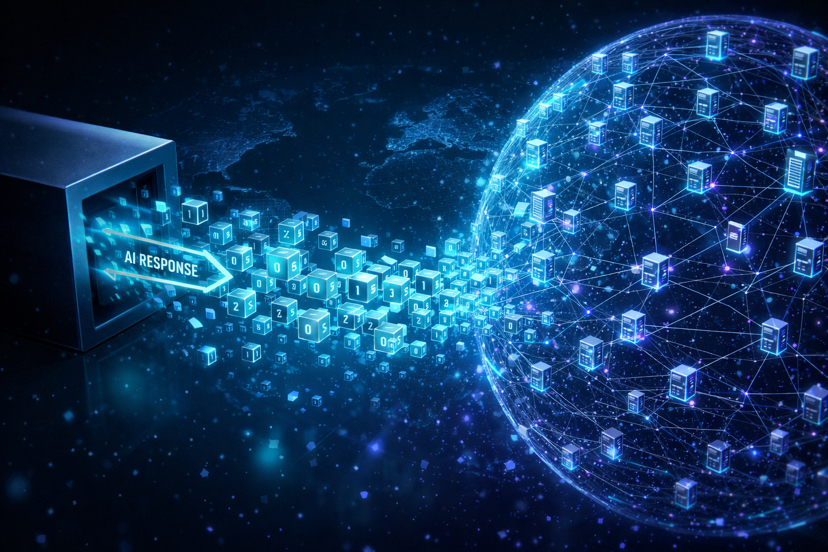
The core technical innovation of Mira Network is its Proof-of-Verification (PoV) consensus protocol. This system is the first to solve the "Interpretability Problem" that plagues all large models. When an AI (acting as the "Prover") generates any complex output, Mira creates a parallel "Truth Pipeline." This pipeline utilizes a proprietary process called Claim Binarization.
Any AI response is algorithmically dismantled into its base, "atomic" assertions. For instance, a detailed medical summary is broken into simple binary claims:
1. Diagnosis=Type 2 Diabetes, 2. Suggested Treatment=Metformin, 3. Rationale=HgA1c > 9.0. These atomic claims are then randomly distributed across a decentralized, global mesh of independent Auditor Nodes, which use diverse models to cross-check each fact. By fracturing the context into tiny, nonsensical pieces, Mira ensures data privacy, no single node sees the full document while achieving granular, semantic verification through a consensus model.
MIRA Tokenomics: Turning Truth into an Economic Good
For a decentralized truth protocol to survive and scale, its underlying token economics must create powerful, cyclical, and inelastic demand. The $MIRA token functions as the standard "Gas" for this entire verification economy. The ecosystem creates a functional feedback loop that ensures economic alignment:
• The Demand Side: Enterprises, healthcare institutions, and legal firms that must guarantee the accuracy of their AI workflows must hold and spend Mira tokens to access the verification SDK. This is not a "nice-to-have" utility; it is the fundamental cost of regulatory compliance and operational safety.
• The Supply Side: Nodes (Auditors) are required to stake a minimum threshold of MIRA as a fidelity bond. This bond ensures their alignment with the network’s goals. If a node provides malicious verification or reaches consensus lazily, its stake is slashed, making the pursuit of truth the most profitable action in the network.
This structure transforms "Truth" into a commodity with tangible economic value. MIRA doesn’t just represent a share of the network; it represents a functional key that unlocks reliable intelligence, ensuring that as AI adoption scales, the demand for MIRA scales linearly with it.