
In a world where robots are getting smarter, cheaper, and more autonomous, one question becomes unavoidable: who coordinates them, pays them, and keeps the rules fair?
@Fabric Foundation answer is $ROBO. It is the utility and governance token designed to power an open “robot economy”, where machines can prove what they did, get paid for it, and participate in a system that is not owned by a single company.
At the most practical level, $ROBO is the fuel for the network. Fabric’s vision is that autonomous robots will need onchain wallets and identities, because robots cannot open bank accounts or hold passports. In this model, $ROBO is used to pay network fees for things like payments, identity, and verification. Fabric also notes that the network is initially deployed on Base, with a longer-term plan to migrate toward its own chain as adoption grows.
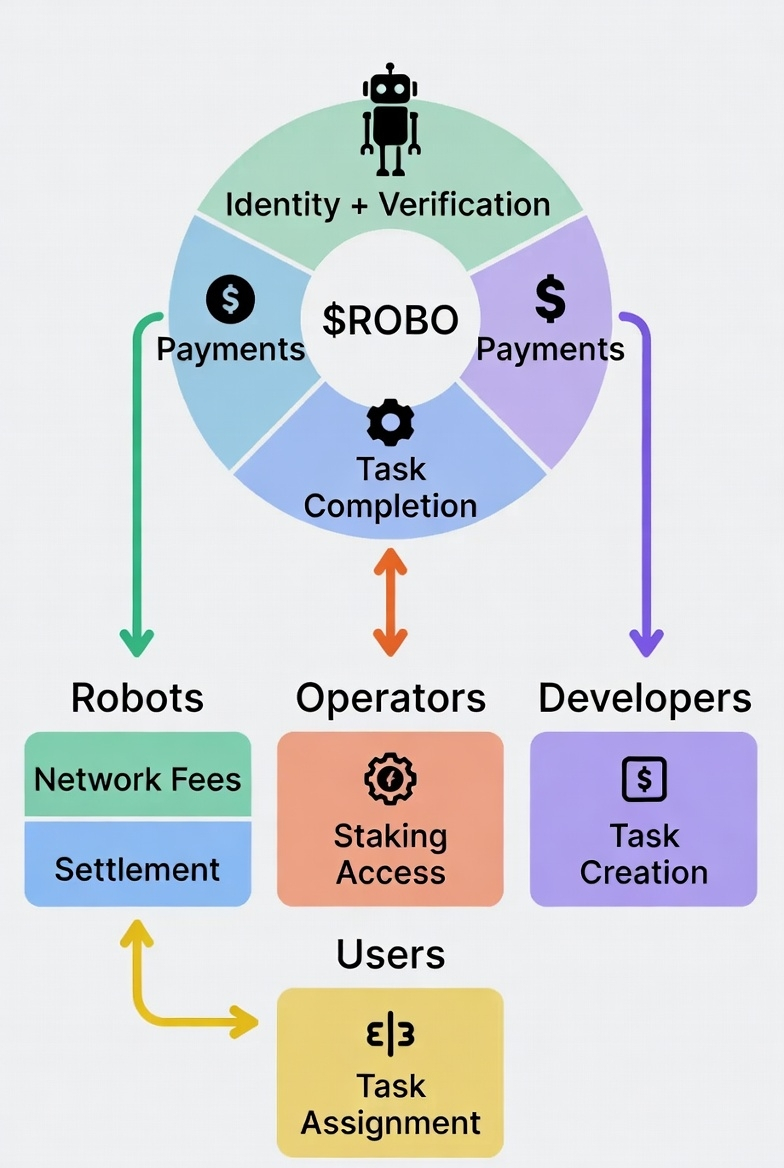
Where it gets more interesting is how Fabric links tokens to real activity. Instead of rewarding people just for holding tokens, Fabric highlights a system often described as Proof of Robotic Work, where incentives are tied to verifiable robotic tasks and contributions. Think of it like this: the token is meant to reward outcomes. If the network grows because robots are actually doing useful work, the incentive design tries to reflect that.
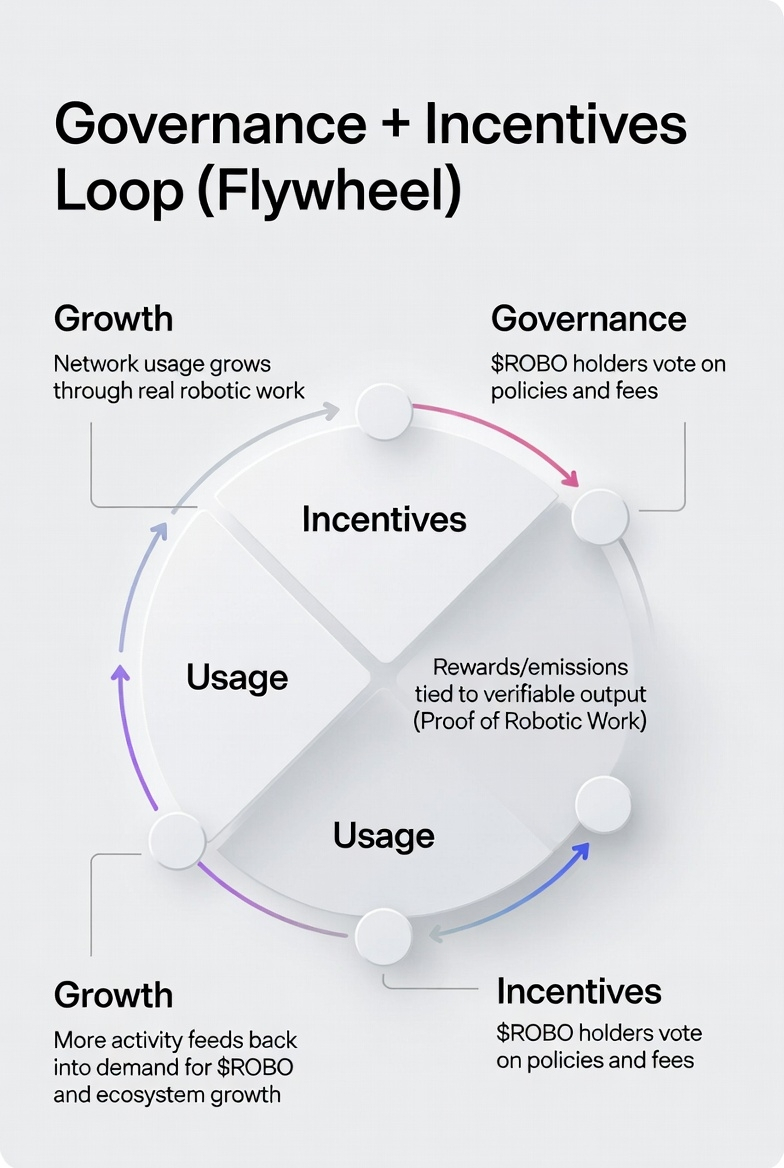
Governance is the second pillar. ROBO coin is intended to be used for shaping how the network runs, including things like fees and operational policies. That matters because governance is not just a buzzword here. If the goal is a shared infrastructure layer for robots, then rules around safety, participation, and economics cannot be locked behind one vendor’s decisions.
Now for the “numbers” people always ask about. Multiple sources describe a fixed total supply of 10 billion ROBO tokens. One exchange academy-style overview lists ROBO as an ERC-20 token and cites an estimated circulating supply around 2.23B and an approximate market cap around $94.89M at the time of its update (market data moves constantly).
Put simply: $ROBO is trying to make robotics coordination measurable and incentivized. If Fabric succeeds, the token is not just a “ticker”, it becomes the economic glue for identity, payments, governance, and rewards tied to real machine output.
