

When traders talk about “governance,” it’s usually code for slow arguments, rushed votes, and a dev team that still ends up steering the ship. Fabric is trying to tighten that loop. The interesting part isn’t that it has voting it’s how veROBO is designed to make decisions fast enough to matter without turning every change into a politics festival.
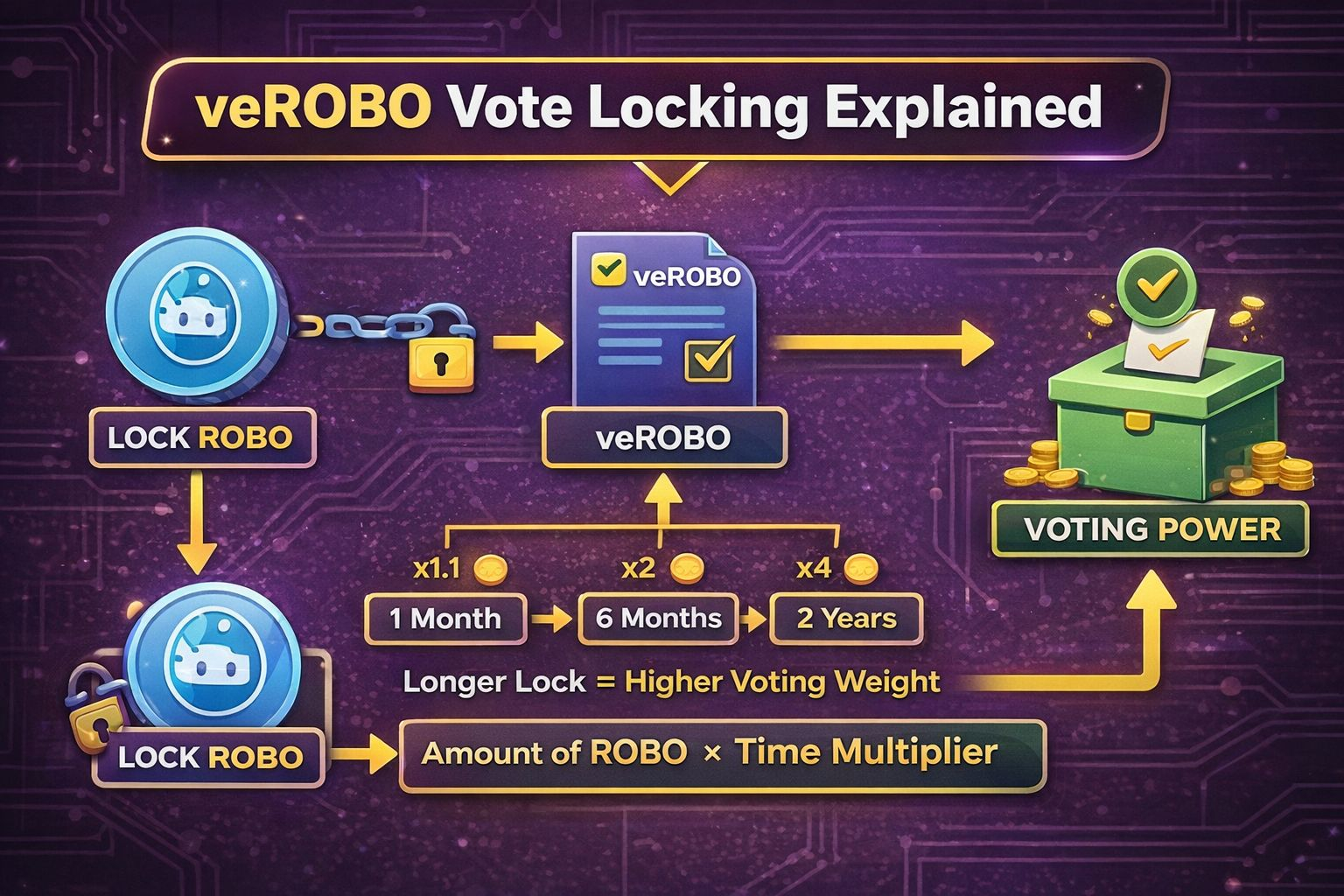
First, the basics in plain English. veROBO is a “vote escrow” setup: you lock ROBO for a period of time, and in return you get veROBO, which is the thing that actually carries voting weight. Lock longer, get more weight. It’s not a meme; the whitepaper literally models voting weight as your locked amount times a time based multiplier, with the multiplier increasing as your lock duration increases. That single choice is a pretty old DeFi trick at this point, but it’s still one of the cleanest ways to reduce drive by governance where someone shows up for one vote, swings it, and disappears.
What does that buy Fabric in practice? Speed and simplicity especially for developers. If you’ve shipped anything onchain, you know the pain: parameters that look “fine” at launch become wrong the moment real usage hits. Fees too high, verification thresholds too strict, emissions misaligned, or incentives that attract the wrong kind of activity. If every tweak requires offchain coordination, a new release, and a long runway for “community feedback,” developers end up building against a moving target, and they hate that.
Fabric’s veROBO framing is basically: keep governance narrow, keep it procedural, and focus it on knobs that affect protocol operations. The whitepaper is explicit that veROBO voting and signaling is for limited protocol parameters and improvement proposals, and it also draws a hard line that these rights do not equate to control over a legal entity or a claim on treasury assets or revenue. That matters because it sets expectations: governance is about keeping the machine running, not fighting over the vault.
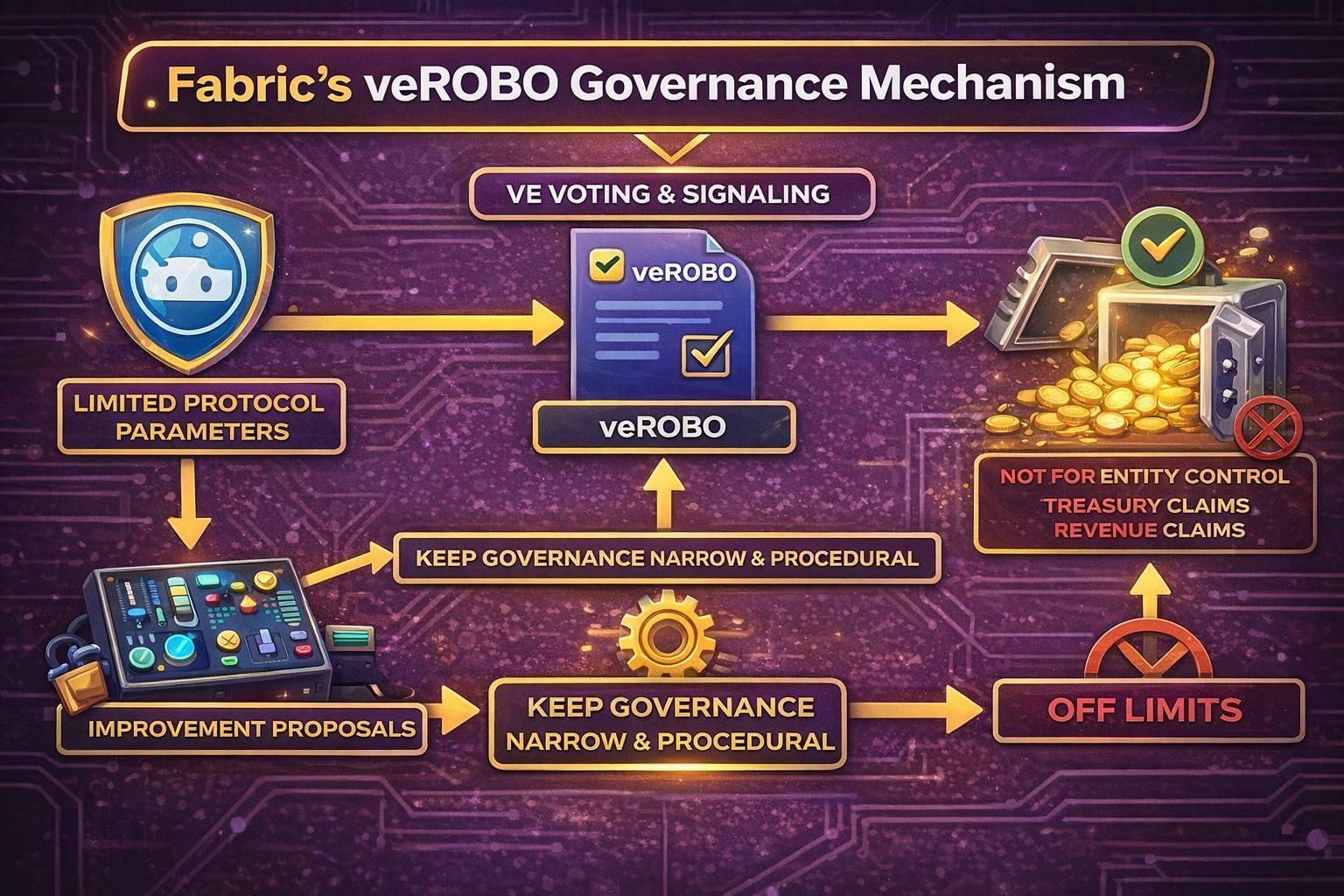
The “knobs” themselves are also the kind devs actually care about. Fabric lists governance participation as signaling preferences on parameter adjustments (it even gives examples like utilization targets and sensitivity parameters), quality threshold changes, verification and slashing rules, and network upgrade proposals. If you’re building on top say you’re integrating robot identity verification, or relying on the network’s quality thresholds for task settlement you want those rules to be predictable, and when they must change, you want the change to be legible and onchain.
Here’s the trader angle I can’t ignore: this is trending right now because ROBO just hit the market in a very visible way. ROBO went live for spot trading on Coinbase on February 27, 2026, and was also featured by Binance Alpha around the same date, which is exactly the kind of catalyst that drags a new governance system into the spotlight. Bitget’s announcement also anchored that week’s attention, pointing to ROBO/USDT spot trading opening February 27, 2026 (10:00 UTC). When liquidity shows up, governance stops being theoretical, because people can actually price the risk of future rule-changes.
Progress wise, what’s concrete today is the shape of the system and the rollout context: Fabric says the network is initially deployed on Base, with an intention to migrate toward its own L1 as adoption grows. That’s relevant to governance because parameter changes, upgrade proposals, and security rules get more consequential as you move from “app on an L2” to “chain with its own execution environment.” Traders watch that migration story for narrative reasons; developers watch it because it determines tooling, latency, and what “fast governance” really means when the stakes increase.
Token distribution details also tell you what kind of governance pressure to expect in the first year. A breakdown published February 27, 2026 described 24.3% for investors and 20% for team/advisors with a 12 month cliff and then linear vesting, while community facing allocations (including airdrops) are available earlier. I’m not treating that as gospel truth for every wallet label, but it’s a useful lens: in the early phase, governance activity often skews toward the participants who are liquid and engaged, not necessarily the ones who will be largest later. Vote escrow mechanics partly counterbalance that by rewarding longer term lockers, which usually correlates with people willing to stick around and do the boring work of governance.
The developer friction win, if Fabric executes cleanly, is that veROBO can become a predictable change۔management layer. You don’t want governance touching everything. You want it touching the minimum set of parameters that keeps the protocol adaptive, while leaving application developers with stable interfaces. If veROBO voting stays focused on operational knobs fees, thresholds, verification rules, and upgrades and if changes happen on clear epochs with transparent onchain signaling, you get the rare combination of “move fast” and “don’t break builders.” That’s the kind of governance traders can understand too: fewer surprises, smaller tail risks, and a clearer map of what can change, who can change it, and how quickly it happens.