
#Mira @Mira - Trust Layer of AI $MIRA
Mira Coin is a blockchain project that focuses on building a trust layer for artificial intelligence and digital systems.
Instead of emphasizing short-term market performance, the project aims to address a technical problem: how to verify and evaluate information generated or processed by AI models.
In this article, I will explain what Mira Coin is designed to do, how its system works, and what strengths and limitations can be observed based on available information.
The Problem It Tries to Solve
One major challenge in the AI and blockchain space is trust.
AI-generated content is becoming more common, but verifying its accuracy, originality, and reliability remains difficult.
At the same time, blockchain systems require reliable data inputs to function correctly.
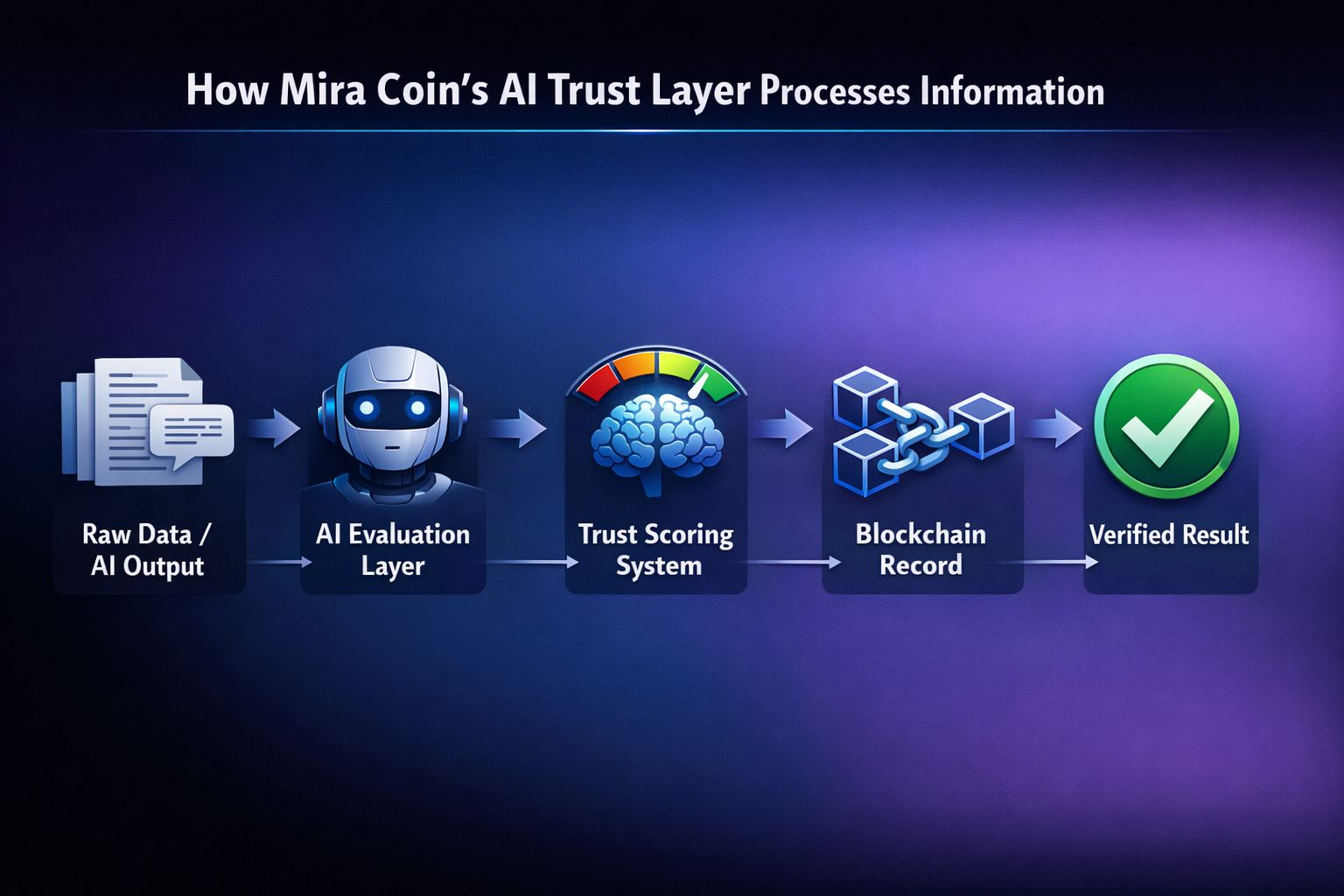
Mira Coin attempts to address this gap by creating a trust framework that can evaluate AI outputs and digital signals in a structured way.
The idea is to reduce dependence on unverified data and improve transparency in automated decision systems.
How Mira Coin Works
The core concept behind Mira Coin is its AI trust layer.
This layer is designed to analyze and score information based on predefined parameters rather than subjective assumptions.
Key components of this system include:
Data validation mechanism: Information is checked before being processed or stored.
AI-assisted evaluation: Models help assess patterns and consistency in the data.
Blockchain recording: Results can be recorded on-chain for transparency and traceability.
This structure allows the network to create a measurable trust signal instead of relying only on human moderation.
Possible Use Cases
If the system functions as intended, several practical applications are possible:
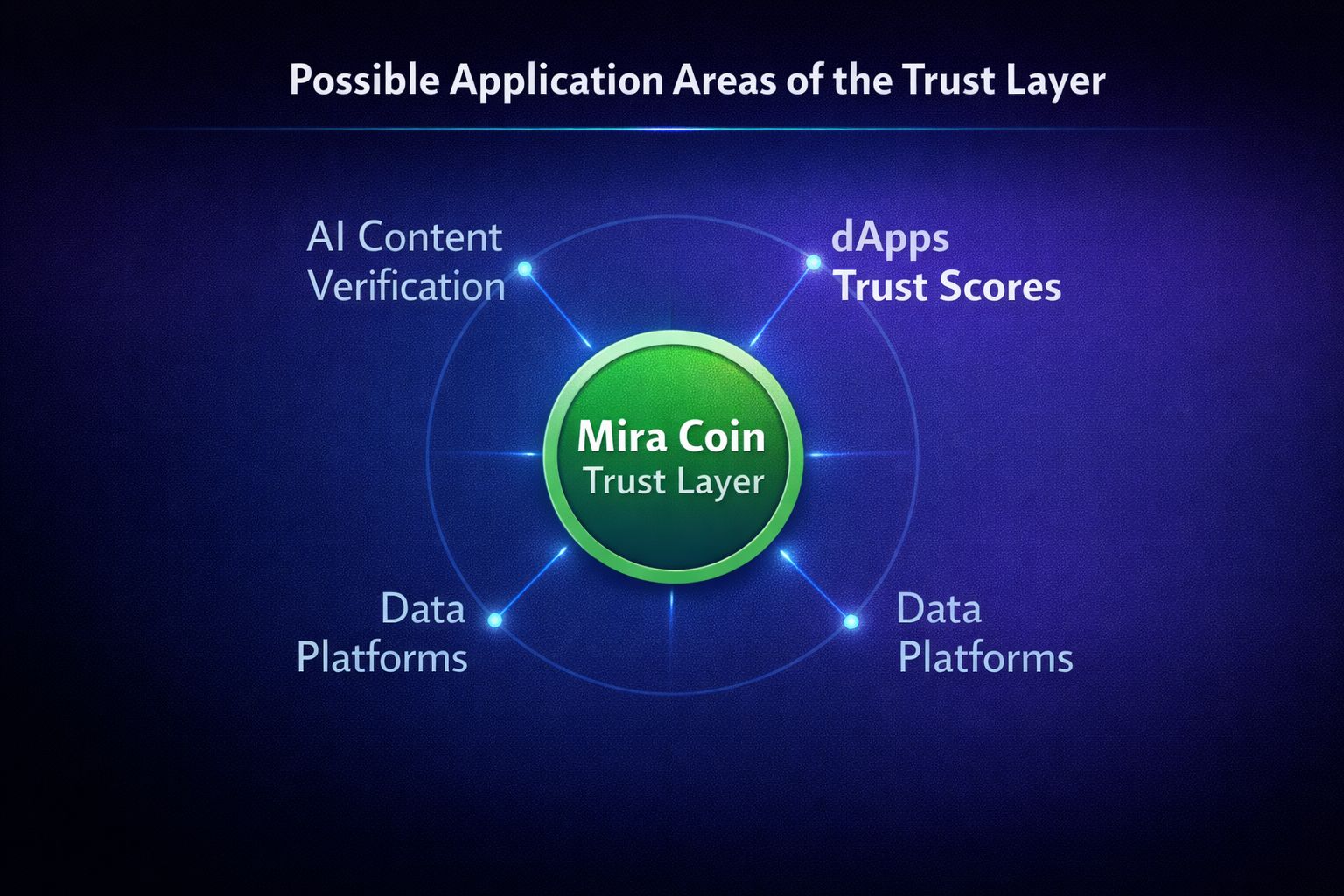
AI content verification: Identifying unreliable or manipulated outputs.
Decentralized applications: Providing trust scores for automated services.
Data-driven platforms: Improving accuracy in systems that depend on external data sources.
These use cases show that the project’s focus is more on infrastructure rather than speculative token use.
Comparison With Similar Projects
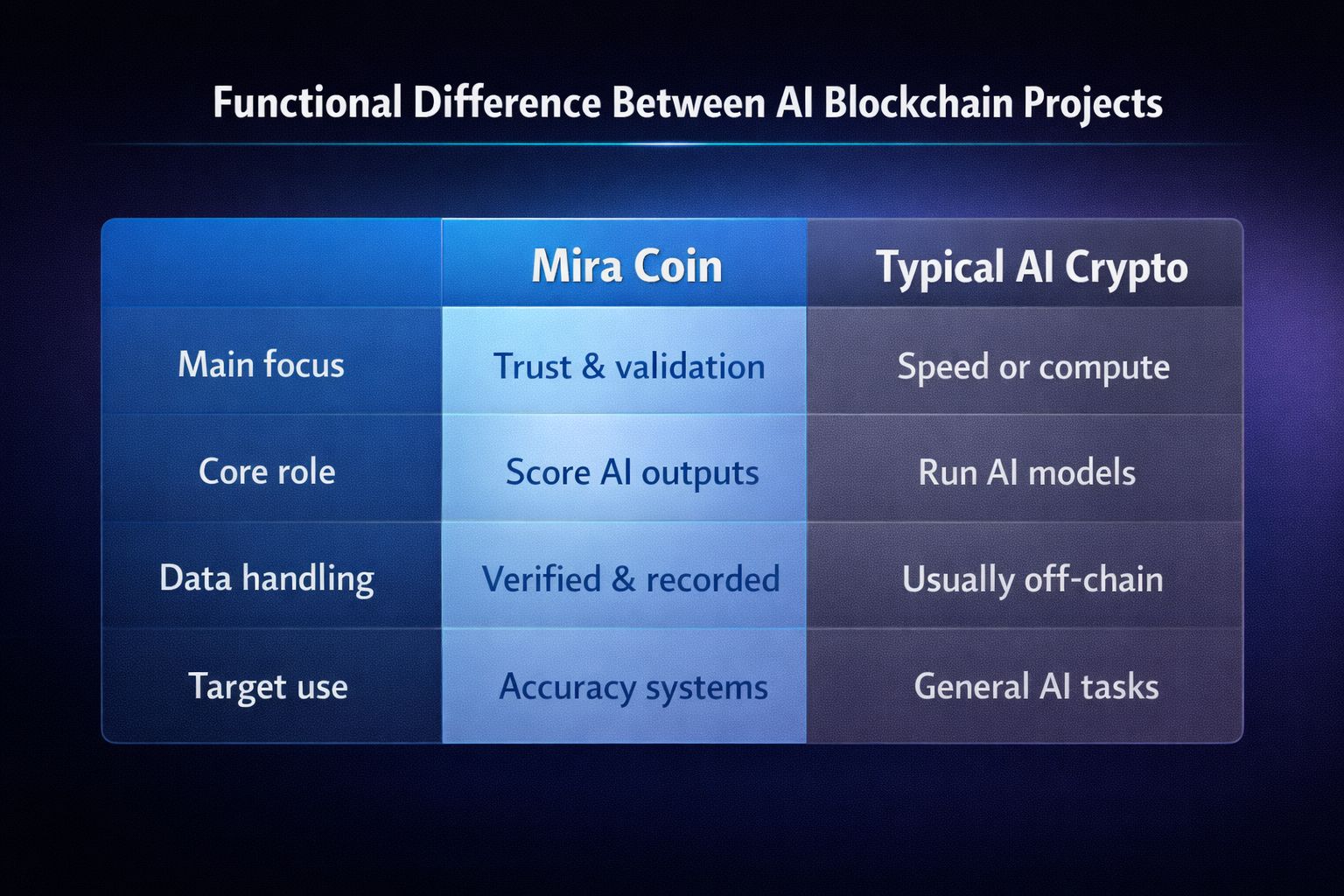
Compared to other blockchain projects that focus mainly on AI computation or data storage, Mira Coin emphasizes trust evaluation.
While some networks prioritize processing speed or scalability, Mira Coin appears to prioritize reliability and validation.
This difference makes it more relevant to platforms that require accuracy rather than raw performance.
Risks and Limitations
Despite its technical goals, there are risks to consider:
Adoption risk: Developers and platforms may be slow to integrate a new trust framework.
Technical complexity: AI evaluation models require continuous improvement and monitoring.
Ecosystem dependency: The effectiveness of the system depends on real usage rather than theory.
These factors may influence how practical the solution becomes over time.
Personal Perspective
From my perspective, the most interesting part of Mira Coin is its focus on trust rather than speed or hype.
Many projects attempt to solve technical issues, but few directly address the reliability of AI-generated data.
However, long-term value will depend on whether the system can demonstrate real-world accuracy and attract consistent users, not just attention from the crypto market.
Conclusion
Mira Coin presents a technical approach to improving trust in AI-related systems.
Its concept focuses on validation, transparency, and structured evaluation rather than short-term trends.
While the idea is promising from a design standpoint, real impact will depend on adoption, execution quality, and integration into practical applications.
Observing how the project develops in these areas may provide clearer insight into its future role in the AI and blockchain ecosystem.
What do you think is more important for AI-focused blockchain projects:
data accuracy or network adoption?