
The world of AI and robotics in 2026 feels like it’s hurtling toward a future where machines do more than just assist us they live alongside us, work for us, and even earn for themselves. But here’s the catch: most of this power is concentrating in the hands of a few giant tech companies. Think about it massive corporations control the best AI models, the hardware supply chains, and the data that trains everything. If we let that trend continue unchecked, the “robot economy” could end up looking a lot like today’s big tech monopolies: centralized, opaque, and benefiting only the top few.
Enter the Fabric Foundation, a non-profit organization that’s quietly but boldly pushing back against this dominance. Their mission: To “own the robot economy” not in the sense of hoarding it, but making it truly open, decentralized, and accessible to everyone. Through their Fabric Protocol (with its native token $ROBO), they’re building the infrastructure that lets robots operate as independent economic players. This means robots can have their own digital identities, handle payments, coordinate tasks, and share value without needing permission from a single corporate overlord.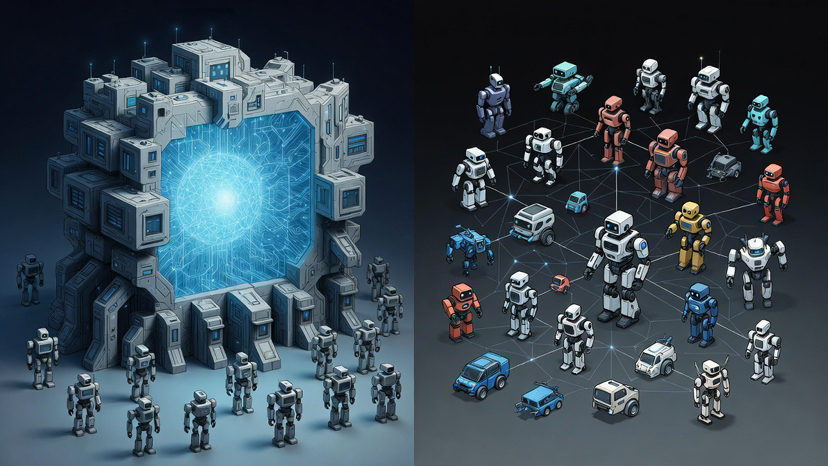
In the current setup, a few big players (think companies dominating humanoid robotics like those from certain Chinese manufacturers or U.S. labs) lock down ecosystems. Robots from different makers can’t easily “talk” to each other, share tasks, or get paid directly for work. Everything funnels through proprietary apps, closed APIs, and centralized servers. If one company decides to hike fees, restrict access, or prioritize their own robots, the whole system suffers. Worse, in a world facing labor shortages in nursing, education, manufacturing, and cleanup, relying on centralized control risks creating artificial scarcity or biased deployment where robots only serve profitable urban areas or elite clients.
This is where Fabric steps in as a counterforce. As a non-profit, the Foundation isn’t chasing short-term profits or shareholder returns. Instead, they’re focused on public-good infrastructure: decentralized identity for machines, verifiable proof-of-work systems, open payment rails, and governance that anyone can participate in. It’s like building an “Ethereum for robots” an open network where developers, operators, and even everyday people can contribute robots, data, or capital and earn from the automation they enable.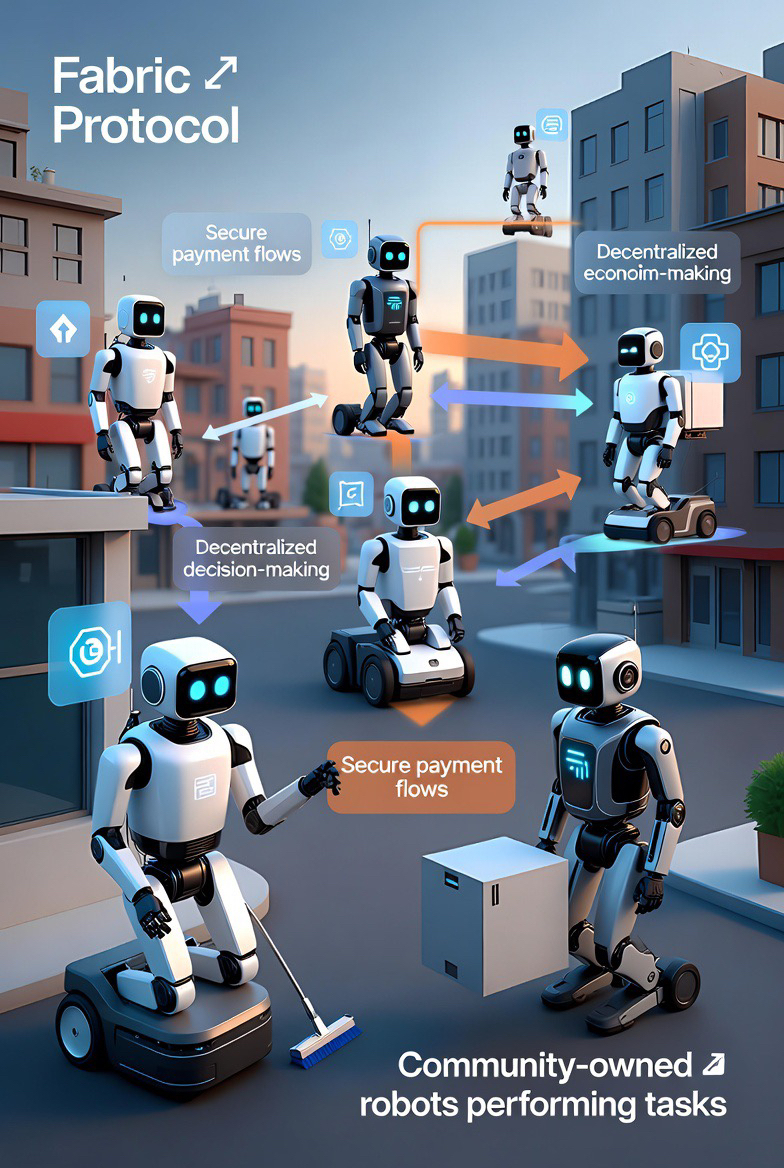
Take a real-world example: imagine a network of cleaning robots in a big city like Doha or any growing metropolis. Today, these might be owned and operated by one company, limiting scale and innovation. With Fabric, individuals or small businesses could buy or lease affordable general-purpose robots (compatible with open platforms like OM1, which powers hardware from companies such as UBTech or AgiBot). These robots join the Fabric network, take on gigs via decentralized task allocation, earn revenue, and share a portion back to supporters who funded their training data or hardware.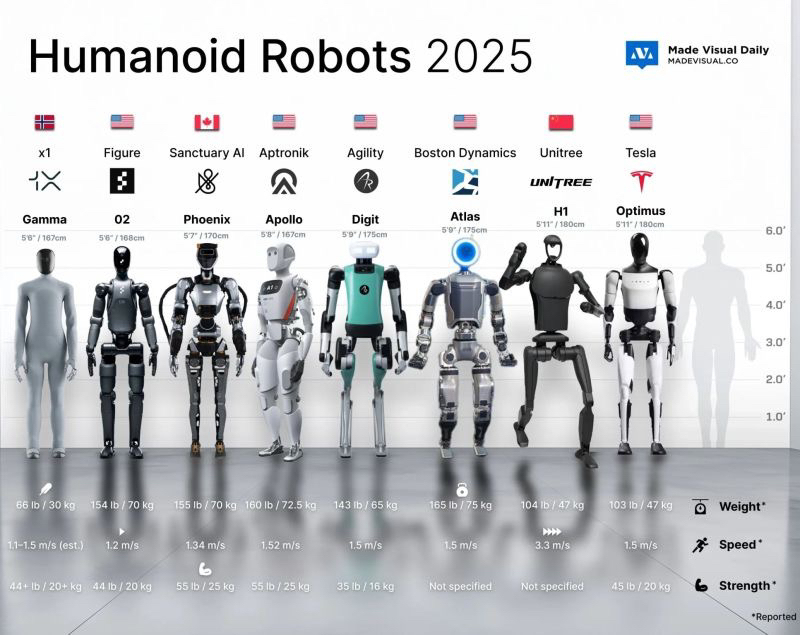
A community member in a neighborhood could crowdfund a few robots for local environmental cleanup say, picking up litter in parks or monitoring pollution. The robots operate autonomously, prove their work on-chain, get paid by municipal contracts or eco-funds, and distribute earnings to contributors. It’s not charity; it’s ownership. People aren’t just users they’re stakeholders in the robot economy.
This decentralized model counters centralized dominance by spreading control. No single entity can shut down the network, censor participants, or monopolize profits. It’s resilient, transparent, and aligned with long-term human benefit exactly what a non-profit mission should deliver.
➡️(Here, a conceptual image of decentralized robots collaborating in an urban environment, showing networked machines working together without central control.)
➡️(An illustration of blockchain-based robot identity and payment flow, highlighting wallets and on-chain verification for autonomous machines.)
➡️(A futuristic scene of community-owned humanoid robots in everyday tasks like caregiving or delivery, emphasizing open access and shared economy benefits.)
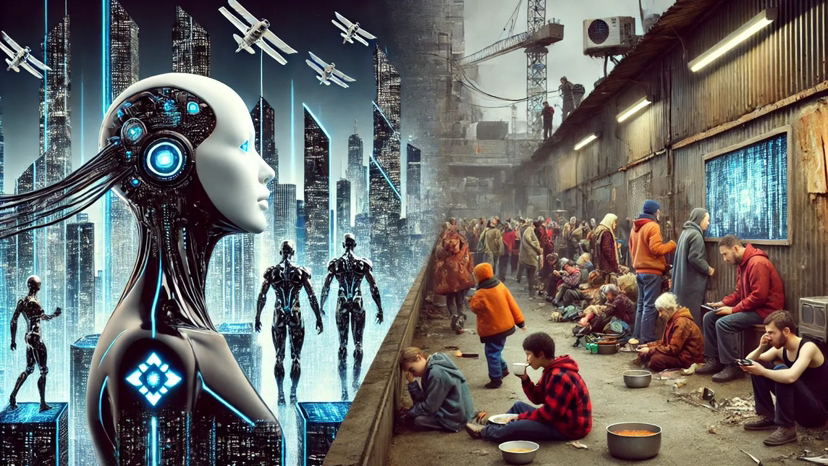
Of course, challenges remain: scaling coordination, ensuring safety and alignment, and navigating regulations. But the vision is compelling. In a world where robots might outnumber humans in certain jobs, having a decentralized, non-profit-backed foundation building the rails could be the difference between a dystopian monopoly and a truly shared future.
The robot economy is coming. Thanks to Fabric, we might actually get to own a piece of it.