
The rain tapped steadily against the window this afternoon, the sort that makes you linger over a second cup of tea instead of rushing anywhere. I was half-distracted, thumbing through Binance Square feeds when the CreatorPad banner for ROBO popped up again—another campaign task staring me down. This one asked for a breakdown of the tokenomics: supply structure, utility mechanics, incentive layers. I clicked in, skimmed the usual charts, then paused on the allocation breakdown where nearly 30% sits under ecosystem and community, explicitly tied to Proof of Robotic Work emissions rather than the typical staking or liquidity mining rewards most projects lean on.
Scrolling that pie chart, seeing the vesting schedules on investor and team portions contrasted with the conditional release mechanism for robotic contributions, unsettled me in a way I didn't expect. Crypto has long sold us the story that tokens gain lasting value through human-driven speculation, community hype, or passive holding—scarcity plus narrative equals demand. But here the design quietly insists that meaningful emissions depend on verifiable output from machines themselves, not endless human participation loops. It challenges the bedrock assumption that decentralized economies remain human playgrounds forever; instead, it hints that the token's real anchor might be non-human agents earning and spending in ways we don't fully control or predict.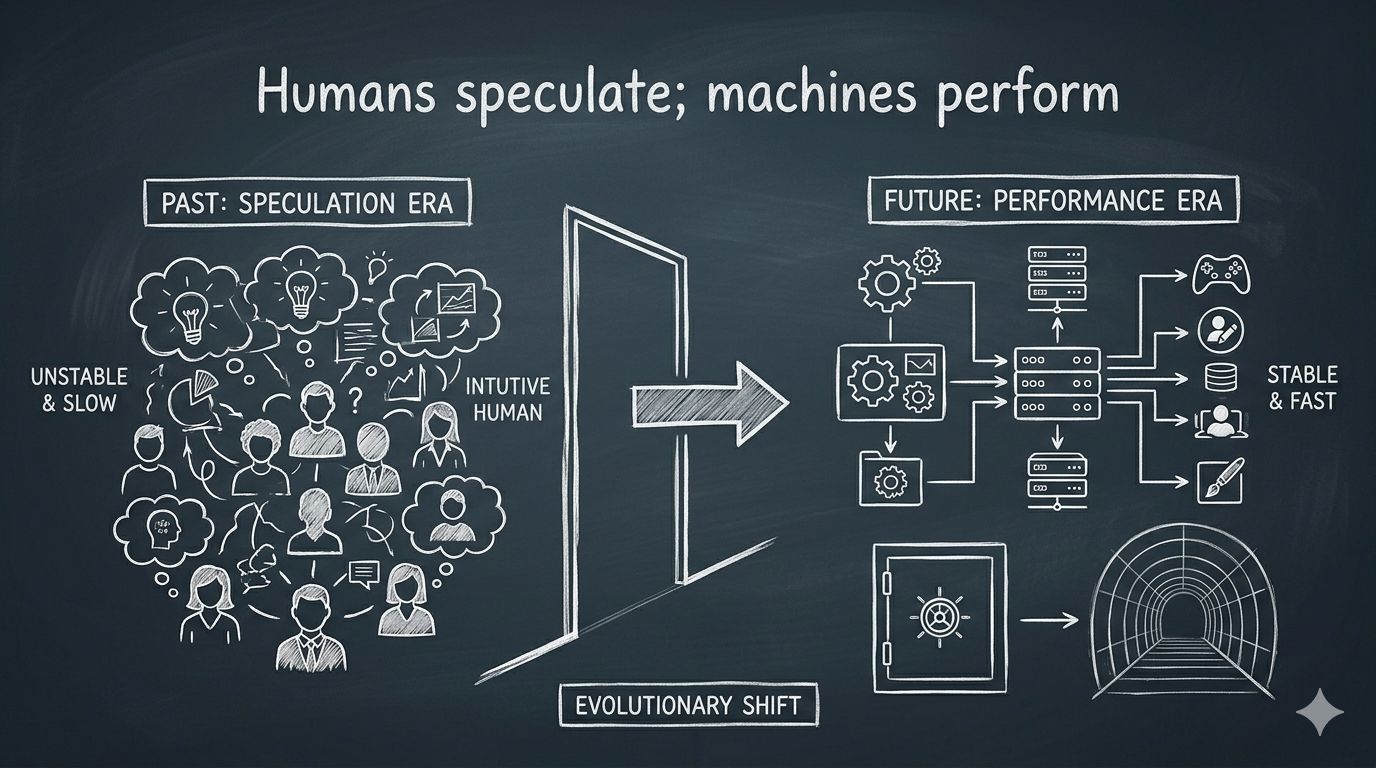
The idea feels risky because admitting it risks sounding dismissive of the current crowd psychology that keeps most tokens afloat. If value truly starts hinging on whether robots perform measurable, on-chain verifiable tasks—maintenance logs, compute contributions, data feeds—then the whole game changes. Traditional models reward belief and loyalty; this one ties unlocks to external performance that could falter if hardware adoption lags, protocols glitch, or real-world robotics hit practical walls. It isn't inflationary in the reckless sense—no uncapped minting—but it's conditionally gated in a manner that exposes tokenomics to forces beyond community sentiment or whale maneuvers. That vulnerability isn't hidden behind vague utility promises; it's baked into the allocation logic.
Fabric's ROBO illustrates this shift more plainly than most I've looked at lately. The token serves payments for robotic services, identity verification, staking for network coordination, governance—but the standout piece is how a large chunk of supply releases only through Proof of Robotic Work, rewarding actual machine labor over passive human staking. That single view on the task page, the ecosystem slice linked directly to robotic contributions, forced the realization: we're inching toward economies where humans might eventually become secondary participants, not the sole drivers of activity and value accrual.
It leaves me wondering whether we'll adapt our definitions of decentralization to include machine-majority networks, or if we'll keep clinging to the old human-centric frame until it breaks under its own weight. What happens to "community" when the majority of on-chain actors aren't people at all? #robo $ROBO @Fabric Foundation