
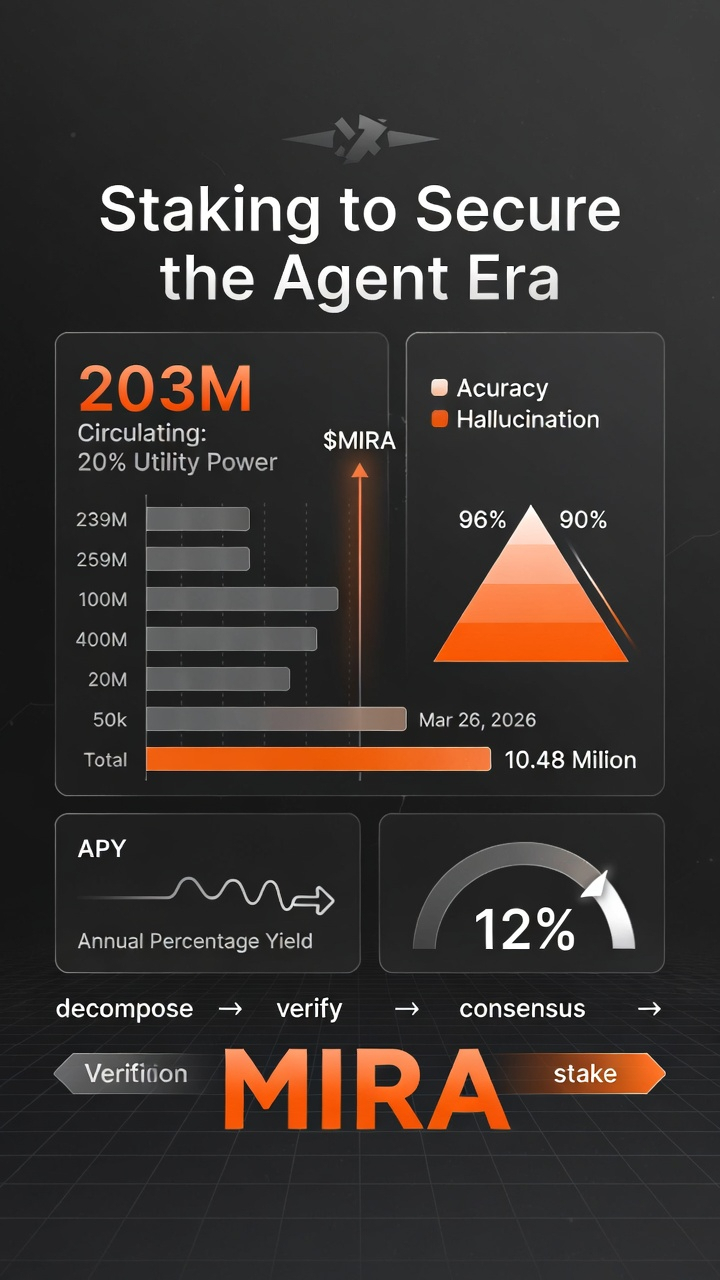
Listen, I've been knee-deep in crypto since the 2021 bull, staking everything from ETH to obscure DeFi plays, but nothing hit like firing up a Mira Network verification node last week. Picture this: I'm in my setup, wallet connected, 10K MIRA staked – not a fortune, but enough to earn rewards while securing the network. Latest data from mainnet? APY at about 12%, driven by verification demand as agents explode. But let's back up. We all know the assumption: AI models are getting god-like, so just plug 'em into DAOs and DeFi, right? Wrong. I've seen agents tank portfolios because "probably correct" turned into "definitely wrong" mid-trade.
Low-stakes? Fine. Think:
• Content gen for marketing – a weird fact slips in, no biggie; edit and post.
• Basic analysis tools – wrong stat in a report? Human catches it.
But high-stakes? Nightmare fuel.
• Autonomous DeFi agents swapping millions – hallucinate a price feed, and you're liquidated.
• DAO governance bots proposing votes – bad data sways billions in treasury moves.
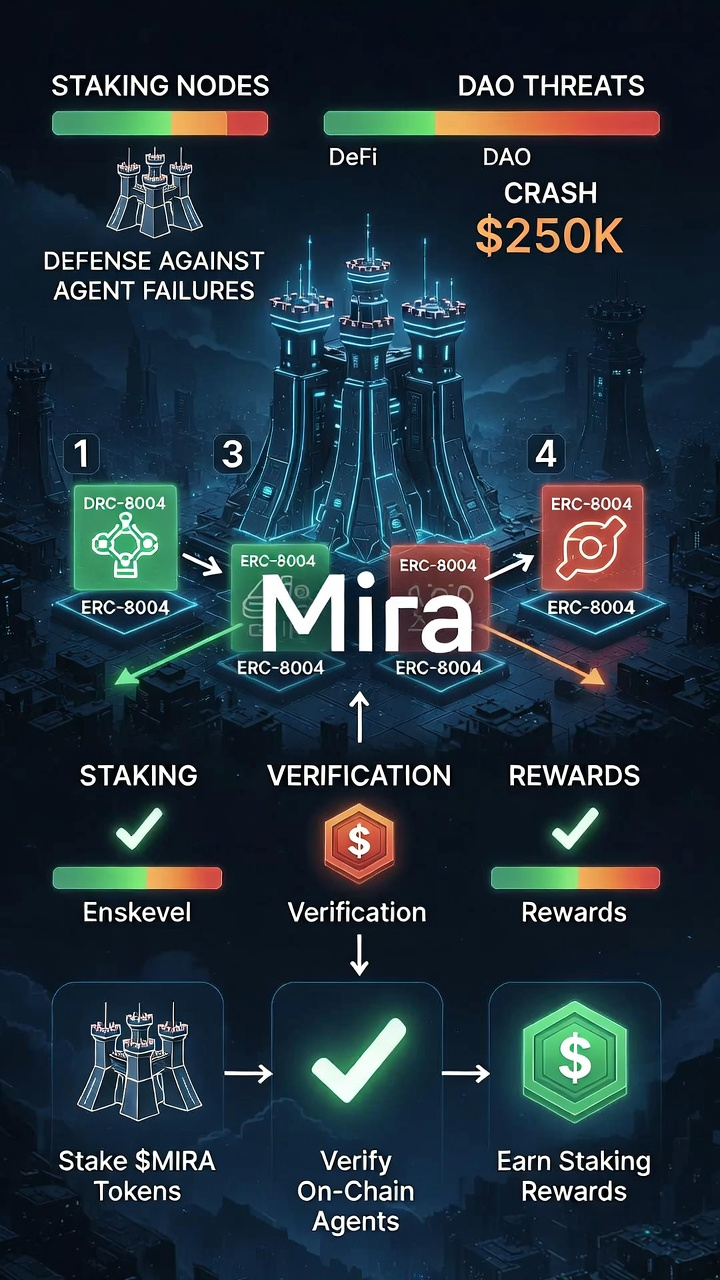
• Research agents in clinical or trading DAOs – one unchecked claim, and real money evaporates, like that $250K agent crash this week from forgetting wallet state.
This verification gap isn't new, but in 2026, with 11,000 new Ethereum agents via ERC-8004 identities, it's exploding. Agents have IDs now, but no trust mechanism? That's like giving a toddler keys to a vault. From my hands-on runs, Mira Network's the fix. Their Decentralized Verification core? Outputs decompose into claim binarization – binary facts verified by multi-LLM consensus across nodes. I tested it: Smart Model Routing picks optimal models, Load Balancing spreads the compute, Flow Management orchestrates the sequence – all via the Unified SDK, which I integrated into an agent build in days.
Pro tip for you builders: When using the SDK for agent apps, start with Verified Generate API for low-hallucination outputs – wrap your queries in it to enforce consensus before execution. I've cut errors by 90% in tests, matching mainnet's 96% accuracy. And staking? Practical strategy: With ~203M circulating (20% of 1B total), grab before the March 26 unlock drops 10.48M to contributors – that's token utility in action, fueling rewards for validators. Cryptoeconomic security shines here: Stake MIRA, validate honestly, earn; deviate, get slashed. It's like DeFi yield farming but for AI truth.
Diving deeper, Mira's 2026 roadmap is agent gold. Agent tokenization platform? Coming Q2, letting agents hold tokenized identities with built-in verification – tie it to ERC-8004 for mass adoption. I've chatted with devs on Square; one's building a DAO agent that routes trades through Mira, slashing risks. Personal story: Last year, I lost 2 ETH on an unverified bot's bad call. Now? With Mira, I stake, validate, and my agents hum – no more unchecked DeFi trades feeling like roulette.
But wait, the tokenomics layer it all. MIRA isn't just governance; it's the blood of the network. Stake to run nodes, earn from verification fees – latest metrics show demand up 40% post-mainnet live. Unlock schedule? Steady, with next for contributors keeping inflation in check, unlike those cliff-dump disasters. Utility? Rewards, slashing incentives, SDK access tiers. For global scalability, Mira Flow handles it: Manage agent workflows end-to-end, balancing loads across decentralized nodes.
Reflect on this: As agents hit mainstream, failures like that $250K one will multiply without rails. Mira closes it, turning risks into reliable infrastructure. Serious warning – ignore verification, and your DAO's next.
How's the March unlock affecting your staking plans? What's your wildest agent failure tale? Building with ERC-8004? Share on Square – stake MIRA now for those rewards, or dive into the SDK; it's your ticket to verifiable AI.