Building the Foundation of the Robot Economy with Fabric
The future of autonomous robotics depends not on promises or flashy applications but on robust infrastructure that can coordinate, verify, and scale operations globally. The Fabric Protocol, backed by @fabric.foundation, is pioneering this infrastructure with the $ROBO token and a series of innovative mechanisms designed to reward real-world contributions.
The Role of Fabric Foundation
@Fabric Foundation serves as the non-profit backbone supporting the long-term development, governance, and coordination of the Fabric Protocol. Its role is to ensure that robotic networks operate efficiently, fairly, and safely. By structuring incentives and enforcing protocol rules, the foundation aligns the economic interests of robots, humans, and other agents in the network.
Core Mission and Execution
The foundation’s mission is clear: create a verifiable, scalable, and fraud-resistant robot economy. This is executed through multiple layers:
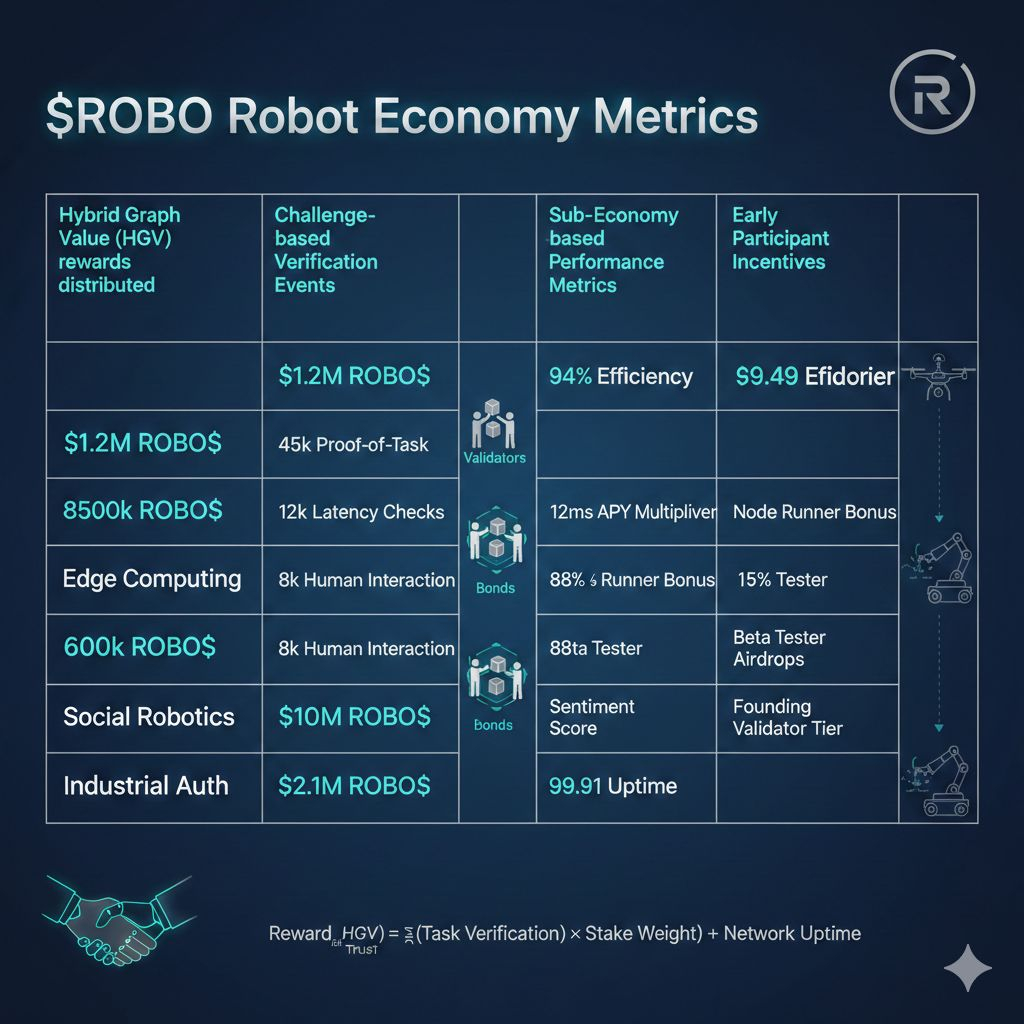
Hybrid Graph Value (HGV) Mechanism: HGV blends activity-based and revenue-based rewards, ensuring early participants are incentivized while protecting the network from Sybil attacks and fake transactions.
Challenge-Based Verification: Validators stake bonds to check task completion, detect fraud, and maintain high standards, creating a self-regulating ecosystem.
Sub-Economy Evolution: The network dynamically identifies high-performing subgraphs—geographical regions, task categories, or operator clusters—and scales best practices across the broader system.
These mechanisms reflect the foundation’s commitment to infrastructure over speculation. Rather than rewarding hype, the protocol rewards measurable, verifiable contributions.
Target and Ambition
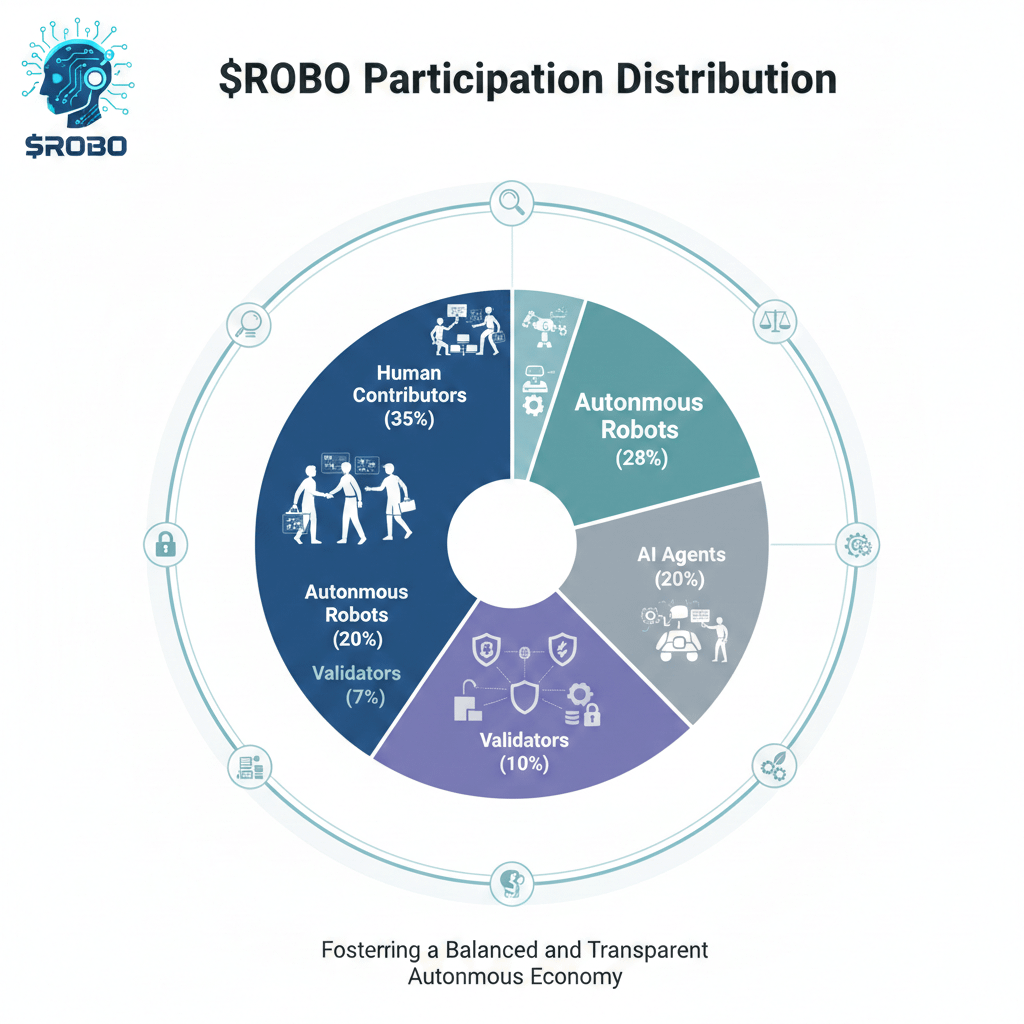
The immediate target is to enable autonomous robots, humans, and AI agents to coordinate seamlessly, with transparent incentives and verifiable work. Longer-term, Fabric aspires to:
Establish a global robot observatory, allowing humans to evaluate and improve robot behavior.
Create a robot skill app store, where modular skill chips can be deployed, shared, or retired.
Enable fair economic interactions, including payments, compute, and data sharing between humans and robots.
Support continuous learning and improvement, where humans contributing models or skills are rewarded fairly.#ROBO
Encourage safe, scalable robot deployment, ensuring availability, compliance, and quality.
These ambitions are aligned with a vision of a machine-native economy where robots are not just tools but coordinated participants in a decentralized, tokenized ecosystem.
Why $ROBO Matters
ROBO is more than a token—it represents participation in a functioning robot economy. Emissions are allocated based on verified contributions, blending activity and revenue measures. This ensures early contributors are rewarded, fraud is economically unprofitable, and the ecosystem scales sustainably. Governance parameters allow the community to evolve reward weights, optimize sub-economy structures, and continually improve network efficiency.
The Strategic Advantage
By focusing on infrastructure, verification, and incentive alignment, Fabric positions itself as the foundation of the next wave of the robot economy. As autonomous machines become more capable, the need for trusted coordination, verifiable work, and scalable incentives will only grow. Projects that quietly build these rails today, like Fabric, are likely to be the breakout leaders tomorrow.
Fabric demonstrates that real economic value comes not from hype but from working systems, verifiable contributions, and adaptive, community-governed infrastructure. The Robot Economy is here, and ROBO is at its core.
@Fabric Foundation #ROBO $ROBO #FabricFounddation