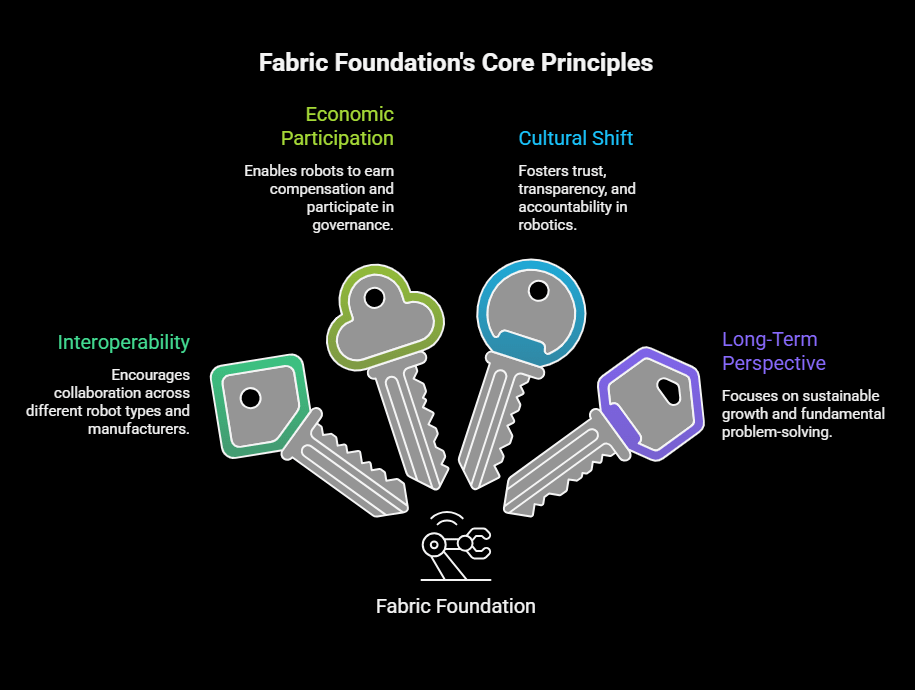
When I first started paying attention to the Fabric Foundation I did not realize how quickly it would move from a promising idea to a tangible force in robotics and digital economies. At first it seemed like an abstract concept about connecting machines and technology. But the more I observed the developments over the past year the more it became clear that this was not just another futuristic project. Fabric is building a foundation for something that could redefine how robots operate in the world and how humans interact with them in economic systems.
What struck me immediately was how Fabric approached the challenge. Traditional robotics has always been constrained by corporate control and proprietary software. Robots could perform amazing tasks but only within limited networks owned by large companies. There was no real framework for collaboration across different platforms. Fabric recognized this gap and decided to create a new type of infrastructure where robots could coordinate, transact, and participate in the economy in ways that were not possible before.
The core of this vision revolves around ROBO. Unlike many tokens that exist primarily for speculation or digital trading the ROBO token is built for actual utility. It acts as a medium for robot payments, task verification, staking, and governance. I remember reading about early design discussions where the focus was on ensuring that robots could earn and spend tokens in a secure and verifiable manner. This is not just about giving machines money it is about creating a functioning economy where robotic work has value and can be rewarded automatically without human intermediaries.
Watching the team implement this vision has been fascinating. They are building a system that allows robots to establish digital identities and reputations. A robot can now complete tasks and its performance can be recorded on the network. Other robots and humans can interact with it knowing its history and reliability. This opens up new possibilities for collaboration. Imagine fleets of robots from different manufacturers coordinating complex logistics operations with minimal human oversight while being compensated fairly for their work. That is the future Fabric is working to make real today.
The approach Fabric is taking is deeply practical. They are not only designing the economic layer for robots but also making sure that it is compatible with existing blockchain ecosystems. This allows the foundation to leverage established technologies while gradually introducing specialized protocols optimized for robotic operations. I found this approach clever because it avoids unnecessary delays in adoption while ensuring that the infrastructure can scale as robot participation increases.
From my perspective the most exciting part is the potential for democratization. Smaller robotics developers and independent operators can now participate in a larger ecosystem. They no longer need to rely solely on proprietary platforms to deploy their robots. This creates opportunities for innovation that I had not seen in other robotics networks. When developers can deploy tasks, earn tokens, and participate in governance they become part of a community rather than being isolated actors.
As I have followed the progress over time I have also noticed the focus on security and verification. Fabric is designing mechanisms to ensure that robotic work is properly verified before tokens are awarded. This is critical because it maintains trust within the ecosystem. Early discussions highlighted a concept similar to proof of work but focused on real world robotic contributions. I find this fascinating because it aligns economic incentives with meaningful activity. Robots do work and are rewarded accordingly. There is no room for empty speculation or gaming the system.
Governance is another area where Fabric is pushing boundaries. Token holders can participate in decision making that affects how the network operates. Policies related to robotic operations, fees, and safety protocols are not dictated by a single central entity but can be influenced collectively. I have personally experienced some of the early community discussions and the energy and engagement were remarkable. People care about shaping the rules in a way that promotes fairness and encourages innovation.
Watching ROBO gain traction has been equally fascinating. The token is now being used in early deployments and pilots where robots perform real tasks and earn compensation in tokens. These are not theoretical experiments they are actual operations that demonstrate the viability of the economic model. I have seen robots in logistics applications, environmental monitoring, and maintenance work interacting with the Fabric network and executing transactions autonomously. This makes the vision of a functioning robot economy feel tangible rather than hypothetical.
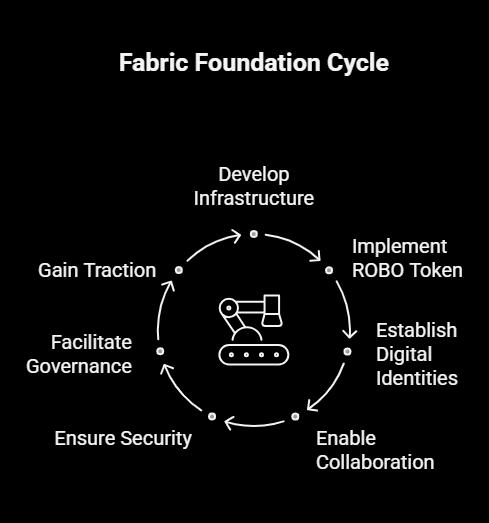
I have been particularly impressed by the design philosophy that emphasizes interoperability. Fabric is not trying to lock participants into a single platform. Instead it encourages collaboration across different robot types and manufacturers. I have observed firsthand how this approach has already attracted interest from developers who want to build new skills and tasks that can be deployed across fleets. The network is growing organically and the variety of tasks and participants continues to expand. This kind of open ecosystem is rare in robotics and I believe it will be a major differentiator for Fabric.
Thinking about the broader implications I realize that Fabric could transform how humans and machines coexist in economic systems. Robots can now contribute value in ways that were not possible before. They can be part of task marketplaces, earn compensation, and participate in governance. For humans this means access to a new type of labor force that is transparent, accountable, and incentivized to perform effectively. For robots it means autonomy, identity, and economic participation. This intersection of technology and economics is unlike anything I have seen in other domains.
Reflecting on the last year I can see that Fabric is laying down more than just infrastructure. They are building a cultural shift in robotics. It is a shift from isolated automation to collaborative autonomous participation. The emphasis on trust, transparency, and accountability creates a network where participants can experiment, innovate, and collaborate safely. I have seen how this fosters creativity and problem solving in ways that would be difficult in traditional proprietary robotics networks.
I also appreciate the long term perspective of the team. They are not rushing to maximize hype or speculation. Instead they are focusing on solving fundamental problems that will support decades of robotic collaboration and economic activity. I have found this approach refreshing because it emphasizes sustainable growth over short term gains. Watching the incremental progress and real world deployments reinforces my confidence in the vision.
In conclusion the Fabric Foundation represents a new paradigm for robotics and digital economies. ROBO is not just a token it is the engine that powers this emerging ecosystem. I have seen robots earn, transact, and participate in governance. I have witnessed the excitement of developers joining the network and contributing to its growth. From my perspective this is not a futuristic idea it is happening now. Fabric is building the foundation for a world where robots are participants rather than tools and where human and machine collaboration is both economic and meaningful. Experiencing this evolution firsthand has been inspiring and it has changed how I think about the role of robots in society. The journey of Fabric and ROBO is just beginning and I am eager to see where it goes next.