
Artificial intelligence is advancing faster than ever before. From content generation and coding assistants to financial analysis and autonomous systems, AI is becoming deeply integrated into our daily lives. However, despite its rapid growth, one major issue continues to limit its full potential: reliability. AI models can generate highly confident answers that sound correct, yet they sometimes produce hallucinations, biased conclusions, or unverifiable claims. As AI begins to power high-stakes sectors like finance, healthcare, research, and governance, the need for trustworthy outputs becomes critical rather than optional.
This is where @Mira - Trust Layer of AI mira_network introduces a compelling solution. Instead of asking users to blindly trust a single AI provider, $MIRA focuses on decentralized verification of AI outputs using blockchain consensus. The idea is not to replace AI models, but to add a verification layer that transforms raw AI-generated content into cryptographically validated information.
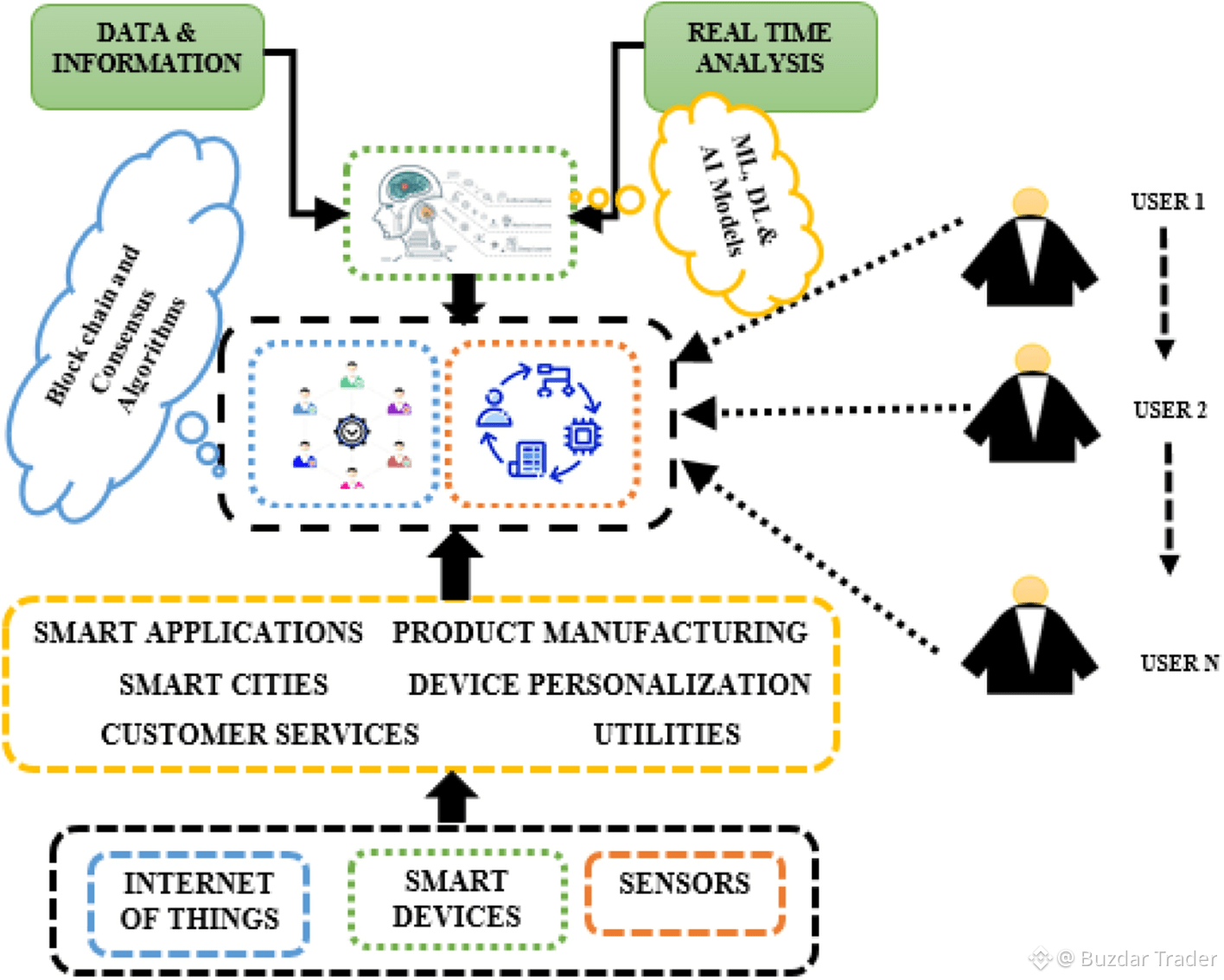
The process is both innovative and practical. When an AI produces a complex response, the system breaks it down into smaller, structured claims. These claims are then distributed across a decentralized network of independent AI models and validators. Each participant evaluates the claims, and through economic incentives and consensus mechanisms, the network determines which information is accurate. Validators who contribute honest and accurate verification are rewarded, while incorrect validation can result in penalties. This creates a trust-minimized environment where accuracy is economically incentivized.
By using blockchain technology, @Mira - Trust Layer of AI mira_network ensures transparency and tamper-resistant validation records. Instead of relying on a centralized authority to decide what is correct, consensus emerges from distributed participants. This trustless structure is particularly important in a future where AI systems may operate autonomously and make decisions without direct human oversight.
If successful at scale, $MIRA ould become foundational infrastructure for verified AI systems. Imagine financial AI tools that must prove the accuracy of their data before executing trades, medical AI systems that require validated diagnostic claims, or research assistants whose citations are cryptographically confirmed before publication. In each of these scenarios, decentralized verification could significantly reduce risk and increase confidence.
The intersection of AI and blockchain has often been discussed, but practical implementations have been limited. @Mira - Trust Layer of AI mira_network appears to be targeting a real structural weakness in current AI systems: the absence of built-in trust mechanisms. Rather than competing in the crowded space of AI model development, positions itself as a verification backbone — a layer that strengthens the entire ecosystem.
As AI adoption accelerates globally, reliability will likely become one of the most valuable attributes in the technology stack. Verified intelligence may soon matter more than raw intelligence alone. For that reason, the vision behind d the long-term potential of @mira_network make it a project worth watching closely in the evolving Web3 and AI landscape. #Mira