
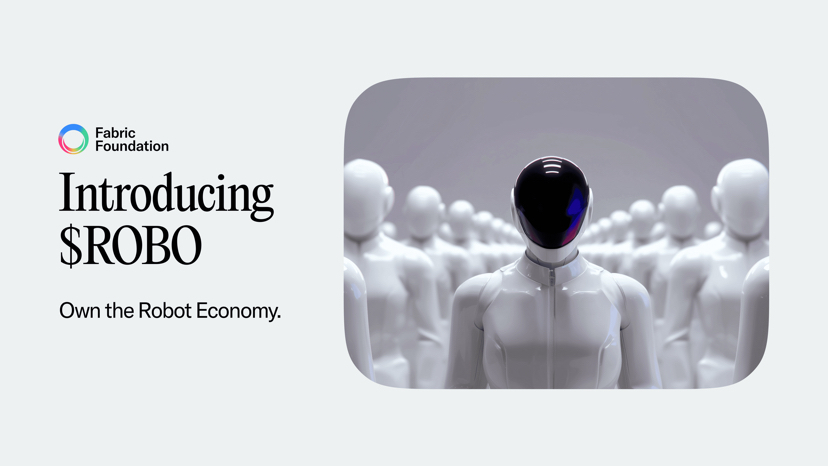
The main idea behind @Fabric Foundation is straightforward. For machines to work in the real world, they need infrastructure just like people do.
Robots are already working in warehouses, factories, and research labs. AI agents are writing code, analyzing data, and making decisions. Still, most of these systems work in isolation. They don’t have a shared economic base or a built-in way to transact, coordinate, or verify work across open networks.
Fabric is focused on building that missing layer.
The Problem:
Robots and AI systems are becoming more capable, but the economic rails around them are still manual. Payments are handled by companies. Access is controlled centrally. Data sharing is limited. Identity is fragmented.
If machines are going to operate independently, booking services, buying energy, paying for data, and completing tasks, they need infrastructure that allows them to:
Have a verifiable identity.
Coordinate tasks across networks.
Send and receive payments.
Participate in governance
That’s where Fabric positions itself.
The Approach:
Fabric combines robotics infrastructure with blockchain based coordination.
The idea isn’t to “tokenise everything.” It’s to create a neutral, programmable layer where machines and humans can interact economically without relying on a single centralized gatekeeper.
The $ROBO token acts as the coordination asset inside this system. It’s used for governance, staking, and incentives within the network. Rather than being purely speculative, its role is tied to participation and alignment.
Fabric also emphasises open collaboration. By working with robotics developers and payment infrastructure providers, the foundation is trying to create standards that allow machines to operate in a shared economic environment.
Why It Matters:
The machine economy isn’t a general idea anymore. Autonomous systems are already being deployed in logistics, research, and services. As they scale, the question becomes less about capability and more about coordination.
Who controls access?
How are payments settled?
How is trust established between machines?
Fabric’s thesis is that these questions shouldn’t be answered by a single company. They should be handled through open infrastructure.
It’s still early. A machine economy won’t appear overnight. But building the rails before the traffic arrives is often how durable networks are formed.
That’s the space Fabric is working in, not flashy, not abstract but foundational.